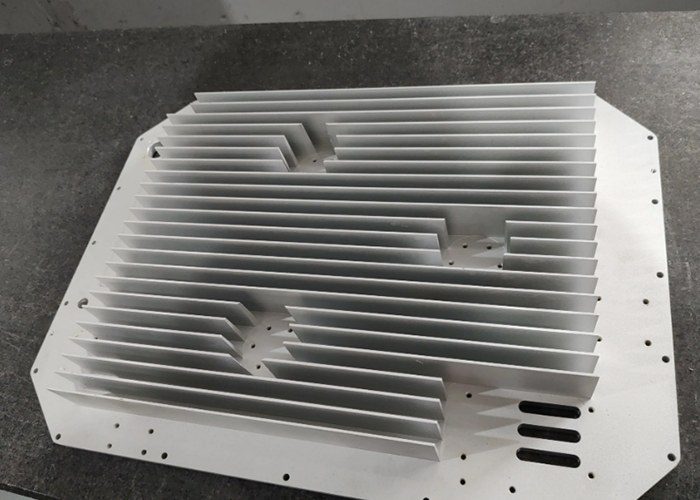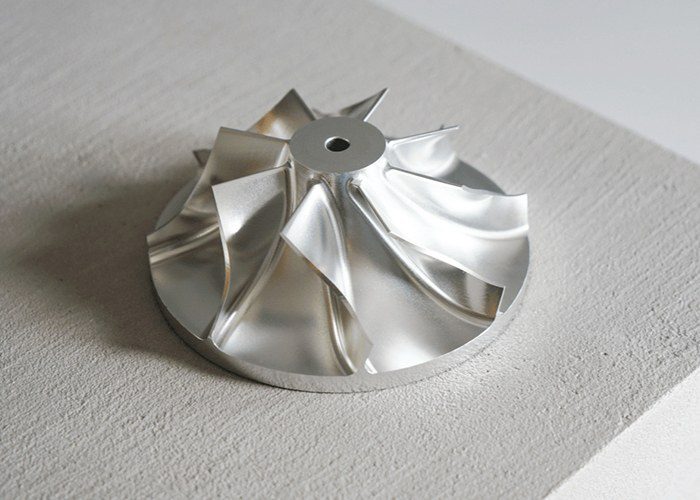
In today’s fast-paced manufacturing landscape, precision is not a luxury—it is a necessity. From the intricate components of a jet engine to the life-saving geometry of a medical implant, the parts that power modern industry demand an exceptional level of accuracy, consistency, and reliability. At the heart of this precision-driven world lies custom CNC milling and turning, two foundational subtractive manufacturing processes that transform raw materials into finished components with micron-level accuracy.
Understanding the Fundamentals: Milling vs. Turning
CNC (Computer Numerical Control) machining uses automated, high-speed cutting tools to remove material from a workpiece based on a digital 3D design. While both milling and turning are subtractive processes, they differ fundamentally in their motion logic and the types of parts they produce best.
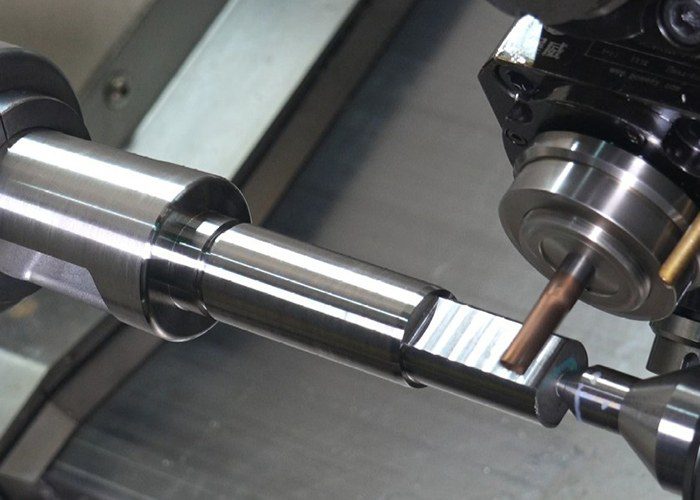
CNC turning is a process in which the workpiece rotates while a stationary cutting tool feeds along and across its axis. This kinematic setup naturally produces axisymmetric features—cylindrical, conical, and rounded parts such as shafts, bushings, bearing seats, pins, and threaded components. Turning excels at achieving high concentricity, tight diameter tolerances, and excellent surface finishes on rotational features. In modern turning centers, the integration of live tooling, Y-axis and C-axis control, and dual spindles has dramatically expanded what was once possible on a simple two-axis lathe.
CNC milling, by contrast, uses a rotating multi-edge cutter while the workpiece remains stationary, clamped securely to the machine bed. The cutting tool moves along multiple axes—three, four, five, or more—to shape the material. Milling is the most versatile CNC process, capable of producing flat surfaces, slots, pockets, complex 3D contours, and prismatic parts such as housings, brackets, plates, and molds. Multi-axis milling machines can rotate or spin the workpiece to create complex geometries without the need for manual repositioning.
The Power of Combination: Mill-Turn Technology
Many of today’s most sophisticated components require both rotational and prismatic features—think of a shaft with a keyway, a housing with threaded bores, or a connector with off-center holes. Historically, producing such parts meant moving the workpiece between separate turning and milling machines, introducing alignment errors, increasing lead times, and adding cost.
The advent of mill-turn centers—also known as turn-mill or multi-tasking machines—has revolutionized this process. These advanced platforms combine turning and milling operations within a single machine, allowing manufacturers to complete all or most machining operations in one clamping. Live tooling mounted on the turret can drill perpendicular holes into a spinning shaft, mill flat features onto round parts, tap threads, and engrave logos—all in the same cycle. By eliminating re-clamping errors, this approach reduces alignment time by as much as 60% and delivers tighter tolerances, better surface finishes, and significantly improved productivity.
Materials and Precision
Custom CNC milling and turning parts can be manufactured from an exceptionally wide range of materials. Common choices include aluminum alloys (valued for their machinability and strength-to-weight ratio), stainless steels (offering corrosion resistance and durability), titanium (comparable to steel in strength but much less dense), copper alloys, and engineering plastics such as ABS, nylon, and PEEK. Advanced applications may demand superalloys like Inconel or high-temperature polymers, each selected for specific mechanical, thermal, or chemical properties.
The precision achievable with modern CNC machining is remarkable. Standard tolerances typically fall within ±0.01mm, while high-precision machining can achieve ±0.005mm. Aerospace and medical-grade components often require tolerances as tight as ±0.002–0.003mm. Surface finishes further enhance part performance—options range from as-machined surfaces (typically Ra 3.2 μm) to polished finishes achieving Ra 0.4 or better, along with anodizing, plating, sandblasting, and other treatments that improve corrosion resistance, wear resistance, and aesthetics.
Applications Across Industries
The versatility of custom CNC milling and turning makes these processes indispensable across virtually every sector of modern industry. In aerospace, CNC machining produces shafts, fittings, bushings, turbine components, and structural parts that must meet stringent AS9100 standards. In the medical field, custom CNC turning creates surgical instruments, orthopedic implants, and diagnostic equipment components with ISO 13485 certification. The automotive industry relies on CNC machining for axles, fasteners, engine parts, and precision transmission components. Electronics manufacturers turn to CNC for miniature housings, connectors, and custom pins. From robotics and automation equipment to industrial machinery and consumer products, custom CNC parts are everywhere.
From Prototype to Production
One of the greatest strengths of CNC milling and turning is their ability to support the entire product lifecycle—from rapid prototyping through full-scale production. CNC prototyping uses production-grade materials to create functional prototypes that accurately represent the final part’s mechanical, thermal, and chemical performance. This allows engineers to validate designs, test form and function, and identify potential issues before committing to expensive production runs. Once the design is validated, the same CNC processes scale seamlessly to produce hundreds or thousands of parts with perfect consistency.
Market Outlook and Future Trends
The precision machining market reflects the growing importance of these technologies. The global precision turned product manufacturing market was valued at USD 96.7 billion in 2025 and is projected to reach USD 187.6 billion by 2034, growing at a CAGR of 7.6%. The broader precision machining market is estimated at USD 123.54 billion in 2025, with projections reaching USD 228.75 billion by 2033. Key drivers include increasing demand for high-precision components in aerospace, automotive, electronics, and healthcare, along with the ongoing trend toward component miniaturization and the adoption of Industry 4.0 solutions such as AI-driven systems and real-time data analytics.
Conclusion
Custom CNC milling and turning parts represent the convergence of precision engineering, advanced materials science, and digital manufacturing. Whether producing a single prototype or millions of mission-critical components, these processes deliver the accuracy, consistency, and reliability that modern industry demands. As technology continues to evolve—with multi-function machining centers, advanced materials, and smart manufacturing solutions—the capabilities of custom CNC milling and turning will only expand, driving innovation across every sector they serve.