In the modern manufacturing landscape, few technologies have had as profound an impact as computer numerical control (CNC) machining. At the heart of this revolution lies the CNC machining centre—a sophisticated machine tool that has transformed how industries produce everything from aerospace components to medical implants. A CNC machining centre is fundamentally defined by its ability to combine high-speed cutting, automated tool changing, and intelligent control systems into a single, versatile unit. Understanding the component parts is the first step toward appreciating the precision and efficiency these remarkable machines deliver.
The Foundation: Machine Bed and Frame
Every CNC machining centre begins with its structural foundation. The machine bed, typically constructed from cast iron, serves as the bedrock upon which all other components are mounted. Cast iron is the material of choice because of its excellent vibration-dampening properties and rigidity—characteristics that are absolutely critical when the machine is removing metal at high speeds and feeds. The frame supports the entire machine and provides the stiffness required to resist cutting forces without deflection. Some manufacturers use weldments with epoxy granite fill or, less commonly, aluminum, but cast iron remains the industry standard for its superior damping characteristics. A rigid, well-designed frame directly translates to better surface finishes, longer tool life, and tighter dimensional tolerances on finished parts.
The Heart: Spindle Assembly
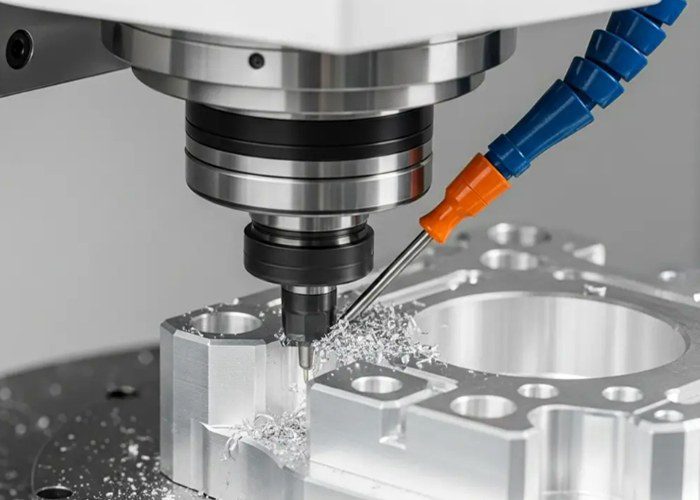
If the frame is the skeleton of a machining centre, the spindle is its beating heart. The spindle is the rotating assembly responsible for holding and driving the cutting tool. It delivers the power and torque necessary to remove material from the workpiece. Modern machining centres feature electrically driven spindles with tapered interiors that match the taper angle of tool holders, maximizing surface contact to securely grip the tool during cutting operations. A drawbar inside the spindle grips and pulls the retention knob on the tool holder to secure the tool firmly in place. Spindle speed, measured in revolutions per minute (RPM), directly determines cutting speed and material removal rate. In advanced machining centres, liquid-cooled motor spindles can achieve speeds of 15,000 RPM or more, enabling high-efficiency machining of a wide range of materials.
The Stage: Worktable and Workholding
The worktable provides the stable surface upon which the workpiece is secured during machining. Most milling machine tables feature T-slots that allow various workholding solutions—such as vises, clamps, and fixtures—to be attached securely. In horizontal machining centres, pallets are used to mount machining fixtures, with aligning blocks on two sides that locate the fixture precisely before it is bolted in place. A key advantage of horizontal machining centres is their dual-pallet configuration, which allows an operator to load and unload parts on one pallet while the second pallet is being machined—dramatically reducing downtime and increasing productivity.
The Brain: CNC Controller and Control Panel
The CNC controller serves as the brain of the machining centre. It interprets programmed instructions—typically in the form of G-code—and coordinates every aspect of the machine’s actions. The control panel houses the user interface, allowing operators to set cutting parameters, specify tooling, and monitor machining processes in real time. Modern controllers support real-time monitoring and often include integrated Ethernet and Wi-Fi capabilities that enable remote access and predictive maintenance. This digital intelligence is what transforms a conventional milling machine into a true machining centre capable of producing complex geometries with exceptional repeatability.
The Workhorse: Axis and Drive Systems
A typical CNC machining centre operates along three or more axes—X, Y, and Z—that correspond to linear movements. Servo motors control motion along each axis, with ball screws and linear guides translating rotary motion into precise linear movement. Ball screws are particularly critical because they convert the motor’s rotary motion into the linear motion of the worktable with minimal friction and backlash, making them the defining factor for positioning accuracy and repeatability. Advanced machining centres may include additional rotary axes (fourth and fifth axes) that allow the machine to approach the workpiece from multiple angles without manual repositioning. This multi-axis capability facilitates the production of complex three-dimensional forms beyond the reach of traditional manual machinery.
The Efficiency Driver: Automatic Tool Changer
One of the most innovative features that distinguishes a machining centre from a conventional milling machine is the automatic tool changer (ATC). The ATC consists of a tool magazine—typically a carousel or chain-type magazine—that holds multiple cutting tools. When a different tool is required, the ATC automatically swaps the current tool with the appropriate one from the magazine, minimizing downtime and dramatically improving productivity. Tool magazines can hold anywhere from 20 to over 100 tools, depending on the machine’s configuration and the complexity of the parts being produced. This automation allows machining centres to perform multiple operations—milling, drilling, boring, and tapping—in a single setup, reducing work-in-process and improving part quality.
The Protector: Coolant and Chip Management Systems
Machining generates significant heat, which can adversely affect tool life and workpiece quality. Coolant systems address this challenge by dissipating heat, lubricating the cutting tool, and flushing away chips and debris. Effective chip management is particularly important in horizontal machining centres, where gravity aids chip evacuation, preventing re-cutting of debris and improving surface finish. Proper coolant flow and chip removal are essential not only for part quality but also for prolonging the lifespan of both cutting tools and machine components.
Materials, Maintenance, and the Future
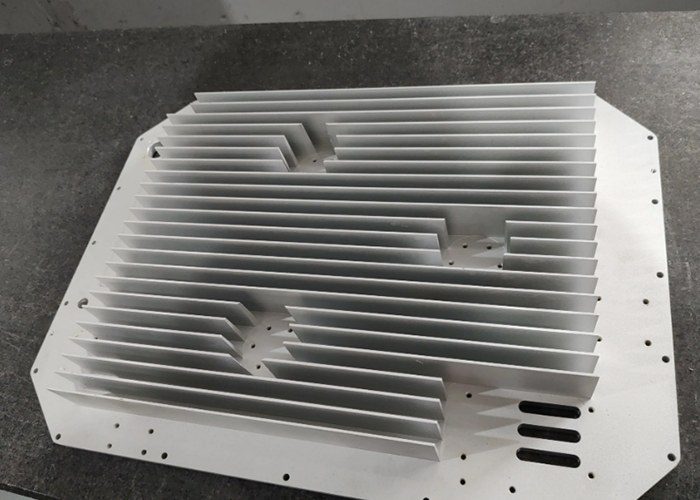
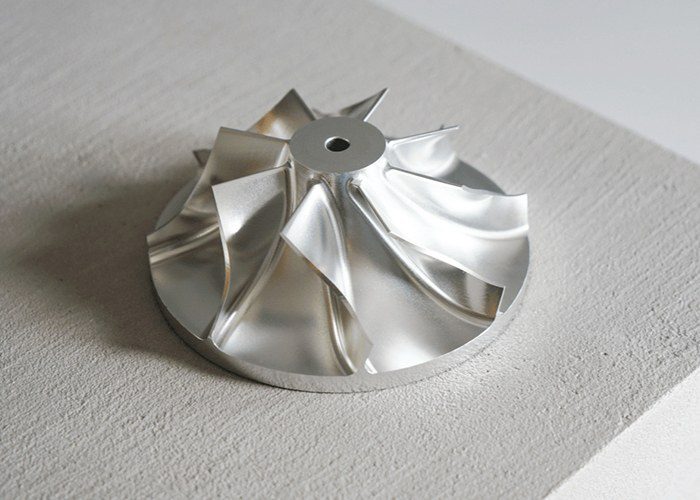
The parts produced on CNC machining centres span virtually every industry and material type. Aluminum and aluminum alloys are among the most common materials due to their excellent machinability and high strength-to-weight ratio. Steel, stainless steel, titanium alloys, copper, engineering plastics, and composites are also routinely machined. The choice of material directly influences cutting parameters, tool selection, and ultimately the quality of the finished part.
Maintaining a CNC machining centre requires regular attention to its critical components. Spindles, ball screws, and guide rails inevitably wear under high-intensity, long-term operation. Routine maintenance includes cleaning, lubrication, regular calibration, and inspection of wear-prone components. The spindle taper should be checked for micro-scratches, way cover seals inspected, and backlash compensation values updated in the CNC system as needed. Proactive maintenance not only extends machine life but also ensures consistent part quality and minimizes unplanned downtime.
Looking ahead, the evolution of CNC machining centres continues unabated. Artificial intelligence is enabling predictive maintenance and real-time optimization of tool paths. Hybrid machines that combine additive manufacturing with subtractive machining are gaining traction. Industry 4.0 technologies are making connectivity and data-driven decision-making mainstream. As the global market for machining centres continues to grow—projected to reach US$15 billion by 2031—the components that constitute these remarkable machines will only become more sophisticated, more precise, and more capable of meeting the ever-increasing demands of modern manufacturing.
From the cast iron bed that provides unwavering stability to the spindle that delivers cutting power, from the ball screws that enable micron-level positioning to the automatic tool changer that drives efficiency—every part of a CNC machining centre plays an essential role in the symphony of precision manufacturing. Understanding these components is not merely an academic exercise; it is the foundation upon which manufacturing excellence is built.