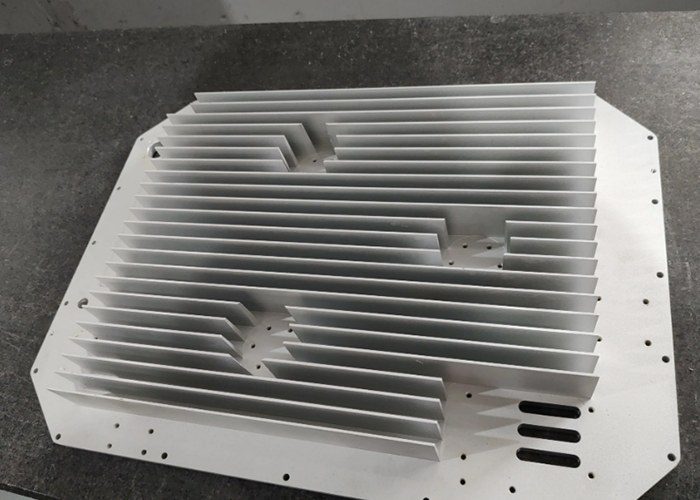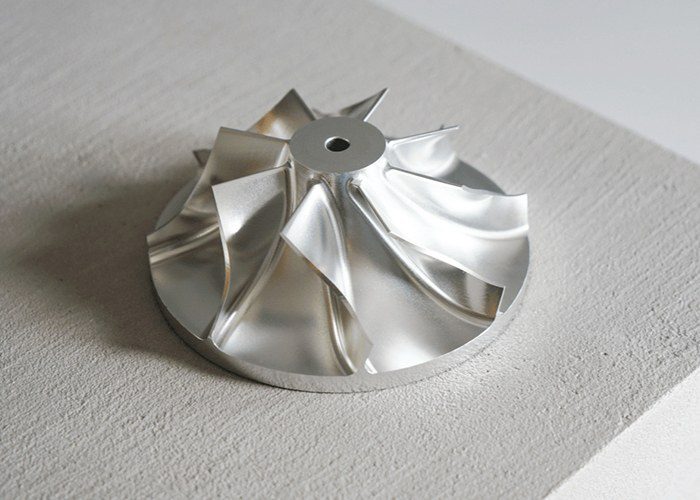
In the vast landscape of modern industry, where towering skyscrapers, roaring jet engines, and life-saving medical devices are the norm, there exists an invisible but indispensable foundation: precision-machined mechanical parts. These components, often no larger than a coin or so intricately shaped that they defy simple description, are the unsung heroes of functionality. Precision machining is not merely a manufacturing process; it is a sophisticated discipline that marries cutting-edge technology with microscopic accuracy to transform raw materials into complex, high-performance parts.
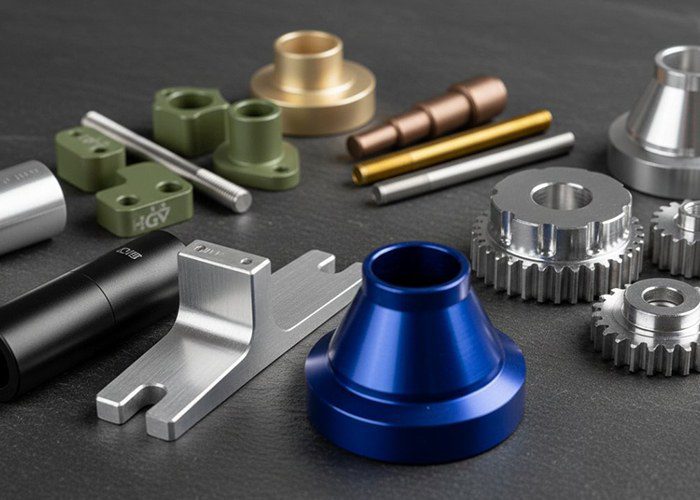
At its core, precision machining is the process of removing material from a workpiece to create a part with extremely tight tolerances, often measured in microns—one-millionth of a meter. To give you some perspective, the thickness of a human hair is roughly 70 microns. Precision machining regularly achieves tolerances of ±5 microns or even ±1 micron. This level of exactness is not born from vanity but from necessity. In a jet engine turbine blade, a deviation of a few microns can lead to catastrophic imbalances. In a surgical bone drill, a slightly off-center axis can cause tissue damage. Thus, precision machining sits at the intersection of physics, material science, and engineering rigor.
The primary enabler of this accuracy is Computer Numerical Control (CNC) technology. CNC machines are the workhorses of precision manufacturing. Unlike manual machines that rely on a human operator’s hand and eye, CNC machines follow a set of digitally coded instructions (G-code) to move cutting tools along multiple axes. A modern 5-axis CNC milling machine can rotate and tilt the workpiece and the tool simultaneously, allowing a single setup to produce a part with complex freeform surfaces, deep cavities, and intricate undercuts. This reduces human error, increases repeatability, and allows for geometries that would be impossible to achieve manually.
Several core processes define precision machining. CNC Milling uses rotating multi-point cutting tools to remove material from a stationary workpiece, ideal for creating slots, pockets, and complex 3D surfaces. CNC Turning, performed on a lathe, spins the workpiece against a stationary cutting tool, perfect for cylindrical parts like shafts, bushings, and threaded fasteners. Grinding, an abrasive process, is employed for finishing hard materials to achieve ultra-smooth surface finishes (down to 0.1 micron Ra) and extreme dimensional accuracy. Additionally, Electrical Discharge Machining (EDM) uses controlled electrical sparks to erode conductive materials, allowing for the creation of sharp internal corners and tiny holes that conventional cutters cannot reach.
The choice of material is a critical determinant of success in precision machining. While aluminum and brass are forgiving and easy to cut, they are often replaced by more demanding alloys in high-stress applications. Stainless steel (such as 304 or 17-4 PH) offers corrosion resistance and strength but work-hardens quickly. Titanium, prized for its strength-to-weight ratio and biocompatibility, is notoriously “gummy” and generates intense heat during cutting, rapidly wearing down tools. Inconel and other superalloys, used in jet engines and nuclear reactors, maintain their strength at red-hot temperatures but are extremely abrasive. Machining these materials requires specialized tool coatings (like titanium aluminum nitride), high-pressure coolant systems, and optimized cutting parameters.
The applications of precision-machined parts span virtually every advanced industry. In aerospace, they appear as fuel injector nozzles, landing gear components, and structural brackets—each part certified to survive extreme temperatures, vibration, and fatigue. In the medical field, hip and knee implants, spinal screws, and surgical instruments are machined to exacting standards; a poorly machined bone plate can cause infection or implant failure. The automotive industry, especially with the rise of electric vehicles (EVs), demands precision parts for battery terminals, gearbox components, and regenerative braking systems. Even the electronics that power our world—smartphones, laptops, and servers—rely on micromachined connectors and heat sinks.
However, precision is nothing without verification. Machining a part to a tolerance of ±2 microns is meaningless if you cannot measure it. Thus, quality control is integrated into every stage of production. Coordinate Measuring Machines (CMMs) use a touch probe to map a part’s geometry against its CAD model, reporting deviations as small as one micron. Optical comparators and laser scanners can non-destructively inspect complex contours. In-process probing systems allow CNC machines to self-correct: a tool can measure the part mid-operation and automatically adjust offsets to compensate for wear or thermal expansion. This closed-loop feedback guarantees that every part leaving the machine—whether the first or the ten-thousandth—is perfectly identical.
The future of precision machining is being shaped by automation and digitalization. Robotics arms now load and unload machines, allowing for lights-out manufacturing—unattended operation through the night. Artificial intelligence algorithms analyze vibration, acoustic emission, and spindle load to predict tool failure before it occurs, preventing scrap and downtime. Meanwhile, additive manufacturing (3D printing) is not replacing subtractive machining but complementing it. Hybrid machines combine laser metal deposition with CNC milling: they print a near-net shape and then machine it to final precision, saving material and reducing lead times for complex parts.
In conclusion, precision machining of mechanical parts is far more than cutting metal. It is a symphony of physics, software, materials science, and metrology. It enables the technologies that drive human progress—from the safe landing of an airplane to the successful implantation of an artificial joint. As tolerances continue to shrink and geometries become more complex, the craft of the precision machinist, now augmented by AI and automation, will remain an indispensable pillar of modern civilization. Every click, every spin, every micro-scale cut is a testament to humanity’s relentless pursuit of perfection.