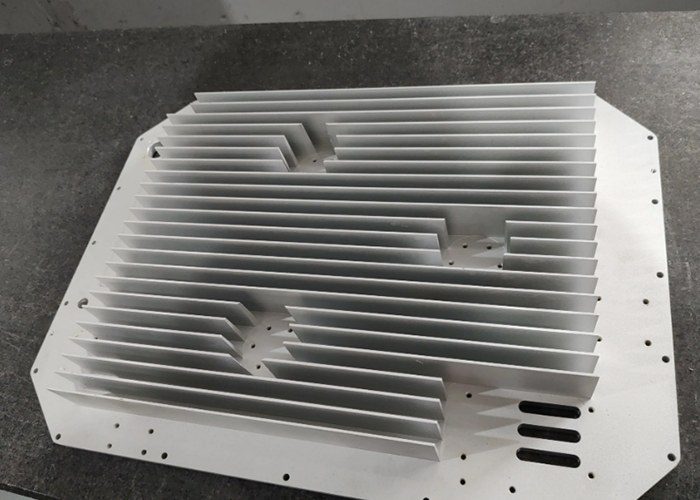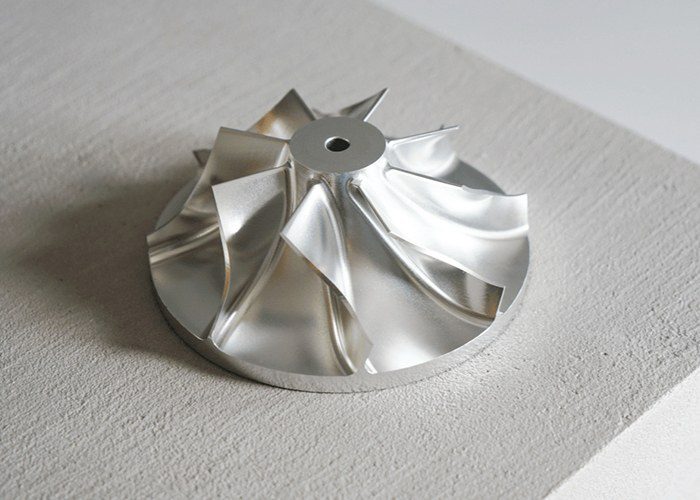
In the landscape of modern manufacturing, mass production has long reigned supreme. However, the growing demand for unique, application-specific components has shifted the spotlight toward a more flexible approach: customization. At the heart of this shift lies CNC turning—a subtractive manufacturing process that, when combined with advanced customization capabilities, is redefining what’s possible in industries ranging from aerospace to medical devices.
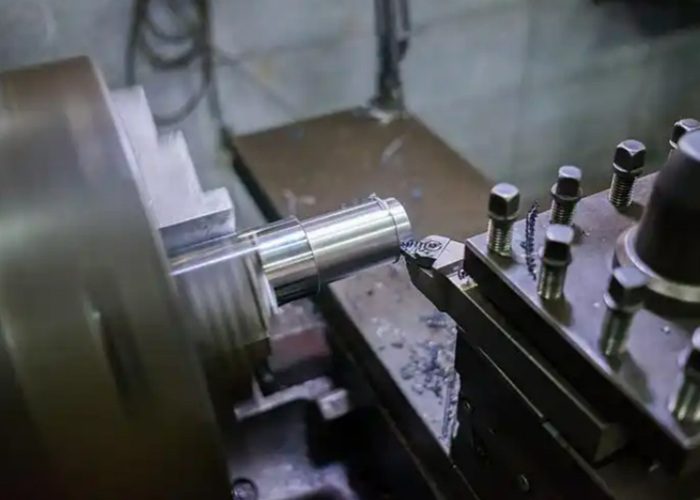
CNC (Computer Numerical Control) turning is a machining process in which a cutting tool moves linearly while the workpiece rotates rapidly on a spindle. Traditionally, this method has been used to produce cylindrical parts like shafts, bushings, and threaded fasteners in large volumes. But the real leap forward is in custom CNC turning—where each part is designed, programmed, and machined to meet exact client specifications, often in small batches or even as single units.
The Anatomy of Custom CNC Turning
Customization in CNC turning begins long before the metal chips fly. It starts with a digital blueprint—usually a CAD (Computer-Aided Design) file—that captures every critical dimension, tolerance, surface finish, and material requirement. Unlike standard off-the-shelf parts, customized turned components may feature non-standard diameters, unusual thread profiles, internal and external contours, eccentric features, or specialized grooves.
Once the design is finalized, CAM (Computer-Aided Manufacturing) software generates the toolpaths, translating geometry into machine-readable G-code. The CNC lathe then executes these instructions with repeatable accuracy down to a few microns. What makes this custom is not just the shape but the process flexibility: tool selection, spindle speed, feed rate, and cooling strategies can all be tailored to the unique geometry and material of each batch.
Materials for Every Application
One of the greatest strengths of custom CNC turning is its material versatility. From common aluminum 6061 and stainless steel 304 to exotic alloys like Inconel, titanium, or brass, custom turners can match material properties to functional requirements. Even non-metals such as PEEK, Delrin, and nylon are routinely machined for specialized electrical or chemical resistance. This material freedom allows engineers to design without compromise—choosing the ideal substrate for strength, weight, conductivity, or biocompatibility.
Why Customization Matters
The value proposition of custom CNC turning is most evident in industries where “one size fits all” is a liability.
- Aerospace and defense applications demand components capable of withstanding extreme temperatures, vibration, and fatigue.
- Medical Devices demand biocompatible, sterilizable parts often with complex micro-features. Custom bone screws, surgical shaver blades, and implantable posts are machined from titanium or stainless steel 316L, with surface finishes polished to prevent bacterial adhesion.
- Automotive Performance relies on lightweight, high-strength custom pulleys, spacers, and transmission shafts. Enthusiasts and race teams turn to CNC turning for bespoke parts that improve power delivery or solve fitment challenges.
- Robotics and automation often demand odd-sized shafts, custom lead screws, and actuator housings that are rarely found in standard catalog inventory.
Beyond technical fit, custom CNC turning reduces waste. Instead of modifying a standard part (which may require secondary operations or weaken the material), manufacturers create the exact geometry from the start, eliminating excess weight and scrap.
Capabilities: From Simple to Complex
Modern CNC lathes have evolved far beyond basic cylindrical turning. With live tooling, Y-axis capability, and sub-spindles, a single turning center can mill flat surfaces, drill cross-holes, tap threads, and even perform off-center milling—all in one setup. This reduces errors and lead times.
Custom features achievable through CNC turning include:
- Internal and external threads of any pitch, including left-hand or multi-start.
- Tapers and radii for fluid dynamics or stress relief.
- Knurling for grip surfaces.
- Undercuts and grooves for retaining rings or O-rings.
- Eccentric turning for cam profiles.
- Micro-machining down to diameters less than 0.5 mm.
Tolerances as tight as ±0.005 mm (±0.0002 inches) are routine for high-end custom work, though typical commercial custom jobs may specify ±0.025 mm.
The Role of CNC Programming in Customization
For each custom order, the CNC program is unique. Skillful programmers optimize tool paths to minimize cycle time without sacrificing surface quality. They also simulate the machining process to detect collisions or excessive tool deflection—critical for thin-walled or long, slender parts. In custom, low-volume runs, setup time may dominate cost, so programmers often design modular fixturing or quick-change collet systems to speed changeovers.
Prototyping to Production
Custom CNC turning offers equal value for both prototyping and full-scale production. A single custom prototype can be machined in hours, allowing iterative design refinements before committing to hundreds or thousands of parts. For production, once the program is proven, the CNC lathe can reproduce identical custom parts on demand, with digital storage of tool offsets and inspection data.
Quality Assurance for Custom Parts
Every custom-turned component is a unique contract. Therefore, rigorous inspection is paramount. In-process probing on the CNC lathe verifies critical dimensions without removing the part. Post-process inspection may include CMM (coordinate measuring machine) checks, optical comparators, or surface roughness testers. Many custom turning shops provide a full dimensional report and certificate of compliance with every order.
The Human Element
While CNC turning is automated, customization relies on a dialogue between engineer, machinist, and client. Understanding the function behind a feature—a chamfer for assembly clearance, a thread for load-bearing—allows the turner to suggest manufacturability improvements. This collaboration often reduces cost and lead time while enhancing performance.
Future Trends in Custom CNC Turning
The future of custom CNC turning is intelligent and connected. With Industry 4.0, machine sensors monitor tool wear and vibration in real time, automatically adjusting feed rates to maintain quality. Digital twins—virtual replicas of the machining process—allow off-line programming and validation, slashing setup time for custom jobs.
Moreover, on-demand manufacturing platforms now connect clients directly to CNC turning shops with instant quoting and DFM (Design for Manufacturing) feedback. This democratization means that a startup founder or a research scientist can order five custom titanium parts as easily as a factory manager orders five thousand.
Conclusion
Customization CNC turning is not merely about making round parts—it’s about making the right round part for the right application. It bridges the gap between creative engineering and practical manufacturing, delivering precision, material integrity, and design freedom. As industries continue to demand shorter runs, greater variety, and faster lead times, custom CNC turning will remain an indispensable tool in the modern machinist’s arsenal. Whether it’s a single prototype for a heart pump or a limited batch of race car components, the ability to turn ideas into metal—exactly as imagined—is the true essence of customized manufacturing.