
In the rapidly evolving world of manufacturing, off-the-shelf components are no longer sufficient to meet the unique demands of cutting-edge industries. From aerospace engineering to medical device innovation, the need for parts that fit exact specifications—down to the micron—has never been greater. This is where Customization CNC Milling steps in as a transformative force. More than just a subtractive manufacturing process, it represents a synergy between digital design flexibility and mechanical precision. This article explores how customized CNC milling is redefining production capabilities, its core advantages, and why it has become the backbone of bespoke component fabrication.
Understanding CNC Milling in a Custom Context
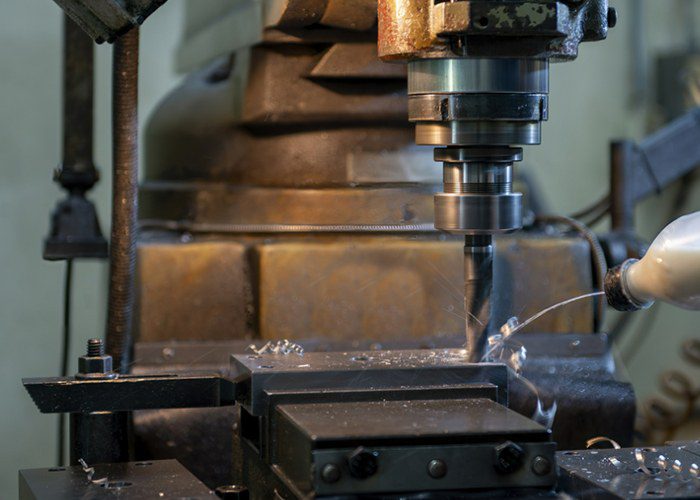
CNC (Computer Numerical Control) milling is a machining process that uses rotating multi-point cutting tools to remove material from a workpiece. While standard CNC milling produces identical parts in large volumes, customization CNC milling shifts the focus toward unique, one-off, or small-batch production based on specific client designs. Instead of being constrained by existing tooling or molds, engineers can directly translate a CAD (Computer-Aided Design) file into a physical object. This direct digital-to-physical workflow eliminates the need for expensive hard tooling, making it economically viable to produce single units that are entirely different from the previous one.
Unparalleled Design Freedom and Complexity
The most significant advantage of customized CNC milling is the design freedom it unlocks. Traditional manufacturing methods like injection molding require parts to be designed with draft angles and uniform wall thicknesses. Custom CNC milling imposes no such restrictions. It can produce undercuts, sharp internal corners, intricate 3D contours, and complex geometric lattices that other processes cannot replicate.
Consider a prosthetic limb socket: every human body is different. Custom CNC milling allows manufacturers to scan a patient’s residual limb, generate a unique CAD model, and machine a perfectly fitted socket from high-grade aluminum or carbon-reinforced polymer. Similarly, in the automotive racing sector, engineers frequently need custom intake manifolds or suspension brackets that optimize airflow or weight distribution for a specific track condition. General milling cannot achieve these highly specialized forms; customization capabilities can.
Superior Material Versatility
Another cornerstone of customization is material flexibility. While 3D printing is often touted for customization, it is largely limited to plastics and specific metals. Custom CNC milling, in contrast, works with an extensive library of engineering materials, including:
- Metals: Aluminum 6061/7075, stainless steel (303, 304, 17-4 PH), brass, copper, titanium (Grade 5), and Inconel.
- Plastics: ABS, polycarbonate, PEEK (for medical implants), Delrin (acetal), and nylon.
- Composites: Carbon fiber sheets, fiberglass, and G10.
This versatility means that a customized part can be machined from solid billet titanium for high-strength, heat-resistant applications like a turbocharger wheel, or from PEEK for a sterile, biocompatible surgical guide. The ability to match material properties exactly to the application’s mechanical, thermal, and chemical requirements is a luxury that only CNC customization can provide.
Precision and Repeatability in Small Batches
Customization does not mean sacrificing quality. Modern 5-axis CNC mills achieve tolerances as tight as ±0.0002 inches (±5 microns). This level of precision is critical for customized components that must interface with standardized systems. For example, a custom gear for a vintage clock must mesh perfectly with existing standard gears. CNC milling ensures that even a one-off gear has flawless tooth geometry.
Furthermore, once a custom program is created, it can be stored digitally. This means that if a client needs a second batch of the same customized part six months later, the machine can reproduce it with 100% identical accuracy—no variation, no reinterpretation of blueprints. This traceability is invaluable for industries like defense and aerospace, where component failure is not an option.
Rapid Prototyping to End-Use Production
Customization CNC milling bridges the gap between prototyping and production. Often, the same machine and same setup used to create a prototype can later produce the final product. This is particularly beneficial for iterative design. Engineers can mill a prototype, test it, adjust the CAD file, and mill a revised version within hours. Once the design is validated, the same code can generate the final production part.
This workflow eliminates the costly and time-consuming transition from prototype tooling to production tooling. For startups and R&D departments, this agility accelerates time-to-market from months to days. A customized heat sink design can be prototyped, tested for thermal dissipation, optimized, and moved into low-volume production—all without leaving the CNC workcell.
Key Industries Driving Demand
Several sectors rely heavily on customized CNC milling:
- Medical: Custom surgical guides, orthopedic implants (hip stems, bone plates), and dental abutments.
- Aerospace: One-off test fixtures, modified engine brackets, and specialized waveguide components.
- Automotive: Prototype cylinder heads, custom brake calipers, and limited-run racing components.
- Robotics: Unique chassis, actuator housings, and sensor mounts.
- Oil & Gas: Custom valve bodies and seals engineered for high-pressure environments.
Challenges and Considerations
Despite its advantages, customized CNC milling has some constraints. Per-unit cost is higher than mass production because setup time and programming are amortized over fewer parts. Complex geometries may require multiple machine setups or specialized fixturing, adding to lead time. Additionally, deep internal cavities or extremely thin walls can be challenging to machine without deflection or tool breakage. However, for applications where off-the-shelf parts simply do not exist, these costs are negligible compared to the value of a functional custom solution.
The Future: Automation and AI-Driven Customization
The future of customization CNC milling lies in automation and artificial intelligence. Cloud-based CNC platforms already allow clients to upload a CAD file, receive an instant quote, and have the part machined and shipped without human intervention. AI algorithms are beginning to optimize toolpaths automatically for custom geometries, reducing machining time and improving surface finish. As 5-axis machines become more affordable, the capability to produce complex, customized parts shifts from specialized job shops to in-house R&D labs—democratizing advanced manufacturing.
Conclusion
Customization CNC milling is not merely a manufacturing process; it is a problem-solving framework. It empowers engineers, designers, and innovators to create exactly what they need, with the exact material and precision required, without the constraints of mass production. Whether it is saving a patient’s life with a custom titanium implant or winning a race with a uniquely machined suspension arm, the value of customization cannot be overstated. In a world where standardization is the norm, the ability to mill the exception is nothing short of revolutionary. As technology continues to advance, the boundaries of what can be customized will only expand, solidifying CNC milling as the definitive tool for bespoke manufacturing.


