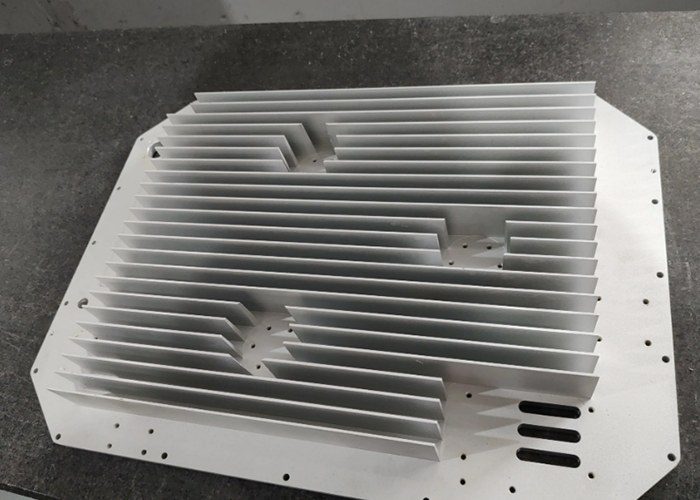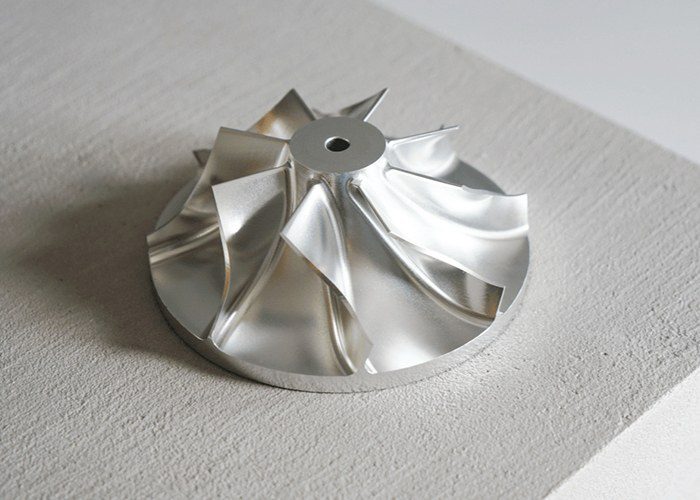
In an age where technological marvels—from jet engines to surgical robots—dominate our lives, a silent, invisible foundation makes it all possible: precision machining machine parts. These are not merely components; they are the meticulously crafted building blocks that ensure reliability, safety, and performance in nearly every mechanical system. Precision machining, the process of removing material from a workpiece to hold extremely tight tolerances, has evolved from a skilled trade into a sophisticated science. This article explores the critical role, methods, materials, and future of manufacturing these indispensable parts.
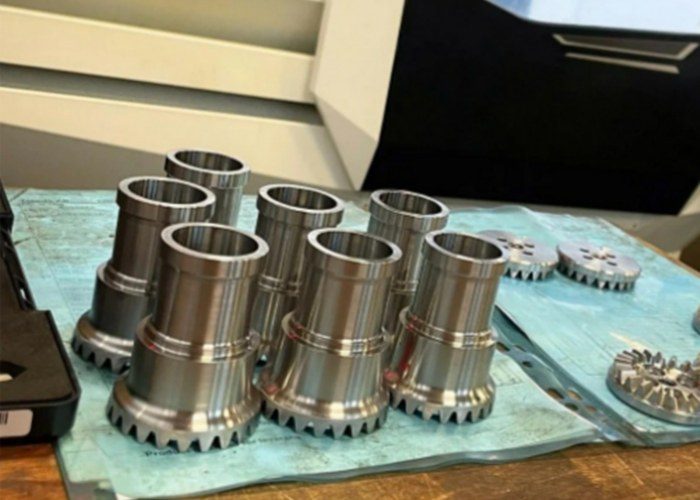
At its core, precision machining is defined by accuracy. While conventional machining may produce parts with tolerances within a few thousandths of an inch, precision machining routinely achieves tolerances of ±0.001 inches (25 microns) or even tighter. In micromachining, tolerances can be as tight as the sub-micron level. This level of exactness is not a luxury but a necessity. Consider a fuel injector in an automobile: a microscopic deviation in a nozzle hole can alter spray patterns, reduce combustion efficiency, and increase emissions. In aerospace, a poorly machined turbine blade could lead to catastrophic failure. Thus, precision machining transforms raw metal, plastic, or ceramic into components that meet exacting design specifications with repeatable reliability.
The methods used to achieve such precision are varied and often employed in sequence. CNC (Computer Numerical Control) machining is the dominant paradigm. Modern CNC mills, lathes, routers, and electrical discharge machines (EDM) follow digital blueprints with incredible fidelity. Multi-axis CNC machines—capable of moving tools or workpieces along five or more axes—allow complex geometries to be produced in a single setup, minimizing error accumulation. Turning is used for cylindrical parts like shafts and bearings, while milling creates flat surfaces, slots, and complex 3D contours. For hard metals or intricate cavities, EDM uses electrical sparks to erode material without mechanical contact, achieving burr-free finishes. Grinding and lapping provide final surface finishes measured in microinches, essential for sealing surfaces or bearing races.
Material selection directly influences machining strategy. Common materials include aluminum alloys (lightweight and easy to machine, ideal for aerospace and consumer electronics), stainless steel and tool steels (strong but demanding on cutting tools), titanium (high strength-to-weight ratio but notorious for work hardening and poor thermal conductivity), brass and bronze (excellent for bushings and electrical contacts), and advanced engineering plastics like PEEK or Delrin (used for lightweight, corrosion-resistant parts). Each material requires specific cutting speeds, tool geometries, cooling fluids, and fixturing to achieve precision without warping or tool failure. The expertise of a machinist—or the algorithm driving the CNC—lies in balancing speed, heat, tool wear, and surface finish for each unique combination.
The applications of precision-machined parts span virtually every industry. In aerospace and defense, landing gear components, hydraulic manifolds, and avionics housings must survive extreme temperatures and stresses. Medical technology relies on machined bone screws, spinal implants, and surgical cutting tools that demand biocompatibility and flawless finish. Automotive racing and production use precision-machined engine blocks, transmission gears, and turbocharger wheels. Oil, gas, and energy depend on valve bodies, pump shafts, and drill components that resist corrosion and erosion. Semiconductor manufacturing even uses machined chambers and wafer-handling parts with cleanliness and tolerances measured in nanometers. Without precision machining, modern electronics, clean energy systems, and transportation would cease to function.
Despite its maturity, precision machining faces several challenges. Thermal stability is a constant adversary—cutting generates heat, causing both the part and the machine to expand, altering dimensions. Advanced coolant systems, temperature-controlled workshops, and in-process probing mitigate this. Tool wear degrades precision over time; thus, tool condition monitoring and automatic tool changers are standard. Vibration and chatter can ruin surface finish and accuracy, requiring rigid machine frames and optimized cutting parameters. Perhaps the greatest challenge is cost—high-precision machining requires expensive capital equipment, skilled programmers, quality inspection tools (CMMs, optical comparators, laser micrometers), and often long cycle times. Balancing cost against tolerances is a central decision in manufacturing engineering.
The future of precision machining machine parts is intertwined with Industry 4.0 and automation. Closed-loop machining systems use real-time sensors to adjust feeds and speeds, compensating for thermal drift or tool wear on the fly. Hybrid manufacturing—combining additive processes (3D printing) with subtractive machining—allows near-net shapes to be printed and then finish-machined to exact tolerances, reducing material waste for complex parts. Artificial intelligence is beginning to predict optimal tool paths, detect anomalies from acoustic or current signatures, and schedule maintenance preemptively. Micromachining and nanomachining are pushing boundaries for medical micro-implants and micro-electromechanical systems (MEMS). Meanwhile, sustainable machining—using minimum quantity lubrication (MQL), recyclable coolants, and energy-efficient drives—is becoming a competitive differentiator.
In conclusion, precision machining machine parts are the unsung heroes of industrial civilization. Every time you board a plane, turn a key, or rely on medical equipment, you trust the accuracy of parts machined to tolerances thinner than a human hair. This field marries ancient craftsmanship with digital precision, materials science with mechanical engineering. As technology demands ever-smaller, stronger, and more complex components, the art and science of precision machining will continue to evolve. But its purpose remains unchanged: to turn raw material into exact, reliable, and invisible order—the very essence of modern machinery.