
In an era where mass production once reigned supreme, the manufacturing landscape is rapidly shifting toward personalization, precision, and agility. At the heart of this transformation lies Customization CNC Machining Service—a solution that blends the accuracy of computer-controlled cutting with the flexibility of tailor-made design. Whether you are prototyping a medical implant, producing a unique aerospace bracket, or crafting a limited-run automotive component, customized CNC machining offers unmatched advantages over standard off-the-shelf parts or traditional manual fabrication.
What Is Customization CNC Machining?
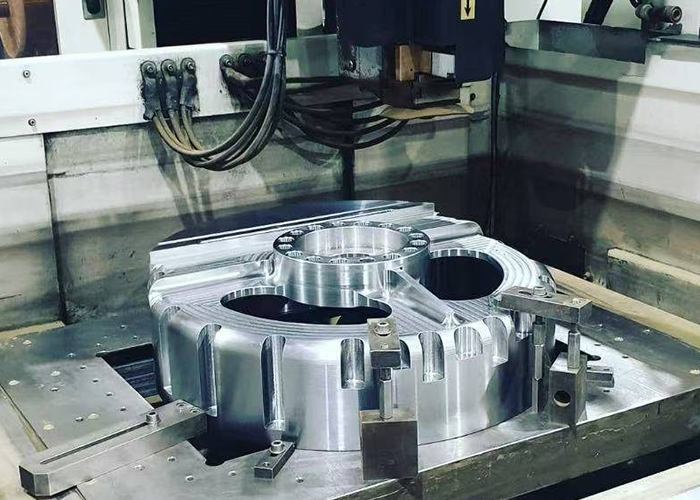
CNC (Computer Numerical Control) machining is a subtractive manufacturing process in which pre-programmed software controls the movement of factory tools and machinery. When we add “customization” to the equation, it means that every aspect of the part—dimensions, geometry, surface finish, material grade, tolerances, and even secondary operations—is adapted to the client’s exact specifications. Unlike standardized products that force design compromises, customized CNC services produce components that fit perfectly into unique assemblies, optimize performance, and reduce waste.
Why Choose Customized CNC Over Standard Parts?
The most compelling reason is precision fit. Off-the-shelf components rarely match critical dimensions or functional requirements without modification. Custom machining eliminates shimming, rework, or redesign—saving time and money in the long run. Second, customization allows for material optimization. A standard aluminum bracket might be too heavy or weak for your application; with custom CNC, you can select titanium, stainless steel, brass, or engineering plastics based on load, corrosion, or thermal needs. Third, design freedom accelerates innovation. Complex internal channels, unconventional threads, lightweight lattice structures, and asymmetrical geometries are all achievable without costly mold tooling.
The Technical Capabilities Behind Customization
Modern CNC machining centers—including 3‑axis, 4‑axis, and 5‑axis mills, lathes, routers, and wire EDM machines—can execute virtually any shape. Multi-axis machines rotate the workpiece or cutting tool to access five sides in a single setup, dramatically improving accuracy for freeform surfaces. Tight tolerances down to ±0.005 mm (0.0002 inches) are routine, suitable for industries like medical, defense, and hydraulics. Surface finishes can be enhanced with post‑processes such as anodizing, powder coating, passivation, or bead blasting, all coordinated as part of the customized service package.
From Prototype to Production: Agile Workflows
One of the greatest strengths of customized CNC machining is its scalability. A single prototype can be turned around in 24‑48 hours using direct digital designs (STEP, IGES, or STL files). After validation, the same program can produce 10, 1,000, or 10,000 identical parts with perfect repeatability. No hard tooling means design iterations cost a fraction of injection molding or casting. For businesses using just‑in‑time inventory, customization also enables on‑demand production—eliminating large stockpiles and reducing obsolescence risk.
Industries Transformed by Custom CNC Services
- Medical & Dental: Custom surgical guides, bone plates, prosthetic sockets, and dental abutments are machined from biocompatible titanium or PEEK, tailored to each patient’s anatomy.
- Aerospace & Defense: Lightweight brackets, manifold housings, and antenna mounts are machined to strict AS9100 standards and often include serialized traceability.
- Automotive & Motorsports: One‑off intake manifolds, gearbox components, brake calipers, and suspension parts allow race teams to optimize performance without volume production.
- Electronics & Robotics: Custom heat sinks, enclosures, and robotic arm links provide maximum cooling and rigidity within confined spaces.
- Industrial Machinery: Replacement gears, wear plates, fixture jigs, and tooling holders keep legacy equipment running or improve existing assembly lines.
Material Versatility
A well‑equipped custom CNC shop handles a wide palette of materials:
- Metals: Aluminum (6061, 7075), stainless steel (303, 304, 316L), brass, copper, titanium, Inconel, and mild steel.
- Plastics: ABS, polycarbonate, Delrin (acetal), Nylon, PEEK, PTFE, and acrylic.
- Composites and specialty materials: Carbon fiber sheets, Garolite, phenolic, and machinable ceramics.
Each material requires specific cutting parameters, coolants, and tool geometries—expertise that a dedicated customization service brings to the table.
Quality Assurance in Custom Machining
Trusting a custom CNC partner means demanding rigorous inspection. The best services incorporate in‑process probing, CMM (coordinate measuring machine) verification, and detailed First Article Inspection reports. ISO 9001:2015 or AS9100D certification is a baseline. For mission‑critical parts, full material traceability, hardness testing, and non‑destructive testing (e.g., dye penetrant) should be available. Customization does not mean ambiguity; it means documented conformance to your drawing or 3D model.
Cost Considerations: Value Over Price
It’s true that custom machining typically has a higher per‑unit cost than mass‑produced castings or stampings. However, when you factor in engineering efficiency, reduced assembly time, longer part life, and elimination of redesign cycles, the total cost of ownership often favors custom. Moreover, advanced CAM software and toolpath optimization reduce machining time, making small batches increasingly affordable. Many shops now offer instant online quoting, so you can compare materials and lead times before committing.
The Future of Customization CNC
We are moving toward a “factory of one” model—where digital inventory, AI‑driven process planning, and lights‑out manufacturing make custom parts as easy to order as pizza. Integration with additive manufacturing (hybrid CNC + 3D printing) enables near‑net shapes finished with subtractive precision. Also, cloud‑based CNC platforms allow remote machining, while advanced probing automates setup changes for different part numbers.
Conclusion
Customization CNC Machining Service is not a luxury—it is a strategic necessity for any organization that refuses to compromise on form, fit, or function. By leveraging the power of digital design and precise material removal, you unlock the ability to create exactly what you need, when you need it, without volume penalties. Whether you are a startup with a brilliant idea or a multinational refining a flagship product, the right custom machining partner turns your vision into measurable reality. Choose precision. Choose personalization. Choose custom CNC.


