In the relentless pursuit of efficiency, reliability, and performance, modern industry has placed unprecedented demands on the components that constitute machinery. At the heart of this industrial evolution lies precision machining—a manufacturing discipline that transforms raw materials into intricate, high-tolerance parts essential for countless applications. From the engines of commercial airliners to the delicate mechanisms of surgical robots, precision-machined machinery parts are the silent enablers of technological progress. This article explores the essence, processes, applications, and future of precision machining in the production of machinery parts.
Defining Precision Machining
Precision machining is a subtractive manufacturing process that uses computer-controlled tools to remove material from a workpiece, creating components with extremely tight tolerances, often measured in microns (thousandths of a millimeter). Unlike conventional machining, which prioritizes speed and volume, precision machining emphasizes accuracy, repeatability, and surface finish. A typical precision-machined part may require tolerances of ±0.005 mm or even finer. Achieving such levels demands advanced equipment, skilled operators, and rigorous quality control systems.
The core technologies include Computer Numerical Control (CNC) milling, turning, grinding, electrical discharge machining (EDM), and laser cutting. Each process offers unique advantages: CNC mills excel at complex 3D geometries, lathes produce cylindrical components, and EDM handles ultra-hard materials or intricate cavities.
Why Precision Matters in Machinery Parts
The necessity for precision arises directly from the functional requirements of modern machinery. Consider an automotive engine piston moving thousands of times per minute inside a cylinder bore. Excessive clearance leads to power loss, increased emissions, and rapid wear; insufficient clearance causes seizure and catastrophic failure. Similarly, in aerospace hydraulic systems, even a microscopic burr on a valve spool can cause leakage, thereby jeopardizing flight safety. In medical devices, precision-machined implants must match patient anatomy to avoid rejection or injury.
Beyond functional performance, precision reduces vibration, noise, and energy consumption. Well-fitted parts ensure smoother operation, longer maintenance intervals, and extended system lifespan. For manufacturers, consistent precision also ensures interchangeability—allowing mass production of identical parts that can be assembled without custom fitting.
Key Manufacturing Processes for Precision Parts
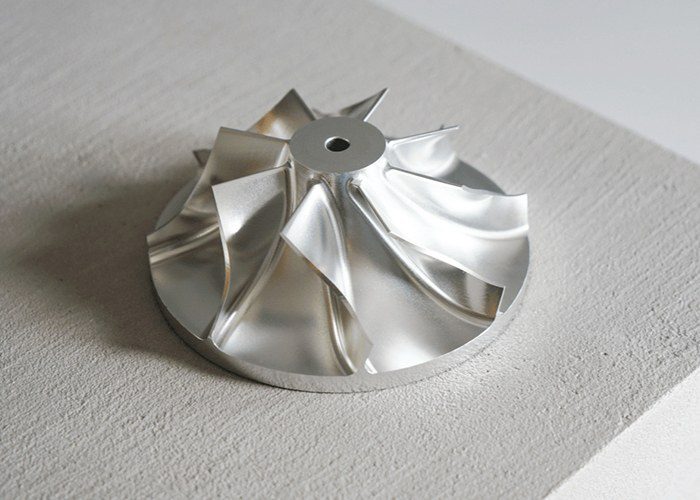
- CNC Milling: Using rotating multi-point cutting tools, CNC mills remove material from a stationary workpiece. Five-axis milling centers can approach a part from virtually any angle, producing complex contours such as turbine blades or prosthetic joints.
- CNC Turning: In turning, the workpiece rotates while a stationary cutting tool shapes it. This process is ideal for shafts, bushings, and flanges. Modern Swiss-type lathes combine turning with sliding headstock technology for long, slender parts like bone screws or injector nozzles.
- Grinding: For achieving mirror-like finishes or tolerances below 0.001 mm, grinding is indispensable. Surface grinders, cylindrical grinders, and centerless grinders use abrasive wheels to remove minute amounts of material. Hardened steel, ceramics, and carbides are often finished by grinding.
- Electrical Discharge Machining (EDM): EDM erodes material through controlled electrical sparks between an electrode and a workpiece, both submerged in dielectric fluid. This non-contact method can machine any conductive material, regardless of hardness, and produce sharp internal corners or tiny holes.
- Laser Micromachining: For parts measured in millimeters or less, laser systems ablate material with micron-scale precision. Applications include fuel injector orifices, stents, and microelectromechanical systems (MEMS) components.
Materials Commonly Used
Precision machining accommodates a broad spectrum of materials, each selected for specific mechanical properties. Aluminum alloys (e.g., 6061, 7075) offer excellent machinability and weight savings, common in aerospace and automotive parts. Stainless steels (303, 304, 17-4 PH) provide corrosion resistance and strength for medical instruments and food processing equipment. Titanium alloys combine high strength-to-weight ratio with biocompatibility, ideal for aircraft landing gear and orthopedic implants. Brass and bronze are favored for low-friction components such as gears and valve guides. Engineering plastics like PEEK and Delrin are machined for non-conductive, lightweight applications.
Quality Control and Metrology
No precision machining operation is complete without rigorous inspection. Modern metrology tools include coordinate measuring machines (CMMs), which probe hundreds of points on a part to verify dimensions against CAD models. Optical comparators project magnified silhouettes of parts, enabling quick measurement of profiles. Laser micrometers measure diameters and gaps without contact. Surface roughness testers quantify finish quality in Ra (average roughness) values.
Advanced shops use statistical process control (SPC) to track key dimensions across production runs, detecting drift before it leads to defects. In critical industries like aerospace or medical, 100% inspection may be required, often using automated vision systems integrated directly into machining cells.
Applications Across Industries
- Automotive: Precision parts include fuel injector bodies, transmission valves, turbocharger wheels, and brake system components. Electric vehicles create demand for motor shafts and battery cooling plates.
- Aerospace: Hydraulic fittings, landing gear components, engine turbine disks, and flight control actuators all require certification-level precision.
- Medical: Orthopedic screws, spinal cages, dental implants, surgical handpieces, and robotic surgical tool tips.
- Oil & Gas: Downhole drilling components, blowout preventer parts, and valve seats designed to withstand extreme pressures and corrosive fluids.
- Defense: Firearm triggers, sights, missile guidance housings, and night vision gimbal mechanisms.
Challenges and Future Trends
The pursuit of ever-higher precision faces several challenges. Thermal expansion—caused by machines and parts heating up during operation—can distort dimensions by several microns. Vibration from nearby equipment or unbalanced spindles introduces chatter marks. Tool wear gradually changes cutting geometry, requiring automated tool condition monitoring.
Looking ahead, the integration of Industry 4.0 technologies is reshaping precision machining. Smart sensors embedded in machine tools collect real-time data on temperature, vibration, and cutting forces. Artificial intelligence algorithms analyze this data to predict tool life or adjust feeds and speeds dynamically. Hybrid manufacturing, combining additive processes (3D printing) with precision subtractive finishing, allows near-net-shape printing of complex blanks followed by final machining to exact tolerances. Nano-precision machining, using single-point diamond turning and atomic force microscopy-based techniques, is pushing boundaries toward the sub-10-nanometer range, enabling quantum device components and advanced optics.
Conclusion
Precision-machined machinery parts are the unsung heroes of modern civilization. They enable the seamless operation of vehicles that transport us, machines that heal us, and technologies that connect us. The field continues to advance through smarter controls, better materials, and ever-tighter tolerances. For engineers and manufacturers, mastering precision machining is not merely a technical requirement—it is the foundation upon which reliability, safety, and innovation are built. As industry demands smaller, faster, and more efficient systems, the importance of precisely crafted components will only grow, driving further breakthroughs in how we shape the material world.