
In today’s fast-paced manufacturing landscape, precision is not just a requirement—it is a decisive competitive advantage. At the heart of countless industrial innovations lie precision CNC machined machinery parts. From the engines of commercial aircraft to the intricate mechanisms of surgical robots, these components enable reliability, performance, and repeatability on a scale previously unimaginable. Computer Numerical Control (CNC) machining has revolutionized how we produce metal and plastic parts, transforming digital designs into tangible, high-tolerance realities.
What Is Precision CNC Machining?
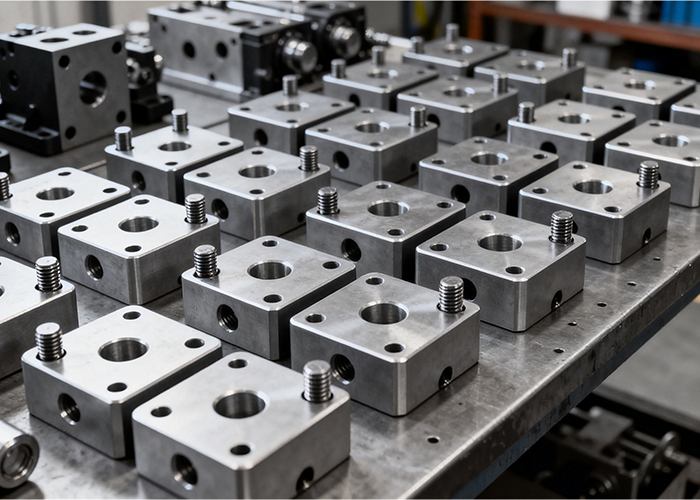
Precision CNC machining is a subtractive manufacturing process where pre-programmed software controls the movement of factory tools and machinery. Unlike conventional manual lathes or milling machines, CNC systems execute complex cuts with micron-level accuracy, often within tolerances of ±0.005 mm or tighter. The process begins with a 3D CAD model, which is converted into a set of machine-readable instructions (G-code). These instructions control spindle speeds, tool paths, coolant flow, and workpiece positioning. Multi-axis CNC machines—such as 5-axis milling centers and live-tooling lathes—can produce geometrically intricate parts in a single setup, eliminating cumulative errors and reducing production time.
Key Equipment and Techniques
Precision machinery parts are produced using various types of CNC machines. CNC milling machines use rotating multi-point cutters to remove material from a stationary workpiece, ideal for flat surfaces, slots, and complex 3D contours. CNC lathes rotate the workpiece against a stationary cutting tool, perfect for cylindrical components like shafts, bushings, and threaded connectors. For extreme surface finishes and ultra-tight dimensions, precision grinding and electrical discharge machining (EDM) are often used as secondary operations. High-resolution probing systems and laser scanners verify critical dimensions in real time, ensuring every part meets stringent quality standards.
Materials and Their Applications
Precision CNC machined parts are crafted from a wide spectrum of materials. Aerospace and defense sectors demand high-strength alloys such as Inconel, titanium Ti-6Al-4V, and 7075 aluminum, which offer excellent strength-to-weight ratios and corrosion resistance. Automotive applications frequently use stainless steel (304, 316) and brass for fuel system components, transmission gears, and braking parts. In the medical field, biocompatible materials like surgical-grade stainless steel, PEEK, and titanium are machined into bone screws, dental implants, and orthopedic instruments. Industrial machinery relies on hardened tool steels and cast iron for gears, bearings, and hydraulic manifold blocks. Even advanced engineering plastics such as Delrin, Nylon 6/6, and PTFE are precision-machined for electrical insulators, valve seats, and low-friction guides.
Industry Applications
The ubiquity of precision CNC machined machinery parts spans virtually every engineering domain. Aerospace relies on turbine blades, structural ribs, and landing gear components that must survive extreme thermal and mechanical stress. Automotive manufacturers use CNC-machined engine blocks, transmission housings, and high-performance camshafts. Medical technology demands miniature bone screws, orthopedic cutting guides, and robotic surgical end-effectors—each requiring absolute consistency. Electronics benefits from heat sinks, EMI shielding enclosures, and connector pins machined from copper alloys. The oil & gas and heavy machinery sectors utilize large-format CNC machines to manufacture valve bodies, pump impellers, and excavator pins from abrasion-resistant materials.
Unmatched Advantages
Why do engineers specify precision CNC machining over casting, forging, or additive manufacturing? First, accuracy and repeatability: once a CNC program is proven, thousands of identical parts can be produced with negligible variation. Second, complexity without compromise: undercuts, deep cavities, helical forms, and micro-threads are routinely machined on multi-axis centers. Third, excellent surface finishes: many precision parts require Ra 0.8 µm or better, reducing the need for secondary polishing or lapping. Fourth, material versatility: unlike some additive processes, CNC machining works with virtually any machinable solid material, including heat-treated alloys that would warp in casting. Fifth, rapid prototyping to mass production: small batches of custom parts are cost-effective thanks to quick setup changes, while automation (robotic part loaders) enables lights-out mass production.
Challenges and Emerging Trends
Despite its power, precision CNC machining faces challenges. Tool wear, chip management, and thermal expansion require constant monitoring. For extremely hard materials (e.g., tungsten carbide, Inconel 718), cutting speeds must be lowered, impacting throughput. However, industry 4.0 solutions are emerging. In-process adaptive control systems monitor spindle loads and automatically adjust feed rates to prevent tool breakage. High-pressure coolant and cryogenic cooling extend tool life in superalloys. Artificial intelligence algorithms predict tool wear and optimize cutting parameters for each job. Hybrid manufacturing (CNC + additive) now allows for near-net shape printing followed by precision finishing, reducing waste and machining time. Micro-CNC machining achieves features below 100 µm, enabling microfluidics and medical micro-devices. Furthermore, sustainability initiatives focus on dry machining, minimum quantity lubrication (MQL), and recycling metal chips back into the supply chain.
Conclusion
Precision CNC machined machinery parts are the silent heroes of modern civilization. Without them, high-bypass turbofan engines would not fly efficiently, surgical robots would lose their dexterity, and Formula 1 cars would never see lap records. With real-time sensing, machine learning, and multi-axis dexterity driving CNC technology forward, the boundaries of machinability continue to expand. For manufacturers, investing in advanced CNC capabilities is no longer optional—it is a strategic necessity to deliver parts that are lighter, stronger, and more precise than ever before. In a world where a single micron can separate success from failure, precision CNC machining remains the gold standard.


