
In today’s fast-paced industrial landscape, the demand for exactness, repeatability, and complexity has never been higher. From aerospace turbines to medical implants, the components that drive innovation must meet microscopic tolerances while withstanding extreme conditions. This is where custom precision CNC machined parts come into play. These parts are not merely off-the-shelf commodities; they are the product of advanced digital fabrication, tailored to fit unique design requirements with unrivaled accuracy. Understanding their value, production process, and applications reveals why they are the silent workhorses of modern engineering.
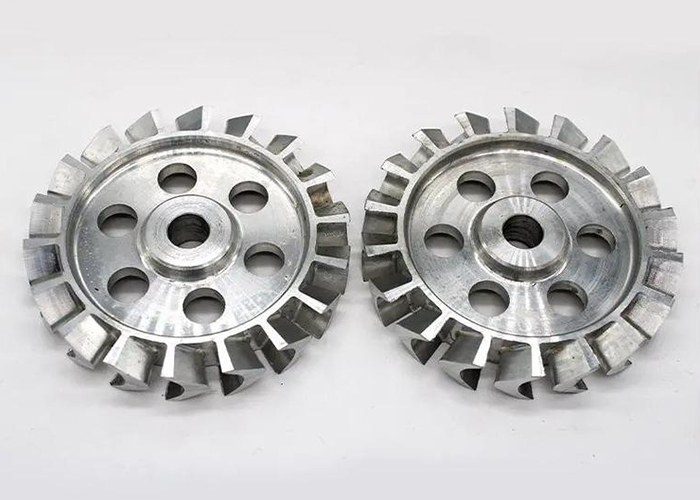
What Are Custom Precision CNC Machined Parts?
Unlike additive manufacturing, CNC machining is a subtractive process: it starts with a solid block and cuts away material to achieve the final shape. It begins with a solid block of material—metal, plastic, or composite—and uses computer-controlled cutting tools to remove material layer by layer, revealing the final shape. When these processes are applied to create parts that are not mass-produced but designed for a specific client or function, they become “custom” parts.
The term “precision” adds another critical layer. Precision machining refers to parts manufactured with tolerances often measured in microns (thousandths of a millimeter). For example, a custom shaft for a jet engine may require a diameter accuracy of ±0.005 mm. Without this level of precision, assemblies would fail, leading to vibration, energy loss, or catastrophic breakdowns.
Thus, custom precision CNC machined parts are unique components designed to exact specifications, produced using automated milling, turning, drilling, or grinding equipment, with tolerances that standard machining cannot achieve.
The Manufacturing Process: From CAD to Finished Part
Creating a custom precision part follows a rigorous digital workflow:
- Design (CAD): The process starts with a 3D model created in computer-aided design (CAD) software. The engineer defines every dimension, thread, hole, and surface finish.
- Programming (CAM): The CAD file is imported into computer-aided manufacturing (CAM) software, which generates toolpaths—the precise routes cutting tools must follow. The output is G-code, a language that CNC machines understand.
- Material Selection: Based on the part’s function—strength, corrosion resistance, weight, or conductivity—materials are chosen. Common options include aluminum 7075, stainless steel 316, titanium Grade 5, brass, PEEK, and acetal.
- Machining: Depending on geometry, the part may be produced on a 3-axis, 4-axis, or 5-axis CNC mill, or on a CNC lathe for cylindrical shapes. Multi-axis machines can create complex undercuts, angled holes, and contoured surfaces in a single setup, reducing error.
- Quality Control: Precision is not assumed; it is verified. Parts are inspected using coordinate measuring machines (CMM), laser micrometers, or optical comparators. Statistical process control (SPC) ensures every batch meets the tolerance specification.
- Finishing: Deburring, anodizing, passivation, powder coating, or heat treating may follow to enhance durability, appearance, or corrosion resistance.
Why Choose Custom Precision CNC Machining Over Other Methods?
Several advantages make this approach indispensable:
- Uncompromising Accuracy: Tolerances as tight as ±0.001 inch (0.0254 mm) or better are routine, enabling interference fits, smooth bearings, and leak-free fluid ports.
- Complex Geometries: Five-axis CNC machining can produce parts with freeform surfaces, deep cavities, and intricate channels that would be impossible or too costly with manual methods.
- Material Versatility: Unlike 3D printing, which is limited by polymer or sintered metal characteristics, CNC works with virtually any engineering-grade material, including hardened tool steel, Inconel, and ceramics.
- Scalability: Precision CNC is equally effective for one prototype or ten thousand production parts. Changeovers are quick because the same G-code runs repeatedly.
- Excellent Surface Finish: With proper tooling and speeds, machined surfaces can achieve Ra 0.4 µm or better, often eliminating secondary polishing.
Critical Applications Across Industries
Custom precision CNC machined parts are everywhere, often hidden from view but essential to performance.
- Aerospace: Turbine blades, landing gear components, fuel system fittings, and structural brackets. Here, failure is not an option, so every part must meet AS9100 or Nadcap standards.
- Medical: Surgical instruments, orthopedic knee and hip implants, dental screws, and spinal cages. Biocompatible materials like titanium and PEEK are machined to match patient-specific anatomy.
- Automotive: High-performance engine pistons, transmission gears, turbocharger housings, and fuel injection nozzles. Aftermarket tuners rely on custom CNC parts for racing.
- Robotics & Automation: The system incorporates precision joints, gripper fingers, end effectors, and housing plates. The repeatability of CNC parts ensures robotic arms position accurately cycle after cycle.
- Defense: Firearm receivers, sight mounts, drone propulsion components, and communication device housings. Mil-spec anodizing and tight tolerances are standard.
Quality Control: The Non-Negotiable Element
No article on precision parts is complete without emphasizing quality assurance. Reputable CNC shops use in-process probing—where the machine measures a feature immediately after cutting—to correct any tool wear or thermal drift. Final inspection reports (FAIRs) are often provided, listing each dimension with measured values. For high-risk industries, 100% inspection is mandated, using CMMs accurate to 0.5 micron.
Challenges and Future Trends
While custom precision CNC machining offers immense benefits, it is not without challenges. The initial setup cost—including programming, tooling, and fixturing—can be high for small quantities. Lead times are longer than simple off-the-shelf purchases. Moreover, achieving sub-micron precision requires expensive temperature-controlled environments and vibration-damping machine bases.
Looking forward, the field is evolving rapidly. Automation through robotic part loaders and pallet systems enables lights-out manufacturing (machining runs unattended overnight). AI-driven toolpath optimization reduces cycle times by 20–30%. Hybrid machines that combine additive manufacturing (3D printing) with subtractive CNC allow near-net shape printing followed by precision finishing. And digital twins—virtual replicas of the machining process—predict and prevent collisions or chatter before cutting begins.
Conclusion
Custom precision CNC machined parts are more than metal or plastic shapes; they are the embodiment of human ingenuity applied through computer-controlled perfection. Whether enabling a Mars rover to survive interplanetary dust or allowing a knee replacement to move smoothly for decades, these components prove that great things come from small, exact details. For engineers and product developers, partnering with a qualified CNC machining provider is not just a manufacturing decision—it is a commitment to quality, reliability, and performance. In a world that demands ever tighter tolerances and faster turnarounds, the role of custom precision CNC machining will only grow, remaining the gold standard for turning digital designs into physical reality.


