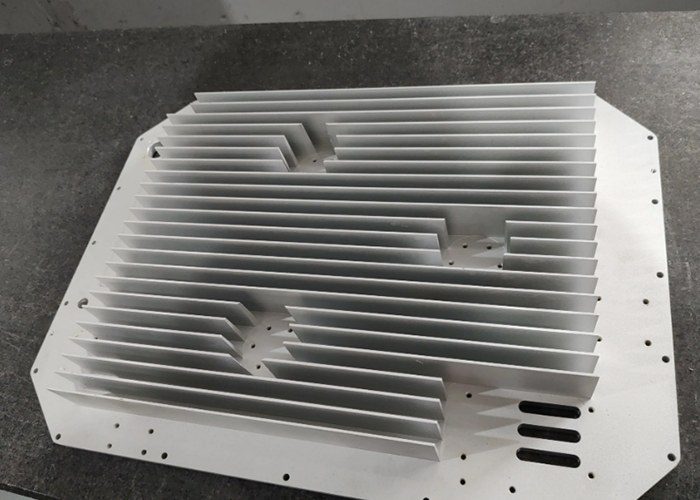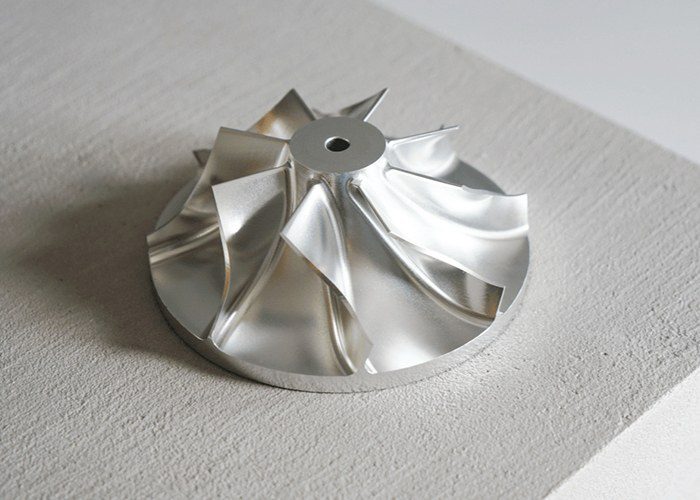
In today’s fast-paced manufacturing landscape, the demand for highly specific, application-driven components has never been greater. Off-the-shelf parts often fall short when faced with unique design requirements, tight tolerances, or unconventional geometries. This is where customization CNC machining parts steps in as a game-changer. By combining computer numerical control (CNC) technology with tailored design and production strategies, manufacturers can create components that fit perfectly into complex assemblies, perform reliably under extreme conditions, and reduce waste in both material and cost.
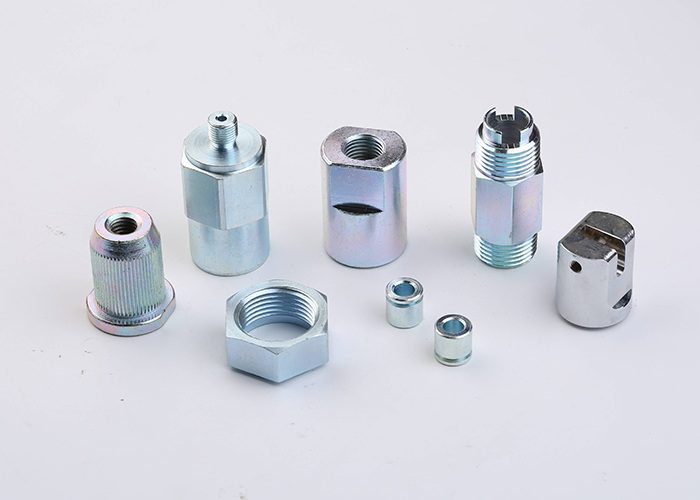
The Essence of Customization in CNC Machining
Customization in CNC machining goes beyond simply adjusting dimensions. It involves a holistic approach to part design, material selection, toolpath optimization, and surface finishing. Whether it’s a one-off prototype for aerospace testing or a small batch of medical implants, custom CNC machining allows engineers to produce parts with intricate features—such as internal cooling channels, lightweight honeycomb structures, or non-standard thread forms—that would be impossible or prohibitively expensive using conventional methods like casting or injection molding.
The process begins with a digital 3D model, typically created in CAD (Computer-Aided Design) software. The model is then converted into a set of machine-readable instructions (G-code) that guides the CNC mill, lathe, or router. Because the machine follows precise numerical coordinates, every part in a batch is identical to the digital master. This repeatability is crucial for industries where even micron-level deviations can lead to system failures.
Key Advantages of Custom CNC Machining Parts
1. Design Freedom and Complexity
Unlike mass-production processes that require expensive molds or dies, CNC machining is subtractive—material is removed from a solid block. This means complex undercuts, angled holes, curved surfaces, and sharp internal corners can all be realized without additional tooling. Designers can iterate rapidly: a CAD change can be implemented in hours rather than weeks.
2. Material Versatility
Custom CNC machining works with an extensive range of materials: aluminum alloys (6061, 7075), stainless steels (304, 316), tool steels, titanium, brass, copper, engineering plastics (PEEK, Delrin, Nylon), and even composites. Each material offers distinct properties—corrosion resistance, biocompatibility, thermal conductivity, or high strength-to-weight ratio—enabling the part to be optimized for its operating environment.
3. Tight Tolerances and Surface Quality
Modern 5‑axis CNC machines can hold tolerances as tight as ±0.005 mm (±0.0002 inches), with surface finishes down to Ra 0.4 µm or better via post‑processing like grinding or polishing. For critical applications—hydraulic valves, optical mounts, turbine blades—this precision ensures proper sealing, minimal friction, and predictable fatigue life.
4. Low- to Medium-Volume Cost Efficiency
Customization shines when production runs range from one to several thousand units. There are no upfront mold costs, and setup time is minimal. Even complex geometries require only fixturing and tool selection. This makes custom CNC machining the go‑to solution for R&D prototypes, legacy spare parts, and niche products that don’t warrant mass production.
Applications Across Industries
- Aerospace: Lightweight brackets, fuel system manifolds, and structural ribs made from titanium or aluminum, with every gram and stress path analyzed.
- Medical: Often machined from biocompatible titanium or PEEK, patient‑specific orthopedic implants, surgical guides, and dental abutments rely on these materials for their performance.
- Automotive: Custom intake manifolds, suspension components, and gearbox housings for race cars or low‑volume specialty vehicles.
- Robotics and Automation: End‑effectors, joint housings, and sensor mounts tailored to exact kinematic requirements.
- Energy: Components for oil‑field tools, wind turbine pitch systems, and hydrogen fuel cell plates requiring corrosion resistance and precise flow channels.
The Customization Workflow: From Idea to Finished Part
A successful custom CNC machining project follows a structured path:
- Design & Engineering – Create a CAD model, define tolerances, and select materials. Use DFM (Design for Manufacturing) principles to avoid impossible features (e.g., extremely deep narrow slots).
- CAM Programming – Convert CAD to toolpaths. Choose appropriate cutting tools (end mills, drills, taps) and optimize feed rates, spindle speeds, and coolant application.
- Setup & Machining – Clamp the workpiece onto the machine table. For multi‑axis jobs, this may involve custom jigs or vises. Run a dry simulation to check collisions.
- Inspection – Measure critical dimensions using CMM (coordinate measuring machine), optical comparators, or handheld micrometers. Generate a First Article Inspection (FAI) report.
- Post‑Processing – Deburring, heat treatment, anodizing, plating, or passivation as required.
- Final Quality Assurance – 100% inspection for high‑risk features, then packaging and shipping with traceability documentation.
Challenges and How to Overcome Them
Customization is not without hurdles. Programming complex geometries can be time‑consuming, and thin walls or unsupported features may deflect during cutting, causing dimensional errors. Material hardness can accelerate tool wear, raising costs. However, experienced CNC shops mitigate these risks through:
- Advanced CAM software with simulation and collision detection.
- Toolpath strategies like trochoidal milling or high‑speed machining to reduce radial loads.
- In‑process probing that measures the part while still on the machine, allowing real‑time compensation.
- Design collaboration between engineer and machinist to adjust feature shapes without compromising function.
The Future: AI‑Driven Customization and On‑Demand Manufacturing
Looking ahead, customization CNC machining parts will become even more accessible. Artificial intelligence algorithms can now suggest optimal toolpaths and cutting parameters based on material and geometry, reducing setup time by up to 50%. Cloud‑based CNC platforms allow designers to upload CAD files and receive instant quotes with DFM feedback. Combined with additive manufacturing (3D printing) for near‑net shapes and CNC for finishing, hybrid processes are pushing the boundaries of what can be made quickly and economically.
Conclusion
Customization CNC machining parts bridges the gap between imagination and physical reality. It empowers engineers, inventors, and repair technicians to create components that fit, function, and last exactly as intended. As industries continue to demand higher performance, lighter weight, and faster turnaround, the role of custom CNC machining will only grow. By embracing this technology—with its precision, material flexibility, and design freedom—manufacturers can turn unique challenges into reliable solutions, one precisely cut chip at a time. Whether you need a single prototype or a thousand production parts, custom CNC machining delivers the accuracy and agility that the modern world requires.