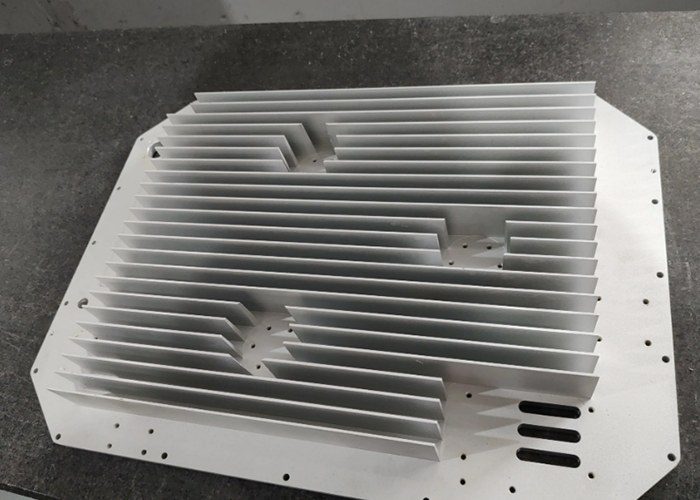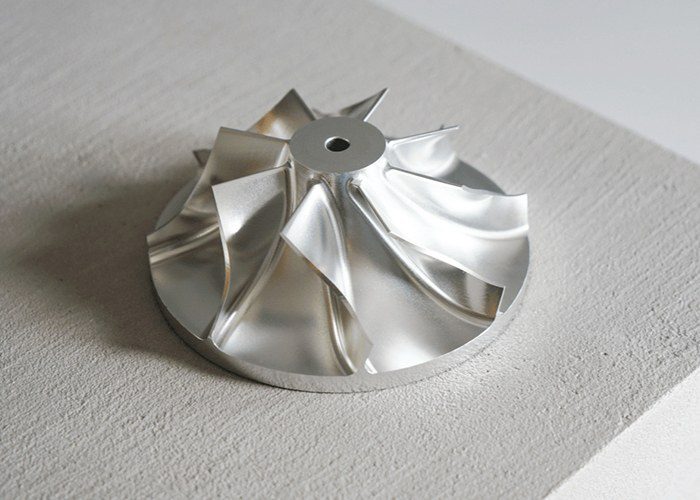
In the vast ecosystem of modern manufacturing, few processes embody the marriage of raw power and microscopic precision as elegantly as CNC turning. While additive manufacturing captures headlines and milling dominates complex 3D geometries, precision CNC turning remains the quiet backbone of cylindrical component production. From the fuel injector nozzles in aerospace engines to the bone screws used in orthopedic surgery, turned parts are everywhere — yet their creation demands a level of discipline, technology, and craft that is anything but ordinary.
The Fundamental Principle: Subtraction by Rotation
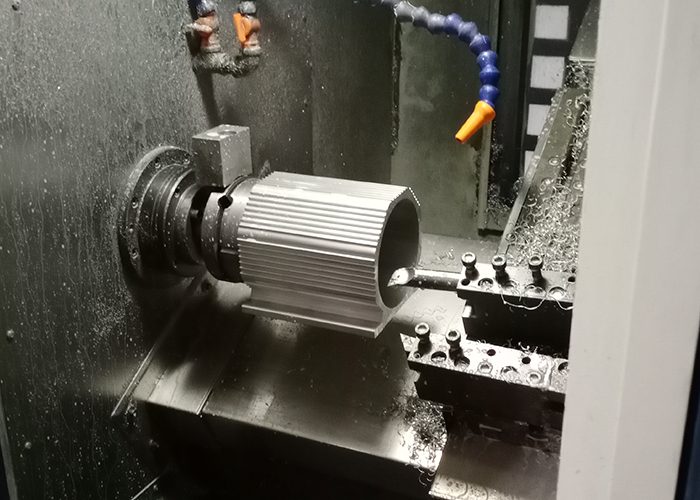
At its core, CNC turning is deceptively simple. A cylindrical workpiece is rotated at high speeds while a stationary cutting tool traverses along its length, removing material to achieve a desired diameter, contour, or feature. In precision machining, however, this simplicity gives way to extreme rigors. “Precision” in this context typically means tolerances measured in microns (millionths of a meter) or even sub-micron levels for ultra-high-end applications. A human hair is roughly 70 microns thick — precision turning routinely works at 10–20 microns total tolerance, and state-of-the-art Swiss-type lathes can hold tolerances below 5 microns.
The key enablers of such accuracy are the CNC (Computer Numerical Control) system, the machine’s mechanical rigidity, and the thermal stability of the entire setup. Modern CNC lathes use linear scales and glass scales for direct position feedback, eliminating the errors introduced by leadscrew backlash. Spindles are often hydrostatic or air-bearing designs for zero friction and minimal runout — the unwanted wobble that would otherwise ruin a precision surface.
Materials and Tooling: Where the Real Challenge Lies
Achieving high precision is not just about the machine; it is about the interaction between the cutting tool and the workpiece material. Hardened steels (above 45 HRC), titanium alloys, Inconel, and ceramics are common in precision turning. Each behaves differently under shear forces. For example, turning Inconel 718 — a nickel-based superalloy used in jet engines — generates intense heat and work-hardens almost instantly. A poorly chosen insert geometry can lead to built-up edge, which scars the surface and destroys dimensional accuracy within seconds.
Advanced tooling solutions, such as CBN (cubic boron nitride) inserts for hardened steel or PCD (polycrystalline diamond) for aluminum and copper alloys, allow turning speeds up to 5000 SFM (surface feet per minute) while maintaining surface finishes under 0.4 µm Ra. Chip control also becomes critical: long, stringy chips can wrap around the workpiece and cause tool deflection, throwing off tolerances. Precision turning often employs high-pressure coolant (up to 1000 psi) directed precisely at the cutting zone to break chips, lubricate, and dissipate heat simultaneously.
The Role of Programming and Metrology
No discussion of precision CNC turning is complete without acknowledging the intelligence behind the toolpath. G-code programming for tight tolerances goes beyond simple linear and circular interpolation. Tool nose radius compensation is mandatory: the nose of a turning insert is not a perfect point but a small radius (often 0.2 mm or less). The control must calculate the exact contact point to avoid undercutting or leaving a “witness mark.” For complex profiles — such as a ball valve seat with a multi-radial blend — programmers use constant engagement angle strategies to maintain consistent chip load, preventing vibration and chatter.
But programming alone cannot guarantee precision; metrology closes the loop. In-process probing is standard on high-end turning centers. A touch probe measures the diameter of a critical feature mid-cycle, then automatically adjusts the next tool offset to compensate for tool wear or thermal growth. Post-process inspection often involves air gauging, laser micrometers, or coordinate measuring machines (CMMs) with sub-micron resolution. For turned parts with features like threads, hexes, or cross-holes, a live-tooling CNC lathe with a Y-axis can complete the part in one setup, eliminating alignment errors from multiple fixturings.
Applications Across High-Stakes Industries
Precision CNC turning is indispensable where failure is not an option. In aerospace, hydraulic actuator bodies require perfectly smooth, round bores to withstand 3000 psi without leakage. The servo valve spools, often made of stainless steel, must have cylindrical diameters within 2 microns — otherwise, fluid bypass causes loss of control. Medical applications include spinal implants: a titanium pedicle screw turned to a 0.01 mm taper accuracy ensures proper bone purchase without stripping. Automotive racing uses turned fuel injector needles with micron-metered orifices; even a 5-micron diameter deviation alters the air-fuel ratio and costs horsepower.
Challenges and Future Directions
As tolerances tighten, the challenges multiply. Thermal expansion is a constant enemy: a 300 mm long steel shaft grows roughly 3.5 microns for every degree Celsius rise in temperature. Precision shops maintain 20°C ±1°C ambient temperatures and may even use oil-cooled spindles and ball screws. Vibration (chatter) presents another limiting factor, but active damping systems—such as those employing piezoelectric actuators—are emerging to cancel vibrations in real time.
Looking ahead, the integration of artificial intelligence and digital twins will further revolutionize precision turning. Machine learning algorithms can analyze vibration, spindle load, and acoustic emission to predict tool wear and recommend optimal feed rates. Hybrid machining, which combines turning with additive deposition, allows repair of high-value components rather than remanufacturing. And as quantum sensing matures, in-process dimensional measurement at the atomic scale may become a reality.
Conclusion
Precision machining CNC turning is far more than just a “subtractive process”—rather, it is a disciplined interplay of kinematics, materials science, thermal management, and computational control. It demands not only capital-intensive machinery but also the skilled eye of the machinist who hears a faint change in cutting sound and knows that tool wear has begun. In a world increasingly focused on digital fabrication, precision turning reminds us that physical accuracy — clean, round, and true — remains the foundation upon which every rotating assembly, every fluid system, and every high-reliability device depends. Without it, modern industry would simply not turn.