
In the ever-evolving landscape of modern manufacturing, few processes have proven as transformative as Computer Numerical Control (CNC) milling. When paired with the philosophy of precision machining, CNC milling becomes not just a production method, but a cornerstone of innovation across industries such as aerospace, medical devices, automotive engineering, and electronics. Precision machining CNC milling represents the art and science of removing material from a solid block—often metal or plastic—with microscopic accuracy, guided by digital instructions. It is a discipline where tolerances of a few microns can separate success from catastrophic failure.
Understanding the Core Mechanics
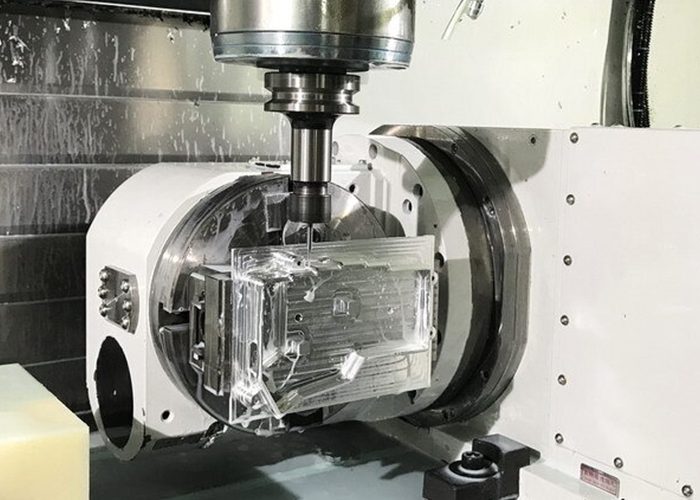
At its heart, CNC milling involves rotating multi-point cutting tools that move along multiple axes to carve a workpiece into a desired shape. While traditional manual milling relies on the steady hand and judgment of a machinist, CNC milling shifts that control to a computer. An engineer creates a 3D model using CAD (Computer-Aided Design) software, which is then translated into G-code—a language of coordinates and commands that tells the machine exactly how to move, at what speed, and at what depth.
Modern CNC mills operate on three to five axes. Three-axis machines move the cutting tool along X, Y, and Z planes, suitable for simpler geometries. Five-axis machines, however, can rotate the tool or the workpiece itself, allowing complex undercuts, contoured surfaces, and single-setup production of intricate parts. This multi-axis capability is what elevates CNC milling from mere cutting to true precision machining.
The Meaning of “Precision” in This Context
Precision is not merely a marketing adjective; it is a measurable parameter. In CNC milling, precision refers to the machine’s ability to repeatedly achieve the same dimensional outcome within a specified tolerance. Standard CNC machining achieves tolerances of ±0.005 inches, but high-precision CNC milling routinely attains ±0.0001 inches (about 2.5 microns). To give you some perspective, a human hair measures roughly 75 microns in thickness. Achieving such tolerances requires not only a rigid, vibration-damped machine frame but also temperature-controlled environments, calibrated tooling, and advanced feedback systems that compensate for thermal expansion or tool wear.
Without precision, industries that depend on interchangeable parts would collapse. A single turbine blade in a jet engine, for example, must meet exact specifications to avoid imbalance at 30,000 RPM. A bone screw for spinal surgery must have threads that match its counterpart to the micron; otherwise, the implant may loosen or fail. Precision machining CNC milling makes these components possible.
Key Advantages Over Conventional Methods
The shift to CNC milling from manual or conventional automated processes has yielded several distinct advantages.
Repeatability is perhaps the most valuable. Once a CNC program is verified, the machine can produce thousands of identical parts with virtually no variation. In mass production, this consistency reduces waste and eliminates the need for manual rework.
Complexity without cost penalty is another hallmark. In manual machining, producing a part with curved surfaces, internal cavities, or variable wall thicknesses requires extensive setup time and specialized tooling. With CNC milling, complexity becomes nothing more than a matter of programming. A 3D contour that would take a skilled manual machinist days to produce can be milled in hours.
Material versatility also stands out. Precision CNC mills handle everything from aluminum and brass to hardened steel, titanium, Inconel (a superalloy), and engineering plastics like PEEK and Delrin. Each material demands specific cutting speeds, feed rates, and coolant strategies—all of which are automated in a well-prepared CNC workflow.
The Role of Tooling and Workholding
Precision is impossible without proper tooling. End mills, ball nose cutters, face mills, and drills must be selected based on the material and geometry. Carbide tools with specialized coatings (TiAlN, AlTiN, or diamond-like carbon) reduce friction and withstand high temperatures. Tool runout—the deviation of the tool’s rotation from its axis—must be minimized, as even 0.0002 inches of runout can ruin a precision feature.
Equally critical is workholding: the method of securing the workpiece. Vises, clamps, vacuum chucks, and custom fixtures must hold the part rigidly without deforming it. For thin-walled or delicate components, machinists use soft jaws or adhesive mounting to distribute clamping forces evenly.
Quality Assurance and Metrology
No precision machining process is complete without rigorous inspection. CNC milling cells often incorporate in-process probing—where the machine touches a sensitive probe to the part to verify dimensions while still on the bed. This closed-loop feedback allows automatic offset corrections. Post-production, parts move to coordinate measuring machines (CMMs), optical comparators, or laser scanners. Statistical process control (SPC) charts track each batch, ensuring that the process remains within control limits.
Applications Across Industries
The versatility of precision CNC milling is evident in its diverse applications. In aerospace, it produces structural ribs, wing spars, and fuel system components from solid billets of aluminum or titanium. In medical manufacturing, it creates surgical guides, hip joint shells, and cranial plates—often from biocompatible materials like stainless steel 316L or titanium grade 5. The electronics industry relies on CNC milling for heat sinks, enclosures, and connectors. Even in prototyping, precision milling delivers functional metal parts that can be tested under real-world loads, bridging the gap between design and production.
Challenges and Future Directions
Despite its capabilities, precision CNC milling faces ongoing challenges. Tool wear remains inevitable, especially with hard materials; advanced monitoring systems using vibration sensors or spindle load analysis now predict tool life and suggest replacement before a part goes out of spec. Thermal management is another hurdle—machines warm up during operation, causing slight expansions. Some high-end mills now include coolant-chilled beds and real-time thermal compensation algorithms.
Looking ahead, the integration of CNC milling with Industry 4.0 concepts will further enhance precision. Digital twins—virtual replicas of the machine and workpiece—allow simulation of the entire milling process before any metal is cut. Artificial intelligence can optimize feed rates dynamically based on sensor feedback. Hybrid machines combining additive manufacturing (3D printing) with subtractive CNC milling promise near-net-shape parts with final precision machining completing the critical surfaces.
Conclusion
Precision machining CNC milling is not merely a manufacturing process; it is an enabler of modern civilization. From the implants that heal our bodies to the engines that connect our world, CNC-milled components operate silently in the background, holding tolerances that would have been unimaginable a generation ago. As software, sensors, and materials science continue to advance, CNC milling will only become more accurate, more automated, and more indispensable. For engineers, machinists, and designers, mastering this technology remains one of the most valuable skills in the industrial world—because in the end, precision is not just about measurement. It is about trust, reliability, and the relentless pursuit of perfection.


