
In the landscape of modern manufacturing, few material-process combinations have proven as transformative as precision machining of aluminum parts. From the airframes that carry passengers across continents to the electric vehicles reshaping urban mobility, precision-machined aluminum components are the unseen backbone of contemporary engineering. Yet beneath this ubiquity lies a sophisticated discipline that demands an intricate understanding of material science, cutting dynamics, and process control.
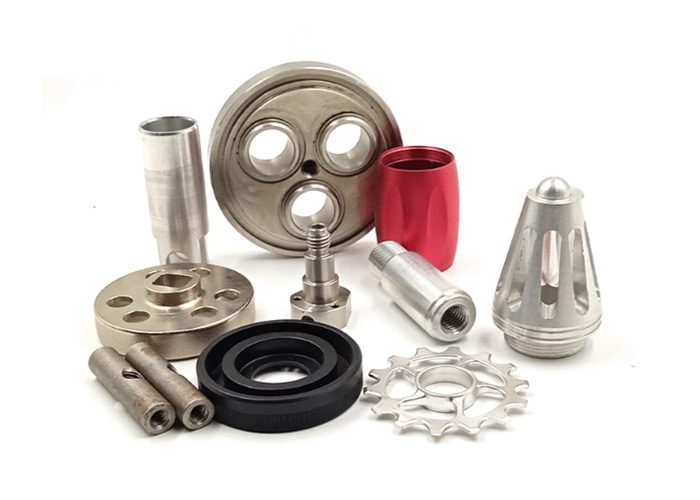
The Aluminum Advantage
Aluminum’s dominance in precision machining is no accident. With a density of approximately 2.7 g/cm³—roughly one-third that of steel—aluminum offers an exceptional strength-to-weight ratio that makes it indispensable for weight-sensitive applications. Certain alloys, such as 7075, approach the strength of steel while maintaining the lightweight characteristics that engineers covet. This combination is particularly vital in aerospace and automotive sectors, where every kilogram saved translates directly into improved fuel efficiency, extended range, or enhanced performance.
Beyond its physical properties, aluminum exhibits excellent machinability. It cuts easily, chips readily, and requires less power to machine than steel, enabling faster production cycles and reduced tooling costs. The material’s natural corrosion resistance further reduces the need for additional protective coatings in many environments. Its thermal conductivity—approximately 205 W/m·K—makes it ideal for heat-dissipating components such as electronic enclosures and heat sinks.
The most commonly machined aluminum alloys, 6061 and 7075, represent two ends of the performance spectrum. 6061, a magnesium-silicon alloy, offers balanced toughness, excellent corrosion resistance, and superior weldability. It produces spiral chips with excellent breakability, exhibits low tool wear, and consistently delivers surface finishes down to Ra 0.8 μm. 7075, a zinc-copper alloy, delivers significantly higher strength—with tensile strength reaching approximately 570 MPa compared to 6061’s 310 MPa—but demands greater care during machining due to its sensitivity to stress corrosion and higher tool wear rates.
The Precision Paradox
Despite aluminum’s reputation as an easy-to-machine material, precision machining presents a paradox: aluminum is easy to cut but difficult to control. Once accuracy requirements reach the micron level and part geometries become complex or thin-walled, a host of challenges emerge that separate capable manufacturers from exceptional ones.
Deformation control stands as the foremost challenge. Aluminum’s relative softness, while advantageous for cutting efficiency, makes it susceptible to dimensional instability. Thin-walled structures can deform under clamping force, internal stress release during machining can cause warping, and multiple setups increase cumulative errors. As one industry expert observed, “aluminum is not difficult to machine—it is difficult to control deformation”.
Thermal management presents another critical consideration. Although aluminum conducts heat efficiently, this property creates its own difficulties. Cutting heat spreads quickly through the workpiece, causing subtle dimensional drift that can compromise precision. Long machining cycles may lead to overall thermal expansion, affecting reference stability in high-precision parts. Temperature control, therefore, becomes a key source of machining accuracy deviation.
Tool-related issues further complicate the process. Because aluminum is relatively soft, problems such as tool sticking, built-up edge formation, and surface quality reduction frequently occur during cutting. Dull tools can create built-up edges that mar surface finishes, while improper cutting parameters may generate burrs or visible machining marks. For 7075 alloys, hard particles can cause tool wear 30–50% faster than when machining 6061.
Surface quality represents one of the most persistent difficulties in aluminum precision machining. Achieving dimensional accuracy and surface finish requires careful optimization of cutting speed, feed rate, depth of cut, and tool selection. As research has shown, these parameters directly affect average surface roughness and material removal rate, making their optimization essential for consistent quality.
Strategies for Excellence
Overcoming these challenges requires a systematic approach grounded in technical rigor. Tool selection is paramount. Sharp cutting tools specifically designed for aluminum alloy machining, often with diamond coatings or carbide substrates, help minimize built-up edge formation and maintain surface quality. Cutting speeds and feed rates must be carefully controlled to avoid excessive cutting forces while maintaining productivity.
Fixture design directly determines final machining accuracy. Excessive clamping force may cause local deformation and surface marks, while insufficient support can lead to vibration and dimensional errors. To prevent deformation, thin-walled workpieces are usually secured using vacuum chucks or soft jaws to reduce clamping-induced stress. As manufacturers have learned, fixture quality often defines the upper limit of machining precision.
Process optimization provides the foundation for stable production. Layered cutting reduces stress release per pass, optimized toolpaths reduce redundant cutting, and high-speed machining reduces material deformation. Strict machining sequences—rough milling to remove bulk material, precision semi-finishing for critical datums, and final finishing passes with high-speed spindles—ensure tight tolerances and superior surface finishes.
Cooling strategies play an essential role in thermal management. High-pressure flood coolant is often mandatory for 7075 alloys, which are particularly sensitive to machining heat. Above 250°C, 7075’s strength drops by more than 40%, leading to built-up edge formation. Effective cooling reduces machining temperature, prevents excessive heat accumulation, and improves precision machining stability.
Applications Across Industries
The versatility of precision-machined aluminum parts is reflected in their widespread adoption across critical industries.
In aerospace, aluminum components such as spars, frames, control surfaces, and structural parts benefit from mass reduction while maintaining strength, directly improving performance and fuel efficiency. The industry demands tolerances as tight as ±0.005 mm, requiring multi-axis CNC centers and advanced process control. Multi-axis CNC milling is particularly valued for manufacturing components with complex surfaces.
The automotive sector relies on precision-machined aluminum for engine and transmission components, chassis parts, and structural elements that reduce vehicle weight and improve efficiency. The shift toward electric vehicles has intensified this demand, with components such as electric motor housings requiring diameter tolerances in the IT6 to IT7 range and circularity of 20 to 30 μm or less.
In electronics, aluminum’s thermal conductivity makes it ideal for enclosures, heat sinks, and structural components requiring thermal management. Medical devices benefit from aluminum’s lightweight, corrosion-resistant, and non-magnetic properties for instrument housings and surgical components.
The Future of Precision Aluminum Machining
The global market for aluminum CNC machining services continues to expand rapidly, with projections indicating growth from US$3,569 million in 2024 to US$5,810 million by 2031—a compound annual growth rate of 7.2%. This growth is driven by electric vehicle adoption, aerospace advancements, and the proliferation of consumer electronics.
Technological innovation is reshaping the field. The evolution from traditional 3-axis to advanced 5-axis CNC machining has revolutionized aluminum parts production, enabling simultaneous multi-directional machining, reduced cycle times, and the creation of complex geometries with minimal setup. Ultra-precise positioning systems now achieve micron-level accuracy, while real-time process monitoring and adaptive control ensure consistent quality.
New aluminum alloys continue to emerge, including aluminum-lithium compositions that present both opportunities and challenges. Long-chipping aluminum alloys whose machining characteristics must first be mastered represent ongoing areas of development. As manufacturers push the boundaries of what is possible, precision machining of aluminum parts remains a field where material knowledge, process expertise, and technological capability converge to produce components that enable the technologies of tomorrow.


