
In the landscape of contemporary manufacturing, few processes are as foundational—or as transformative—as CNC machining of precision steel parts. Computer Numerical Control (CNC) technology has redefined what is possible in metalworking, turning raw steel stock into components with tolerances measured in microns and geometries that were once unimaginable. As industries from aerospace to medical devices demand ever-greater performance, strength, and reliability, CNC-machined steel parts have become the indispensable backbone of modern engineering.
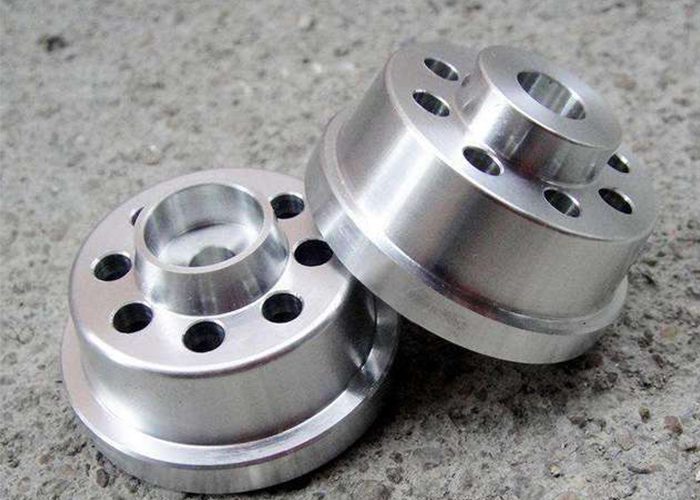
The Precision Paradigm
At the heart of CNC machining lies an extraordinary capability: the consistent production of parts with breathtaking accuracy. Modern CNC machining centers routinely achieve tolerances of ±0.01 mm, with high-precision applications reaching ±0.005 mm and aerospace-grade components holding tolerances as tight as ±0.002–0.003 mm. This level of precision is not merely a technical achievement—it is a functional necessity. In sectors where a fraction of a millimeter can mean the difference between a component that performs flawlessly and one that fails catastrophically, CNC machining delivers the repeatability and reliability that manual processes simply cannot match.
The journey from CAD model to finished steel part is a symphony of digital precision. Engineers translate three-dimensional designs into G-code—the digital instructions that guide every movement of the cutting tool. Multi-axis machines, particularly five-axis CNC centers, have revolutionized this process by enabling complex geometries to be machined in a single setup. This eliminates the cumulative errors that arise from multiple fixturing operations, ensuring superior geometric accuracy and surface quality.
Key Machining Processes
CNC machining of steel encompasses a diverse array of processes, each suited to specific geometries and requirements. CNC milling uses multi-axis rotating cutters to shape complex steel parts by removing material layer by layer, achieving accuracy of ±0.02–0.05 mm with surface finishes of Ra 1.6–3.2 μm. Applications range from engine brackets and gear housings to hydraulic blocks and molds.
CNC turning, the foundation of steel machining, rotates the workpiece on a lathe while a stationary cutting tool removes material to form precise cylindrical shapes. With accuracy reaching ±0.01–0.03 mm and surface roughness as fine as Ra 0.8 μm, turning is essential for shafts, pins, bushings, and threaded components. Drilling, tapping, boring, and grinding further expand the capabilities of CNC steel machining, enabling everything from precision alignment pins to bearing seats with roundness tolerances of ≤0.01 mm.
The Material Advantage
Steel is not a single material but a vast family of alloys, each offering distinct properties that influence machinability and performance. Carbon steels such as 1018 and 1045 provide cost-effective strength for structural parts and general components. Alloy steels like 4140 and 4340, alloyed with chromium, molybdenum, and nickel, deliver exceptional toughness and fatigue resistance for high-stress applications. Stainless steels—including 304, 316, and 17-4PH—offer superior corrosion resistance for medical, marine, and food processing environments. With superior hardness and wear resistance, tool steels—D2, A2, and H13 among them—are indispensable for dies, molds, and cutting tools.
Each steel grade presents unique machining challenges. Harder alloys accelerate tool wear; tougher materials generate significant heat during cutting. Modern CNC strategies address these challenges through specialized carbide tooling, advanced coatings, optimized cutting parameters, and intelligent coolant application.
Industries Transformed
The applications of CNC-machined precision steel parts span virtually every sector of the global economy. In aerospace, CNC machining produces critical structural components, brackets, and housings that must withstand extreme conditions while maintaining minimal weight. The automotive industry relies on CNC-machined steel for engine components, transmission parts, suspension systems, and braking components—parts that demand both strength and dimensional accuracy.
Medical device manufacturing depends on stainless steel components machined to exacting tolerances for surgical instruments, implants, and diagnostic equipment. In heavy industry, construction, and mining, CNC-machined steel parts form the core of machinery that must endure relentless heavy-duty operations. The energy sector, electronics, and industrial equipment manufacturing all depend on precision steel components to power their operations.
The Future of Precision Steel Machining
The trajectory of CNC machining precision steel parts points toward ever-greater capability and efficiency. The global precision machining market continues to expand, driven by increasing demand across aerospace, automotive, and healthcare sectors. Five-axis machining is becoming the standard for complex steel components, offering superior surface finish, extended tool life, and reduced setup times. AI-guided CNC machines are achieving micron-level accuracy with unprecedented speed, while automation and intelligent control systems are enhancing both productivity and quality.
As manufacturing demands grow more sophisticated, CNC machining of precision steel parts will remain at the forefront—transforming raw material into the components that drive innovation, power industry, and improve lives around the world.


