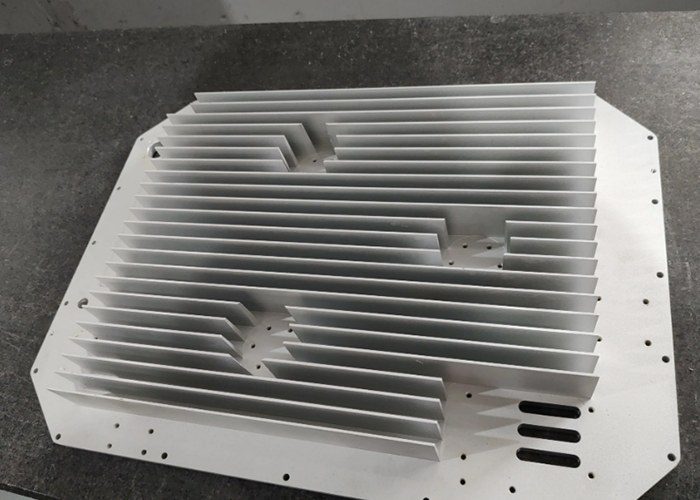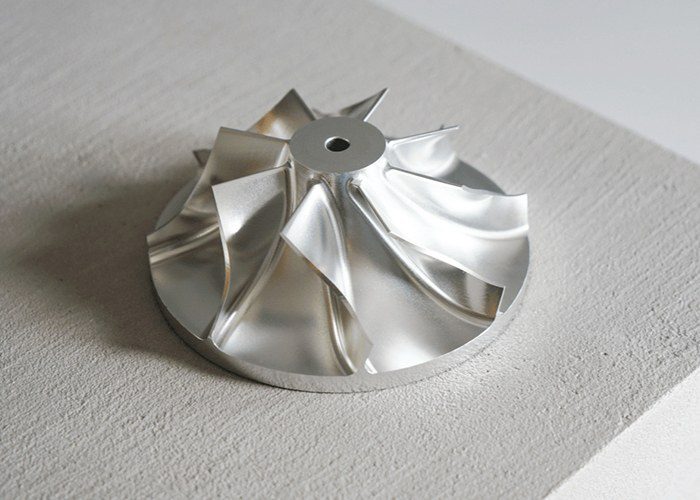
In the modern industrial landscape, precision is not merely a desirable attribute—it is the foundation upon which entire systems of technology are built. Mechanical machining precision parts represent the intersection of human ingenuity, advanced computational control, and material science, serving as the critical components that enable high-performance systems across aerospace, automotive, medical devices, robotics, and electronics. These meticulously crafted components, often measured in micrometers or even sub-micrometer ranges, are the unsung heroes that allow complex assemblies to function within extraordinarily narrow design tolerances.
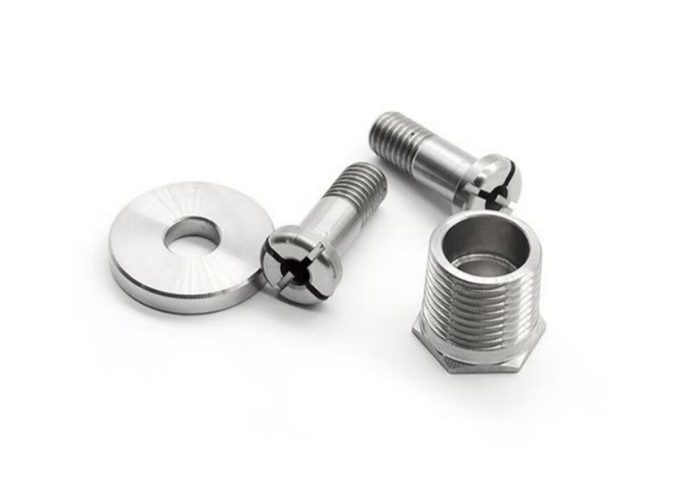
The Evolution of Precision Machining
The manufacturing of precision mechanical parts has undergone a profound transformation over the past decades. While traditional machining techniques such as turning, milling, and drilling have been refined over generations to achieve remarkable accuracy, modern manufacturing increasingly relies on Computer Numerical Control (CNC) machining. CNC technology allows for the precise programming of cutting tool movements, enabling the production of complex geometries with consistent and repeatable accuracy. Capable of maintaining micron-level precision (±1µm), today’s advanced CNC systems enable rapid part-to-part transitions with minimal interruption, effectively bridging the gap between high-volume manufacturing and small-batch prototyping.
Beyond conventional CNC machining, the precision parts ecosystem has been enriched by technologies such as electrical discharge machining (EDM), which proves particularly valuable when working with hard and brittle materials that resist conventional cutting methods. Laser processing, photochemical etching, and advanced grinding techniques further expand the manufacturing toolkit, each offering unique advantages for specific applications and material types.
The Critical Role of Tolerances and Quality Control
At the heart of precision machining lies the concept of tolerance—the permissible deviation from a specified dimension. In CNC environments, tolerance encompasses dimensional limits, geometric controls, and surface finish requirements that collectively ensure parts integrate seamlessly into assemblies. Dimensional tolerances define the allowable variation in length, diameter, or depth, determining whether components seat correctly within housings or maintain controlled clearances in precision assemblies. Geometric tolerances regulate form, orientation, and positional relationships between features, ensuring that holes remain concentric, surfaces stay flat, and axes align precisely. Surface quality directly influences friction, wear, and sealing integrity, making roughness parameters critical to application requirements.
Maintaining such stringent tolerances necessitates continuous quality control and corrective actions throughout all stages of machining. Quality control begins at the programming stage, where simulation tools verify that cuts will meet tolerances before actual production begins. On the shop floor, sophisticated metrology solutions—including coordinate measuring machines (CMMs), laser interferometry, and in-line optical inspection—are deployed to ensure dimensional accuracy and process control. Smart factories are increasingly integrating closed-loop feedback between machining and inspection systems, autonomously correcting deviations in real time to reduce rework and scrap rates.
Materials Innovation and Application Diversity
The selection of materials for precision mechanical parts has expanded significantly in recent years. While metals such as steel, titanium, and aluminum remain staples due to their strength and durability, advanced materials are making their mark. Carbon fiber-reinforced polymers are gaining popularity in applications where high strength-to-weight ratios are crucial, particularly in aerospace where weight reduction directly translates to fuel efficiency and greater payload capacity. Advanced ceramic materials, with their excellent thermal stability, chemical resistance, and hardness, are finding applications in high-temperature bearings and cutting tools. Materials innovation ranging from Inconel and titanium to ceramics and advanced polymers is driving differentiation, with these high-performance materials matched to tailored cutting tools, toolpath strategies, and cooling methods to ensure machinability while preserving microstructure integrity.
The applications of precision machined parts span virtually every advanced industry. In aerospace, components such as turbine blades, fuel injectors, rotors, and landing gear parts require aerospace-grade tolerances and full traceability. The medical field relies on precision parts for surgical instruments, implants, and diagnostic imaging equipment like MRI machines and CT scanners. The automotive industry’s shift toward electric vehicles is driving new demand for precision-machined powertrain components, batteries, and lightweight frames. In robotics, precision parts are essential for the dexterity and accuracy of robotic arms.
Market Growth and Future Trajectories
The global precision machining market reflects the indispensable nature of these components. Valued at approximately USD 123.54 billion in 2025, the market is projected to reach USD 228.75 billion by 2033, growing at a compound annual growth rate of 8.1%. This growth is driven by increasing demand for high-precision components across advanced industries, accelerated adoption of CNC automation, and the integration of smart manufacturing technologies. Increasingly embedded within precision machining, AI and machine learning are dynamically optimizing tool paths, preemptively flagging machine wear, and driving down material waste.
Looking ahead, the convergence of additive and subtractive manufacturing—often termed hybrid manufacturing—represents one of the most significant evolutions in advanced manufacturing. By synergizing additive manufacturing’s shape-forming capabilities with subtractive manufacturing’s precision machining, hybrid systems enable significant improvements in both surface quality and dimensional accuracy. This integration, combined with ongoing advancements in materials science, automation, and digital quality control, ensures that mechanical machining precision parts will continue to push the boundaries of what modern engineering can achieve.
In an era where failure of even a single component can lead to catastrophic outcomes, precision machining is not merely a technical discipline—it is the bedrock of safety, efficiency, and innovation across the global industrial landscape.