
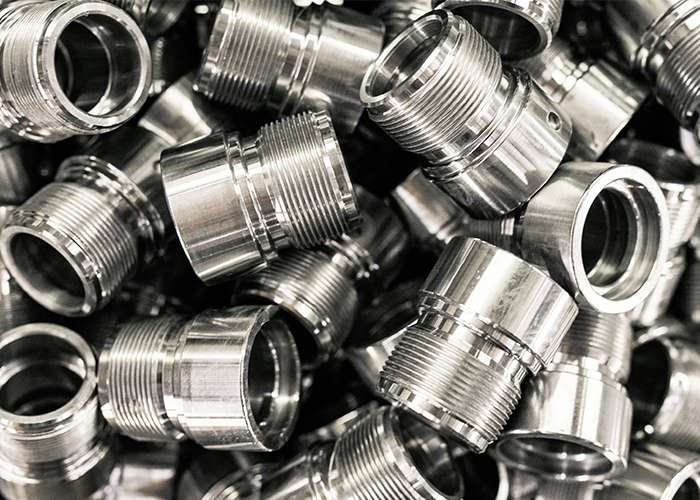
In the vast ecosystem of modern manufacturing, where entire assembly lines hum with the creation of complex products, it is often the smallest components that carry the greatest responsibility. Among these critical elements are precision CNC turning parts. While they may appear as simple pins, shafts, bushings, or connectors to the untrained eye, these components are the result of a highly sophisticated subtractive manufacturing process that demands micron-level accuracy, advanced material knowledge, and rigorous quality control.
The Art and Science of CNC Turning
At its core, CNC (Computer Numerical Control) turning is a machining process where a cutting tool moves linearly while the workpiece rotates rapidly on a spindle. Unlike milling, where the tool rotates and the workpiece remains stationary, turning is ideal for creating cylindrical, conical, or contoured parts. The “precision” aspect elevates this process from basic machining to a high-stakes engineering discipline.
Modern CNC lathes, equipped with live tooling, Y-axis capabilities, and sub-spindles, can produce parts with tolerances as tight as ±0.0002 inches (±5 microns). For perspective, a human hair is about 70 microns thick. Achieving such precision requires not only a rigid, vibration-damped machine but also a deep understanding of cutting parameters: feed rate, spindle speed, depth of cut, and tool geometry. Even a slight thermal expansion of the cutting tool or a microscopic change in material hardness can push a part out of specification.
Why Precision Matters: The Domino Effect of Failure
The demand for precision in CNC turning is not academic; it is existential for many industries. Consider the aerospace sector. A fuel injection nozzle in a jet engine, machined from Inconel or titanium, must have an internal bore diameter accurate to within a few microns. If that hole is too large, the fuel-air mixture becomes lean, potentially causing engine surge. If too small, the mixture is rich, leading to incomplete combustion and carbon buildup. The result in either case is reduced efficiency, increased emissions, and eventual catastrophic failure.
Similarly, in medical devices, precision turned parts are used in surgical robotics, bone screws, and implantable devices. A bone screw with slightly off-spec threads could fail to provide adequate fixation, leading to non-union of a fracture. For implantable pacemaker components, surface finish is as critical as dimensional accuracy: any burr or rough edge could cause tissue irritation or blood clotting. Thus, precision CNC turning directly impacts human safety and well-being.
Materials: The Foundation of Performance
A professional precision turning shop is distinguished by its ability to handle a wide range of materials, each with its own unique challenges. Common materials include:
- Aluminum (6061, 7075): Easy to machine, excellent thermal conductivity, ideal for electronic housings and automotive components.
- Stainless Steel (303, 304, 316, 17-4 PH): Offers corrosion resistance and strength, but work-hardens quickly, requiring sharp tools and controlled feeds.
- Brass and Bronze: Excellent machinability, often used for electrical connectors and decorative hardware.
- Titanium (Grade 2, Grade 5): High strength-to-weight ratio and biocompatibility, but notoriously gummy and prone to built-up edge, requiring specialist tool coatings (e.g., TiAlN) and high-pressure coolant.
- Engineering Plastics (PEEK, Delrin, PTFE): Used for lightweight, insulating, or low-friction parts; require sharp, polished tools to avoid melting or smearing.
A skilled CNC turning operator knows that the same cutting parameters that work beautifully for aluminum will quickly destroy a carbide insert when machining Inconel. This material intelligence is part of what defines “precision.”
Advantages Over Alternative Processes
When compared to other manufacturing methods, precision CNC turning offers several distinct advantages:
- Superior concentricity: Because the part rotates around a fixed centerline, turned parts naturally exhibit excellent roundness and coaxiality between different diameters.
- High surface finishes: With proper speeds, feeds, and wiper inserts, turned surfaces can achieve Ra 0.2 μm finishes, eliminating the need for secondary grinding.
- Cost-effective for medium volumes: While 3D printing excels at prototyping and low volumes, and high-speed milling works for complex prismatic parts, turning is often the most economical for cylindrical parts in batches of 500 to 50,000 units.
- Fast cycle times: Modern CNC lathes with bar feeders can run lights-out for hours or even days, producing a finished part every 30 seconds.
Quality Assurance: The Invisible Layer
No discussion of precision parts is complete without addressing quality control. In a professional turning shop, every feature is measured, often automatically. Common inspection tools include:
- Laser micrometers: For non-contact measurement of diameters at high speed.
- Optical comparators: For visualizing thread forms and radii.
- CMM (Coordinate Measuring Machines): For full 3D verification of complex turned parts with off-axis features.
- Surface roughness testers: To ensure finish meets design requirements.
Many shops now implement SPC (Statistical Process Control), where measurements are taken at regular intervals and plotted on control charts. If the process shows a trend toward an upper or lower spec limit, the operator intervenes before any non-conforming parts are produced. This proactive approach is far superior to simply sorting good parts from bad after the fact.
The Future: Automation and AI
As Industry 4.0 advances, precision CNC turning is becoming increasingly intelligent. Robotic arms now load bar stock and unload finished parts. In-process sensors monitor tool wear and compensate automatically. Machine learning algorithms analyze vibration data to predict tool failure before it happens. These innovations are driving down cost per part while raising the ceiling on achievable precision.
In conclusion, precision CNC turning parts may be small, but they are far from insignificant. They are the quiet workhorses of the industrial world, enabling engines to run smoother, medical implants to last longer, and electronic devices to perform reliably. Behind every perfectly machined pin, shaft, or bushing lies a blend of physics, material science, and skilled craftsmanship. And in a world that demands ever-higher performance from ever-smaller products, the importance of these unassuming components will only continue to grow.


