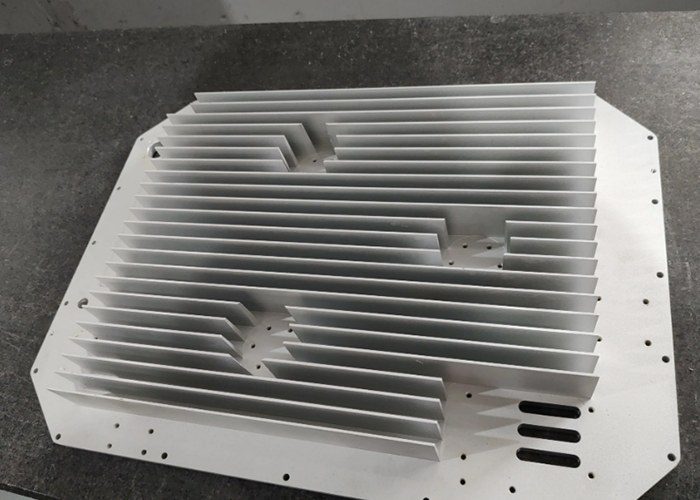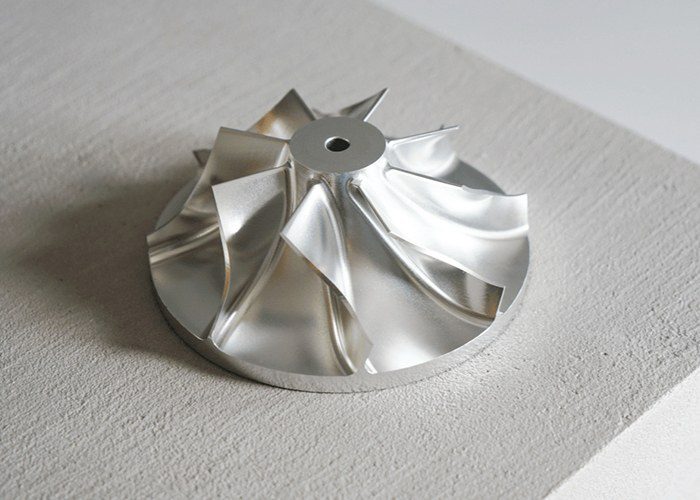
In the landscape of contemporary industrial production, few manufacturing processes are as foundational—or as continuously evolving—as precision CNC turned metal parts. From the life-saving implants used in operating rooms to the turbine blades that power jet engines, these components are the unsung heroes of modern engineering. Precision turning, executed through computer numerical control (CNC) lathes, has transformed from a simple cylindrical shaping operation into a sophisticated, multi-axis manufacturing discipline capable of producing parts with micron-level accuracy.
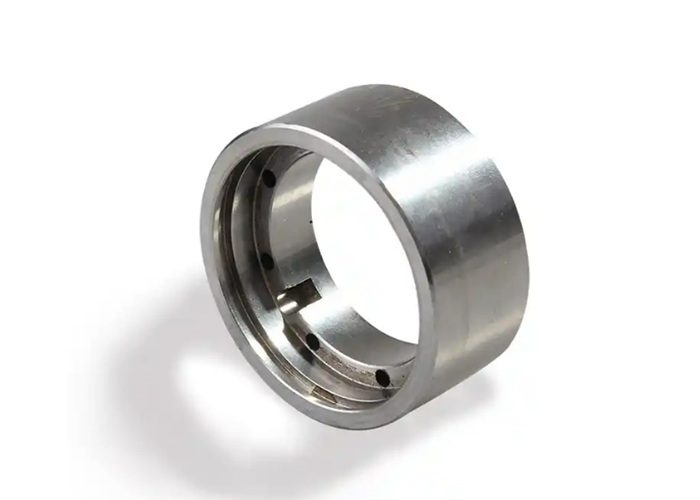
From Simple Lathes to Multi-Axis Machining Centers
The journey of CNC turning is a story of technological refinement. Traditional turning relied on two-axis lathes that removed material while the workpiece rotated—effective for symmetrical, round parts but inherently limited in capability. Today’s advanced turning centers bear little resemblance to their predecessors. Modern machines incorporate live tooling, which enables drilling, milling, tapping, and engraving operations to be performed in a single setup. They feature rotary positioning with C-axis and Y-axis control, allowing for off-center drilling and non-cylindrical contours. Dual turrets and dual spindles make it possible to machine both ends of a part simultaneously, dramatically reducing cycle times while minimizing handling and setup changes. Modern turning centers now operate along X, Y, Z, plus A, B, and C axes, sculpting not just cylindrical forms but intricate, multi-faceted components in a single automated process.
The Precision Imperative: Tolerances That Define Excellence
What distinguishes precision CNC turned parts from conventional machined components is the relentless pursuit of dimensional accuracy. Advanced CNC turning centers produce reproducible components with tolerances of up to ±0.01 mm and surface roughness as fine as Ra 0.8 µm. For the most demanding applications—medical device manufacturing, aerospace engineering, and optical instrumentation—ultra-fine precision can reach ±0.005 mm. This level of accuracy is achieved through automated process monitoring, multi-channel controls, integrated measurement technology, adaptive tool compensation, and temperature-stabilized machine structures that guarantee dimensional stability even during extended production runs. The result is components that fit together with flawless precision, reducing assembly issues, minimizing wear, and extending the service life of finished products.
Material Versatility: From Aluminum to Exotic Alloys
One of the great strengths of precision CNC turning is its compatibility with an extraordinarily wide range of materials. Manufacturers routinely machine aluminum alloys for lightweight, weight-optimized components; stainless steels for corrosion-resistant medical and food-contact parts; and titanium alloys for high-strength, biocompatible implants. Brass and copper alloys are favored for electrical contacts and hydraulic fittings, while high-performance plastics such as PEEK and PTFE serve low-friction, insulating applications. For extreme environments, special alloys like Inconel and Hastelloy are machined to withstand intense temperature, pressure, and chemical loads. This material flexibility allows manufacturers to serve diverse industries with consistent machining quality, adapting cutting parameters—speed, feed rate, tool geometry, and cooling strategy—to each material’s unique properties.
Applications Across Critical Industries
The ubiquity of precision CNC turned parts across industries is a testament to their indispensability. In aerospace, they form the structural components, turbine parts, shafts, fittings, and bushings that must endure extreme conditions while maintaining absolute reliability. In medical manufacturing, CNC turning produces surgical instruments, orthopedic implants, bone screws, and diagnostic device components—applications where precision is literally a matter of life and death. The automotive industry relies on turned parts for engine shafts, transmission components, fasteners, axles, and braking systems. In electronics, miniature housings, connectors, and custom pins are produced with the microscopic precision that modern devices demand. The fluid control and HVAC sectors utilize nozzles, pipe connectors, couplings, and heat sinks machined from corrosion-resistant materials. Even the robotics and defense industries depend on these precision components for mission-critical systems.
The Economics of Excellence
While precision CNC turning may carry higher upfront costs compared to conventional methods, the investment delivers compelling returns. The exceptional accuracy translates into reduced rework and waste, lowering per-part costs across production runs. The automated nature of the process ensures high repeatability—essential for mass production scenarios where multiple pieces must be machined to exacting specifications every time. CNC precision turned components can reduce operating energy costs by minimizing friction and waste heat, generating the same power output while running at lower speeds. The ability to complete multiple operations in a single setup—turning, milling, drilling, and threading—eliminates the errors and delays associated with re-fixturing. Furthermore, precision machining optimizes the use of precious raw materials, with savings passed on to customers without compromising quality or turnaround times.
Looking Forward: The Future of Precision Turning
The precision turned product manufacturing market reflects the growing importance of this technology. Valued at approximately USD 96.7 billion in 2025, it is projected to grow at a compound annual rate of 7.6% to reach USD 187.6 billion by 2034. This growth is driven by increasing demand for complex and customized metal parts across automotive, aerospace, electronics, and healthcare sectors. Key trends include the integration of IoT and smart manufacturing capabilities, the rise of AI-driven process optimization, and the growing adoption of Industry 4.0 technologies that enable full-process data-driven optimization from design to delivery. Hybrid machines combining turning and milling functions are becoming increasingly prevalent, while Swiss-type turning continues to gain ground for the production of small, intricate components with exceptional precision.
Precision CNC turned metal parts represent far more than a manufacturing process—they are the enabling technology behind the products that define modern life. From the vehicles we drive to the medical treatments we receive, from the aircraft we fly to the devices we hold, these precision components work silently and reliably, testament to the extraordinary capabilities of modern manufacturing. As technology continues to advance, the precision, complexity, and efficiency of CNC turning will only increase, ensuring its place at the heart of industrial production for decades to come.