
In the intricate ecosystem of modern manufacturing, few components are as ubiquitous yet as critically understated as high precision turned parts. While the average consumer may never see them, these tiny metallic or plastic components are the silent enablers of the technology we rely on every second of the day. From the intricate mechanisms of a mechanical watch to the life-saving precision of surgical robots, and from the high-altitude performance of aerospace engines to the humble reliability of automotive fuel injectors, high precision turned parts are the physical embodiment of engineering accuracy. This article explores the definition, process, quality control, and diverse applications that make these components indispensable in the 21st century.
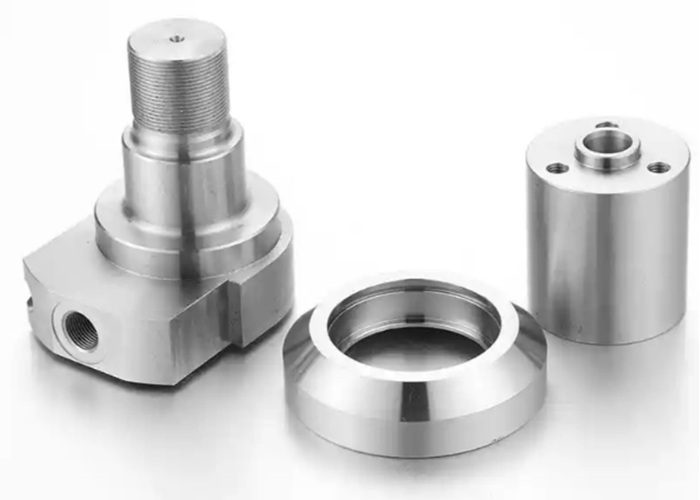
Defining “High Precision”
To appreciate the value of these components, one must first understand what “high precision” entails. In the manufacturing world, the term “turning” refers to a subtractive machining process in which a cutting tool moves linearly while the workpiece rotates. High precision turned parts are distinguished by their extraordinarily tight tolerances, often measured in micrometers or even millionths of a meter (microns). For context, a human hair is approximately 70 to 100 microns thick. High precision turning achieves geometries accurate to within 1 to 10 microns. This level of accuracy extends beyond simple diameter measurements; it encompasses concentricity, roundness, surface finish, and threading. Achieving a surface finish of 0.2 to 0.4 micrometers Ra (roughness average) is standard, resulting in a mirror-like finish that reduces friction and wear, thereby extending the lifespan of the part and the assembly it belongs to.
The Materials and the Machine
The choice of material is foundational to achieving high precision. The go-to materials span traditional workhorses like stainless steel, aluminum, brass, copper, and titanium, as well as cutting-edge engineering plastics, notably PEEK and PTFE. The machinability of these materials dictates the speed, feed rate, and type of tooling required. Nevertheless, the material represents merely one component of the larger framework. The modern CNCs (Computer Numerical Control) Swiss-type lathes and multi-spindle automatics are the champions of this process. Swiss-type lathes, in particular, are renowned for their ability to machine long, slender parts with high accuracy because they support the material very close to the cutting point, minimizing deflection.
Modern machines are equipped with live tooling, allowing for secondary operations like milling, cross-drilling, and tapping to be performed in a single setup. This “done-in-one” capability is crucial for high precision parts, as it eliminates errors that are introduced when a part is transferred between different machines. The synergy between robust machine construction (often utilizing composite polymer concrete bases to dampen vibration), high-speed spindles, and advanced cooling systems creates an environment where micron-level accuracy is consistently achievable.
The Critical Role of Quality Control
In the world of high precision, “making” the part is only half the battle; “verifying” it is the other. Quality control (QC) in this sector is a science in itself. Traditional tools like micrometers and calipers are insufficient. Instead, manufacturers rely on advanced metrology equipment:
- Coordinate Measuring Machines (CMM): Using a tactile probe or laser, CMMs map the physical geometry of the part against the digital CAD model.
- Optical Comparators and Vision Systems: These use light and cameras to measure complex contours and angles without physically touching the part, preventing any risk of deformation.
- Surface Roughness Testers: These devices ensure the smoothness of the surface meets the rigorous specifications required for dynamic seals or bearing surfaces.
Statistical Process Control (SPC) is also integral to the process. Continuous monitoring of machine performance and dimensional data throughout a production run enables manufacturers to anticipate tool wear and recalibrate process parameters, thereby preempting the production of out-of-tolerance components. This proactive approach ensures that whether the run is 100 parts or 100,000 parts, the first and the last part are identical in quality.
Applications Across Industries
The versatility of high precision turned parts is demonstrated by their presence across a spectrum of demanding industries.
- Aerospace and Defense: Here, failure is not an option. High precision turned parts are used in hydraulic systems, landing gear components, and engine fasteners. The materials (often Inconel or Titanium) are difficult to machine, but the parts must withstand extreme temperatures and pressures.
- Medical Technology: In the medical field, these parts are used in surgical instruments, dental implants, bone screws, and components for MRI machines. Biocompatibility and surface finish are paramount to prevent bacterial growth and ensure patient safety.
- Automotive: With the rise of electric vehicles and the demand for fuel efficiency, the automotive industry relies on precision turned parts for fuel injection systems, ABS brake system components, sensors, and electric motor shafts.
- Electronics: The connectors, jacks, and pins found in smartphones, laptops, and servers are often produced via high precision turning to ensure perfect electrical conductivity and a snug fit.
Economic Efficiency and Sustainability
While high precision implies high cost, it often results in significant savings over the lifecycle of a product. A part that is perfectly machined reduces friction, requires less energy to operate, and wears out slower. Furthermore, the precision of Swiss-type machining minimizes material waste compared to other manufacturing methods. This efficiency in using expensive raw materials (like medical-grade titanium) makes the process economically viable and environmentally more sustainable.
The Future Landscape
The industry is currently undergoing a transformation driven by smart manufacturing. The integration of sensors into cutting tools and spindles allows for real-time data transmission. This “digital twin” concept allows engineers to simulate the machining process virtually before cutting metal, optimizing the process in the cloud. As tolerances continue to shrink and geometries become more complex, the reliance on AI-driven process optimization and the Internet of Things (IoT) will increase.
Conclusion
High precision turned parts are the DNA of industrial machinery. They are the result of a synthesis of advanced materials, computational design, and ultra-precise engineering. They ensure that engines run smoother, surgical procedures are safer, and electronics are more reliable. As we push the boundaries of what is possible—moving toward electric propulsion, autonomous systems, and space exploration—the demand for these meticulously crafted components will only grow. They are, quite literally, the building blocks upon which the future is turned.


