
In the vast landscape of modern manufacturing, few processes embody the marriage of art and engineering as elegantly as CNC turning. This subtractive manufacturing process, where a rotating metal workpiece is shaped by a computer-controlled cutting tool, stands as a cornerstone of industrial production. From the life-saving precision of medical implants to the relentless reliability of automotive engines, CNC turning precision metal parts are the unsung heroes that keep our world in motion.
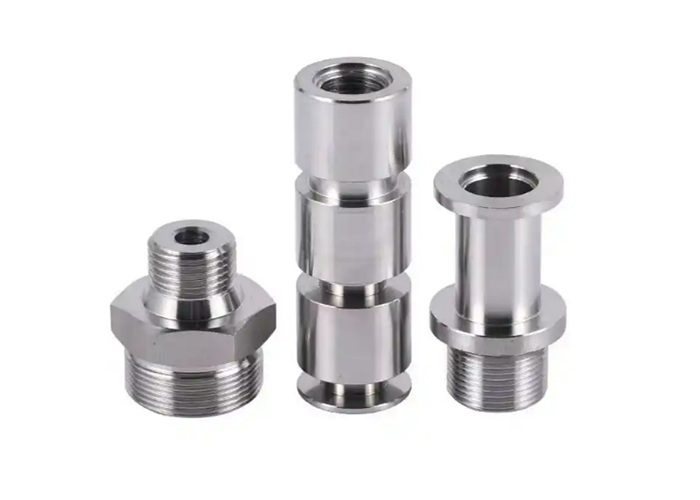
The Process: From Digital Blueprint to Physical Reality
The journey of a CNC turned part begins not on the factory floor, but in the digital realm. Engineers create a detailed CAD (Computer-Aided Design) model of the desired component. This digital blueprint is then translated into G-code by CAM (Computer-Aided Manufacturing) software—a language of precise instructions that the CNC machine will follow.
With the program loaded, the physical process begins. A cylindrical bar of metal—be it aluminum, steel, brass, or titanium—is securely clamped into the lathe’s chuck. The spindle then rotates the workpiece at high speeds, often reaching thousands of RPM. As the material spins, a stationary cutting tool, guided by the CNC program, moves along the X and Z axes to remove excess material layer by layer. This is the essence of CNC turning: the workpiece spins, and the tool cuts.
The workflow is a meticulously orchestrated sequence of stages: engineering drawing analysis, process planning, CNC programming, tool preparation, machine setup, the machining operations themselves, and finally, rigorous inspection. The machining stage is often divided into roughing, semi-finishing, and finishing passes, each serving a distinct purpose in achieving the final shape and surface quality.
The Advantages: Precision, Repeatability, and Versatility
What makes CNC turning indispensable is its unique set of advantages. First and foremost is precision. CNC turning can achieve extremely tight tolerances, often within microns. Some advanced operations can maintain tolerances as tight as ±0.0001 inches (2.5 µm). This level of accuracy ensures that parts fit and function exactly as designed, which is critical in industries where failure is not an option.
Equally important is repeatability. With a finely tuned program, the CNC lathe ensures flawless replication across thousands of production cycles. This consistency is the bedrock of mass production, ensuring that every component in a run meets the same exacting standards. This automation also reduces human error and minimizes material waste, leading to lower per-part costs and more sustainable manufacturing.
The versatility of CNC turning is another key strength. The process can handle a wide range of materials, from common steels and aluminum to exotic alloys like titanium and Inconel. The system is adept at manufacturing both straightforward cylindrical components and intricate geometries that incorporate multiple diameters, threads, grooves, and tapers. Furthermore, the process can create excellent surface finishes, often reducing or eliminating the need for secondary operations.
Modern Capabilities: Beyond Simple Cylinders
While CNC turning was once limited to producing simple, symmetrical parts, modern technology has shattered those boundaries. Today’s advanced turning centers are multi-axis marvels that incorporate live tooling, enabling drilling, milling, tapping, and engraving to be performed in a single setup. With the addition of Y-axis and C-axis control, these machines can create complex, multi-faceted components with contours, grooves, and asymmetric features.
This capability is a game-changer. By performing multiple operations in one setup, manufacturers eliminate the errors and time associated with re-fixturing parts. The outcome introduces added complexity while simultaneously reducing cycle times and boosting precision. Modern CNC turning centers can now produce parts that were once the exclusive domain of milling or grinding, all while maintaining the speed and efficiency of a lathe.
Applications Across Industries
The applications of CNC turning precision metal parts are vast and varied. In the automotive industry, they are found in engine shafts, transmission components, fasteners, and custom fittings. In aerospace, they are critical for structural components, turbine parts, and precision fittings where failure is not an option. The medical sector relies on turned components for surgical instruments, orthopedic implants, and diagnostic equipment, all of which must meet stringent biocompatibility and sterilization standards. Beyond these, CNC turning serves the electronics, industrial machinery, and even consumer goods sectors.
The Future of Precision
The global market for precision turned products is substantial and growing, valued at over USD 100 billion and projected to reach nearly USD 150 billion by the early 2030s. This growth is driven by increasing demand for complex, customized, and high-precision components across all major industries. Key trends include the adoption of advanced multi-axis CNC technology, increasing automation and robotics, and the integration of Industry 4.0 principles for enhanced efficiency and quality control.
In conclusion, CNC turning precision metal parts represent a pinnacle of modern manufacturing. It is a process that combines the intelligence of digital design with the physical prowess of advanced machinery to create components of incredible accuracy and consistency. As technology continues to evolve, CNC turning will undoubtedly remain a vital force in shaping the future of industry, proving that sometimes, the most powerful innovations are those that refine the fundamentals.


