
In today’s advanced manufacturing landscape, the ability to produce components with exceptional dimensional accuracy and repeatability is not merely an advantage—it is a necessity. Industries ranging from aerospace and automotive to medical devices and consumer electronics depend on tight engineering tolerances and consistent part quality to ensure reliable product performance. At the heart of this capability lies precision CNC milling, a computer-controlled machining process that has fundamentally transformed how mechanical parts are designed, prototyped, and produced at scale.
Understanding Precision CNC Milling
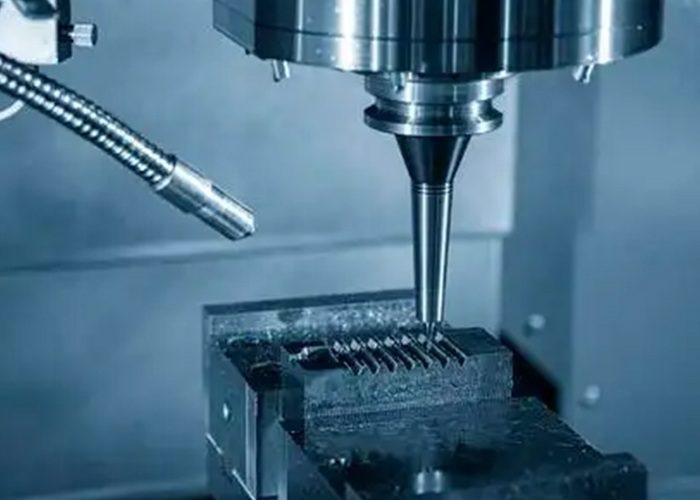
CNC milling is a subtractive manufacturing process in which computer-controlled rotating cutting tools remove material from a solid workpiece to achieve a desired geometry. Unlike manual milling, which relies heavily on operator skill and is prone to variability, CNC milling converts digital design models into precise toolpaths through CAM software, ensuring consistency across every production batch. The process begins with a three-dimensional CAD model that defines the exact geometry, dimensions, and tolerances required for the final part. This digital design is then translated into G-code instructions that guide the machine’s spindle, cutting tool, and worktable with micron-level precision. Modern CNC milling systems can achieve dimensional tolerances in the micron range, enabling manufacturers to produce components that must fit precisely within complex mechanical assemblies.
The Technology Behind the Precision
The exceptional accuracy of CNC milling stems from a combination of advanced hardware and sophisticated software. Multi-axis CNC machines—typically 3-axis, 4-axis, or 5-axis configurations—allow complex geometries to be machined in a single setup, reducing cumulative error and improving repeatability. Five-axis machining excels at creating intricate features, precise mating surfaces, and complex internal geometries—capabilities that simply cannot be replicated with manual machining. By allowing multiple surfaces to be reached within a single clamping, 5-axis systems improve repeatability and strengthen geometric integrity throughout the production cycle.
Tool selection and cutting parameter optimization are equally critical to achieving high precision. The choice of tool material—whether carbide, ceramic, or coated tools—determines wear resistance and cutting stability. Proper control of cutting speed prevents material deformation or accelerated tool wear due to overheating, while optimized feed rates ensure uniform cutting loads and avoid surface imperfections. To achieve the required depth of cut, a layered machining approach is generally adopted. By removing material incrementally, this method minimizes the tool load on each individual cut, thereby improving overall machining stability. This comprehensive optimization of equipment, process parameters, clamping methods, and environmental conditions enables stable, continuous high-precision output even in complex machining scenarios.
Key Advantages of Precision CNC Milling
Precision CNC milling offers a host of advantages that make it indispensable across industries. First and foremost is its ability to achieve tolerances as tight as ±0.005 mm and surface finishes up to Ra 0.8 μm, ensuring that every part strictly meets design specifications. Part repeatability can exceed 99%, making CNC milling the preferred choice for high-precision applications where even minor deviations could compromise performance or safety.
The process also excels at producing complex geometries that would be impossible with traditional machining methods. Equipped with advanced 3/4/5-axis capabilities, modern CNC mills excel at producing highly complex components—from contoured surfaces and helical grooves to intricate undercuts and free-form parts. Multi-axis synchronization drastically cuts setup time and eliminates redundant repositioning, accelerating throughput while guaranteeing exceptional precision and flawless surface quality. For example, 5-axis CNC milling can simultaneously machine multiple faces of a component, making it ideal for complex aerospace turbine blades and medical implants.
In terms of efficiency, CNC milling reduces production time by up to 60% compared with traditional methods while lowering scrap rates by more than 30%. The automation of the machining process reduces the need for manual intervention, allowing for continuous operation and faster production cycles. Precision CNC machined parts typically do not require additional polishing or finishing, eliminating costly and inconsistent manual processes. This combination of speed, repeatability, and adaptability makes CNC milling the backbone of sectors such as aerospace, automotive, medical devices, and electronics.
Critical Applications Across Industries
The versatility of precision CNC milling is reflected in its wide-ranging applications. In the aerospace industry, the process is used to manufacture structural brackets, housings, complex mechanical interfaces, and flight-critical components from advanced alloys such as aluminum, titanium, and stainless steel. Aerospace components must perform flawlessly under extreme conditions—high altitudes, intense vibration, thermal variation, and continuous mechanical stress—making the repeatability and traceability of CNC milling essential.
In automotive manufacturing, CNC milling drives production of engine blocks, cylinder heads, pistons, crankshafts, transmission housings, and suspension components. These vital components demand precision down to the micron for optimal engine performance, fuel efficiency, and safety. The process also supports rapid prototyping and mass manufacturing, enabling automakers to bring new designs to market faster than ever before.
The medical device industry relies on precision CNC milling for surgical instruments, implants, and complex medical device components. Achieving the exacting micron-level tolerances required by minimally invasive surgery and diagnostic devices, CNC machining underpins the safety, efficacy, and superior patient outcomes that are paramount in the healthcare sector. Materials commonly processed include stainless steel, titanium, and high-performance polymers, all of which must meet strict regulatory standards.
Beyond these sectors, precision CNC milling is also critical in industrial machinery, robotics, energy, defense, and consumer electronics, where it produces components ranging from drivetrain parts to precision mechanical assemblies.
The Future of Precision CNC Milling
As manufacturing enters an era where the cutting edge is as digital as it is physical, precision CNC milling continues to evolve. The integration of AI and machine learning is enabling real-time adjustments to toolpaths, predictive maintenance, and intelligent quality control. Digital twins are becoming the production backbone, allowing manufacturers to simulate and optimize machining processes before cutting begins. Industry 4.0-driven automation upgrades are migrating from isolated machine tools to fully networked cells where IoT sensors stream real-time conditions, cutting scrap and improving efficiency.
The global precision machining market is undergoing a robust surge, propelled by escalating requirements for high-accuracy parts across the automotive, aerospace, electronics, and medical sectors. As supply chains rebalance and technology advances, precision CNC milling will remain at the forefront of modern manufacturing—transforming digital designs into the mechanical parts that power our world.


