
In an era where product differentiation and performance reliability define competitive advantage, customized precision CNC machining has emerged as the indispensable backbone of advanced manufacturing. This technology, which combines computer numerical control with highly specialized machining processes, enables the production of components that meet exacting specifications with repeatable accuracy that traditional methods simply cannot achieve. From aerospace turbines to surgical implants, customized precision CNC machining transforms digital designs into physical realities with micron-level fidelity.
Defining Precision in CNC Machining
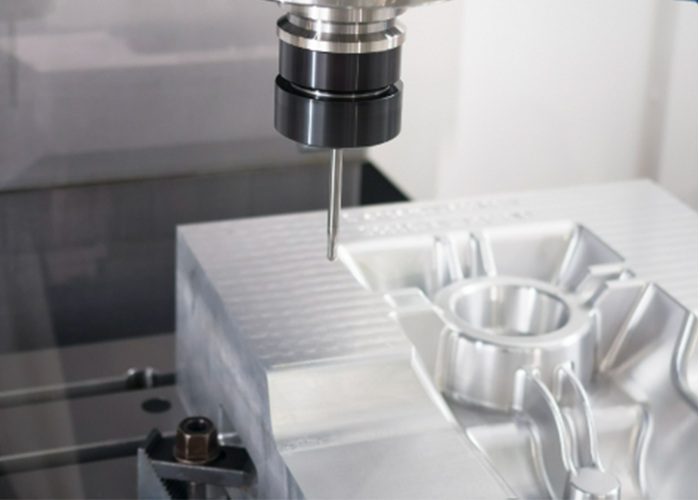
Precision in CNC machining is far more than a marketing term — for specialists in the field, it represents the technical capability to consistently achieve tolerances of 0.01 millimeters or tighter. To put this in perspective, standard tight tolerances for metal machining are defined at ±0.01 mm, while high-precision applications demand ±0.005 mm, and aerospace or medical-grade components often require tolerances as tight as ±0.002–0.003 mm. Achieving this level of accuracy demands far more than high-end equipment; it requires a controlled synergy between machine rigidity, tooling quality, thermal stability, and environmental control. Even a temperature shift of a few degrees can cause a metal part to expand beyond its specified limits, which is why climate-controlled workshops are essential for true precision machining.
The Customization Workflow
The journey from concept to finished component begins with a detailed 3D CAD (Computer-Aided Design) model, which is then translated into a CAM (Computer-Aided Manufacturing) program that directs the CNC machine’s every movement. This digital thread ensures that every cut, hole, and groove is executed according to exact specifications, minimizing human error while maximizing production speed. The machine follows this program to cut, mill, drill, or grind raw material into the finished product, with multi-axis capabilities allowing for intricate and complex designs to be realized with high fidelity. Modern CNC machining centers can perform 3-axis, 4-axis, and even 5-axis milling, enabling the completion of complex geometries in a single setup — a critical advantage for precision engineering.
Material Versatility and Capabilities
One of the defining strengths of customized precision CNC machining is its remarkable material versatility. The process can work with an extensive range of materials, including aluminum alloys, stainless steels, titanium, brass, copper, and engineering plastics such as PEEK, ABS, nylon, and POM. Each material presents unique machining characteristics: aluminum offers excellent machinability and lightweight properties, while hardened steels and titanium require more advanced tooling and careful thermal management. This flexibility allows manufacturers to select materials based on specific functional requirements — whether the priority is strength, corrosion resistance, electrical insulation, chemical resistance, or weight reduction.
Industry Applications
The applicability of customized precision CNC machining spans virtually every sector of modern industry, each benefiting from the ability to produce parts that meet rigorous specifications and standards. In aerospace, components must withstand extreme conditions while remaining lightweight; CNC machining produces engine mounts, fuel flow components, and landing gear parts with the precision necessary to ensure safety and performance. The medical device industry relies on CNC machining to create intricate parts like orthopedic implants and surgical instruments, with the capability to work with biocompatible materials further highlighting the technology’s importance in healthcare. The automotive sector produces durable, high-performance parts such as gearbox components, pistons, and custom racing fixtures. Emerging sectors including robotics, renewable energy, and microelectronics are increasingly turning to custom CNC machining for highly precise, flexible manufacturing solutions.
Competitive Advantages
Customized precision CNC machining delivers several distinct advantages over conventional manufacturing approaches. The primary benefit is its ability to produce parts tailored exactly to a client’s specifications, extending to dimensions, shapes, materials, and surface finishes. By automating many aspects of the manufacturing process, CNC machining significantly reduces production time, leading to faster delivery and improved efficiency. Digitization ensures repeatability across production runs; once verified, every subsequent part matches the first to the exact same tolerances. Furthermore, precise control over material removal minimizes waste, contributing to both cost efficiency and sustainability. Unlike traditional manufacturing, which often requires expensive tooling and is only economical for large volumes, custom CNC machining makes small-batch and even one-off production economically viable.
The Future of Customized Precision CNC Machining
As we move further into 2026 and beyond, customized precision CNC machining continues to evolve at an unprecedented pace. The industry is being reshaped by several converging trends: AI-native machining that uses real-time sensor feedback to adjust feeds, speeds, and toolpaths automatically; digital twins that create living ecosystems mirroring the entire machining process; hybrid manufacturing that combines additive and subtractive processes on a single platform; and an increasing focus on sustainability as a core metric. Thriving factories treat every machine cycle as a data event—captured, analyzed, and fed forward into the next operation. The custom machining services market, valued at approximately USD 26.84 billion in 2025, is projected to reach USD 39.45 billion by 2032, reflecting the growing recognition of this technology’s indispensable role in modern manufacturing.
Customized precision CNC machining represents more than a manufacturing process — it is a partnership between technology and creativity, enabling engineers and designers to push the boundaries of what is possible. In a world where a fraction of a millimeter can determine whether two components fit perfectly or fail to assemble, this technology provides the accuracy, flexibility, and reliability that modern industry demands.


