In the vast ecosystem of modern manufacturing, few technologies have exerted as profound an influence as Computer Numerical Control (CNC) machining. From the intricate joints of humanoid robots to the critical components of aerospace turbines, CNC-machined hardware parts form the invisible skeleton upon which contemporary industry is built. As global markets pivot toward higher precision, greater complexity, and unprecedented production efficiency, CNC machining has evolved from a mere manufacturing technique into a strategic imperative. This article explores the core principles, transformative capabilities, material versatility, and future trajectory of CNC machining in the production of high-quality hardware parts.

The Foundation: Precision, Automation, and Digital Control
At its essence, CNC machining is a subtractive manufacturing process that utilizes pre-programmed computer software to dictate the movement of factory machinery and cutting tools. Unlike conventional manual machining, which relies heavily on the skill and experience of individual operators, CNC machining translates digital design data—typically in the form of CAD (Computer-Aided Design) files—into precise, automated machine instructions via CAM (Computer-Aided Manufacturing) software. This digital thread ensures that every cut, drill, and turn is executed with mathematical exactitude, dramatically reducing human error and enabling the production of parts with tolerances as tight as ±0.002mm.
The advantages of this approach are manifold. CNC machines offer unparalleled repeatability, ensuring that the thousandth part rolled off the production line is identical to the first. They deliver exceptional surface finishes—critical for mating surfaces, sealing interfaces, and components that must slide or rotate with minimal friction. Moreover, the automation inherent in CNC systems allows for continuous, lights-out production, significantly boosting throughput and reducing per-part costs in high-volume runs. Modern CNC platforms are increasingly integrating cutting-tool performance data with machine controls, enabling real-time adjustments to feeds, speeds, and toolpaths for optimized performance.
The Paradigm Shift: Multi-Axis and Compound Machining
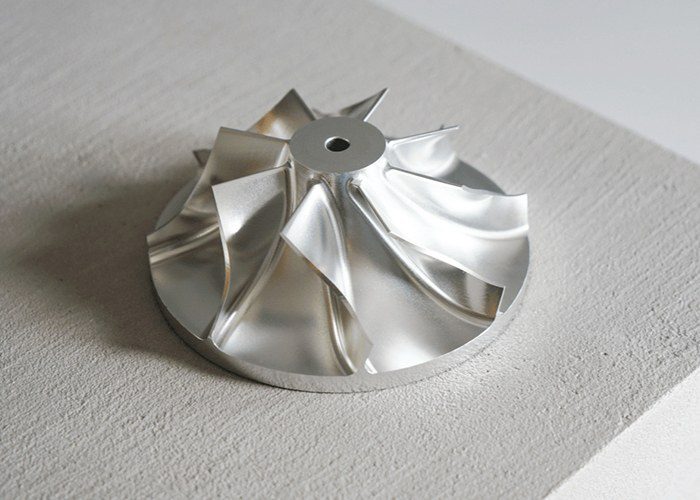
Perhaps the most transformative development in recent years has been the widespread adoption of multi-axis CNC machining, particularly five-axis simultaneous machining. Traditional three-axis machines, while effective for prismatic parts, struggle with complex geometries that require machining from multiple angles. Five-axis CNC machining centers overcome this limitation by seamlessly coordinating three linear axes (X, Y, Z) with two rotational axes, enabling continuous, synchronized toolpath control across full five-sided machining capability.
This capability ushers in the “Complete-in-One-Setup” paradigm, where complex parts that previously required numerous re-fixturings and manual rotations can now be machined from all necessary angles in a single clamping. The benefits are substantial: elimination of cumulative errors from multiple setups, dramatically improved accuracy, and significantly reduced cycle times. For instance, in the machining of electric vehicle battery enclosures, five-axis methodology enables the use of shorter, more rigid tools, leading to substantial weight reduction and improved dynamic balance.
The trend extends beyond mere axis count. Compound machining—the integration of milling, turning, drilling, and other processes within a single machine—is rapidly gaining traction. Five-axis mill-turn Composite machine tools have become the “killer application” for complex shaft-type parts in aerospace, aviation, and new energy sectors. This functional integration reduces process Flow, minimizes clamping frequency, and enables manufacturers to achieve micron-level form accuracy even on difficult-to-process materials like titanium alloys.
Materials and Applications: A Universe of Possibilities
The true versatility of CNC machining is best reflected in the sheer diversity of materials it handles and the broad spectrum of industries it serves. From common aluminum alloys and stainless steels to high-performance titanium alloys, Inconel, and engineering plastics, CNC machining adapts to the unique physical characteristics of each material through optimized cutting parameters and specialized tooling.
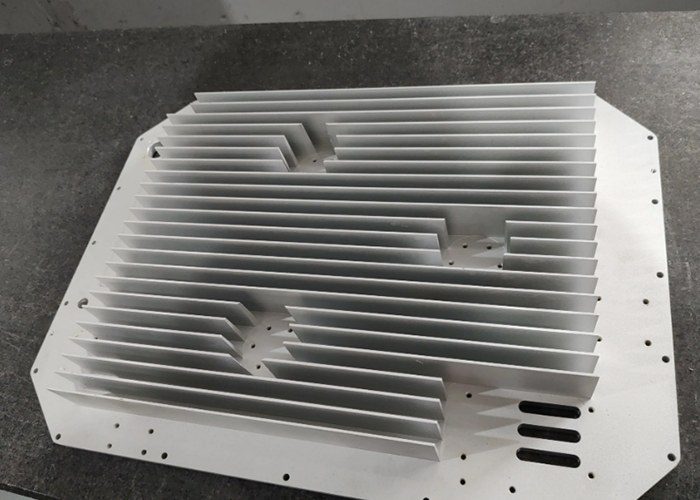
In the aerospace sector, CNC machining is indispensable for producing turbine blades, engine components, landing gear parts, and structural airframes. Aircraft performance, fuel efficiency, and safety hinge critically on the precision machining of titanium and aluminum alloys to micron-level tolerances. In the automotive industry, CNC-machined hardware parts are found in engine blocks, transmission components, chassis systems, and the increasingly complex housings for electric vehicle powertrains. The sector’s relentless push for lightweighting and integration has driven demand for large aluminum die-cast parts that require multi-angle drilling, tapping, and milling in a single setup.
The medical device industry represents another frontier, where CNC machining produces surgical instruments, orthopedic and dental implants, and components for diagnostic equipment. CNC machining stands out as the go-to solution, uniquely equipped to handle biocompatible materials, extreme precision, and the strict demands of certified, traceable production. Emerging fields such as humanoid robotics are also driving innovation, with CNC machining enabling the production of Precision joints, ankle connectors, finger joints, and palm skeletons that demand both complex curved surfaces and micro-level form accuracy.
Quality, Intelligence, and the Road Ahead
As CNC machining hardware parts find their way into ever more critical applications, quality control has become as sophisticated as the machining process itself. Modern CNC systems increasingly incorporate in-process monitoring and online inspection capabilities, allowing real-time measurement of critical dimensions and surface roughness. Any deviation can trigger automatic correction or an alarm, ensuring that defects are caught before they propagate. This is complemented by post-process inspection using coordinate measuring machines (CMMs) and other high-precision metrology equipment.
Looking forward, the CNC machining landscape is being reshaped by five converging shifts: the accelerating adoption of five-axis machining, the rise of open automation architectures, the deployment of digital twins, the proliferation of connected sensors, and tightening energy and quality requirements. Machine shops are moving from isolated CNC equipment toward integrated manufacturing cells that connect CNC controllers, robots, and inspection systems. Artificial intelligence is beginning to play a role in工艺 optimization, with AI algorithms automatically adjusting machining parameters based on material characteristics. The global CNC machining market, valued at approximately $108.7 billion in 2025, is projected to reach $183.8 billion by 2032, reflecting a compound annual growth rate of 7.8%.
In conclusion, CNC machining hardware parts represent far more than metal and plastic shaped by computer-controlled tools. They are the physical manifestation of digital design, the enablers of technological progress across every major industry, and the foundation upon which the factories of the future will be built. As precision requirements tighten, geometries grow more complex, and production scales expand, CNC machining will continue to evolve—becoming smarter, faster, and more capable—cementing its role as the precision backbone of modern manufacturing for decades to come.