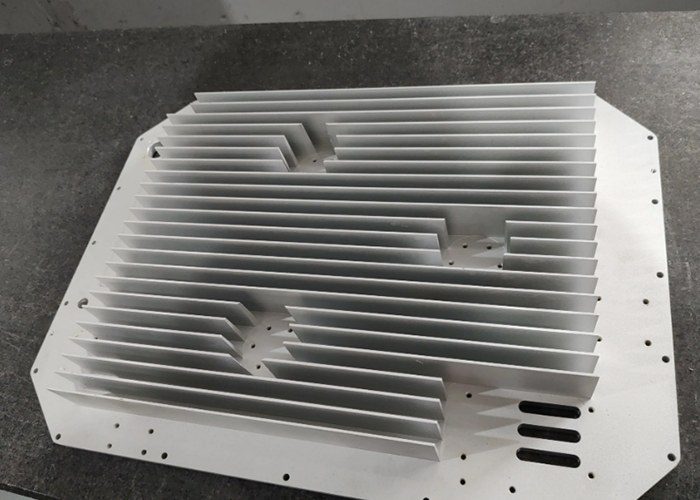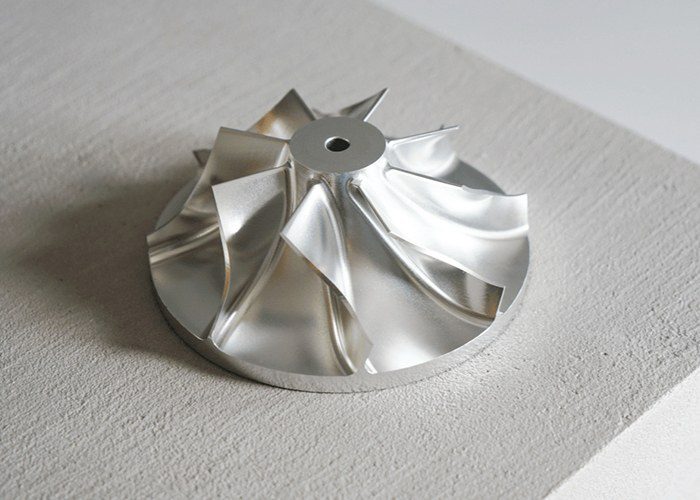
In the modern manufacturing landscape, few technologies have been as transformative as Computer Numerical Control (CNC) milling. From automobiles to handheld smartphones, CNC technology powers the everyday objects we rely on. CNC milling machines are machine tools used for shaping metal and other solid materials, programmed with computer code to read and store instructions that control and drive a powered mechanical device to cut precision products. As a subtractive manufacturing process, CNC milling removes material from a solid block of stock to produce parts with exacting dimensions. This article provides a comprehensive overview of CNC milling machining for metal parts, exploring the process, materials, applications, advantages, and its critical role in contemporary industry.
The Process: From Digital Design to Physical Part
The manufacturing process for a CNC-milled metal part commences with a 3D model generated using CAD. This model is then converted into G-code, the machine-readable programming language that guides the tool paths. This code provides instructions on where to move the cutting tool, as well as controlling its speed, feed rate, cut depth, and workpiece movement.
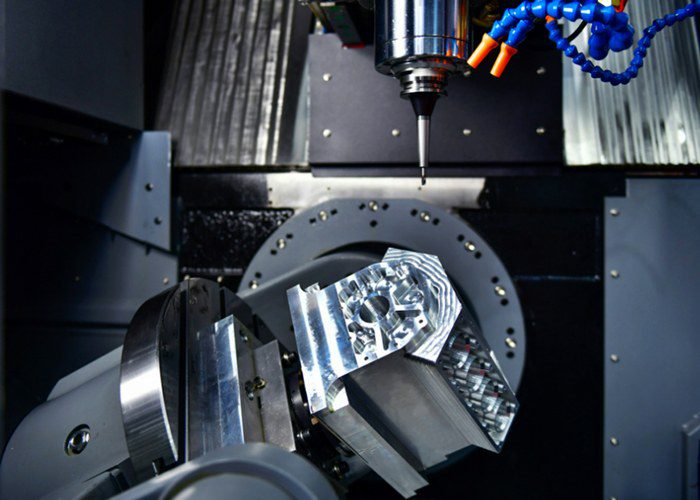
Once the program is ready, a precisely sized block of metal—known as a blank or workpiece—is securely mounted to the machine bed using a vise or clamps. The CNC milling machine then uses high-speed rotating multi-edge cutting tools to remove unwanted material from the workpiece. The fundamental difference between milling and turning is that in milling, the tool rotates while the workpiece moves beneath it along controlled axes.
Most CNC mills operate along three linear axes (X, Y, and Z), but advanced machines incorporate 4 and 5 axes. Modern CNC technologies support up to 5 axes, adding tilt and rotation to traditional X, Y, and Z axes to enable precise cutting for more detailed parts. This multi-axis capability is also more efficient as it can create more part features in a single operation, reducing the need for multiple setups. The machining process typically involves a rough pass that prioritizes speed, followed by finishing passes for precision. After machining, parts undergo deburring to remove small defects from sharp edges, and critical dimensions are inspected to verify that the correct tolerances have been achieved.
Materials: Versatility Across Metals
One of the key strengths of CNC milling is its compatibility with a wide range of materials. The process exhibits outstanding compatibility with metal parts, proving highly effective for aluminum, steel (including both carbon and stainless varieties), titanium, brass, bronze, copper, and zinc-based alloys. Aluminum and its alloys are the most common and easiest materials to machine, making them ideal for aerospace structural components, electronic casings, and automotive parts. Stainless steel, while more challenging due to its hardness and tendency to generate heat, is widely used in medical devices, food processing equipment, and industrial structural components. Titanium alloys, prized for their high strength-to-weight ratio and corrosion resistance, are typical high-performance materials used in aerospace and medical implants, though they require careful precision machining control.
Applications: Industries Transformed by CNC Milling
CNC milling is the workhorse of the metalworking industry, serving a vast array of sectors. In the automotive industry, it is used to manufacture engine parts, transmission components, molds, and prototypes. The aerospace industry relies on CNC milling for the production of turbine and jet engine parts, precision machining of light alloys like titanium and aluminum, and the creation of structural components for aircraft and satellites. The medical industry benefits from CNC milling’s ability to produce extremely precise components such as orthopedic and dental implants, surgical instruments, and advanced prostheses. In the electronics industry, the technology is used to produce housings for electronic devices and miniature components. Other industries that depend on CNC milling include shipbuilding, construction, and even jewelry manufacturing.
Advantages: Precision, Repeatability, and Efficiency
The advantages of CNC milling for metal parts are numerous and compelling. High accuracy is paramount, with the technology operating with tolerances as tight as ±0.005 mm, making it ideal for high-performance parts. Repeatability ensures that once programmed, CNC machines can produce the exact same geometry over and over again, which is crucial for maintaining consistent quality from prototyping to mass production. Material versatility allows engineers to select the optimal metal for each application. Fast lead times are achievable because, unlike tooling-heavy methods like injection molding, CNC machining requires no molds or dies, making it great for prototyping and small-batch production. Scalability is another key benefit, as CNC machining is suitable for both low-volume production and mass production. Finally, by precisely cutting solid metal blocks, CNC machining achieves levels of durability and accuracy that additive manufacturing processes still cannot fully match.
Challenges and Considerations
While CNC milling offers remarkable capabilities, it is not without its challenges. The technology has more geometry restrictions compared to additive manufacturing because material is removed rather than added. Additionally, setup costs can be higher initially, though these are often offset by the efficiency and consistency of automated production. The machining of certain difficult materials, such as titanium alloys and stainless steel, requires careful parameter control, appropriate tool selection, and stable cooling systems to manage heat and tool wear.
Conclusion
CNC milling machining for metal parts stands as a cornerstone of modern manufacturing. Its ability to transform digital designs into high-precision, durable metal components with exceptional repeatability makes it indispensable across industries ranging from automotive and aerospace to medical and electronics. As manufacturing continues to evolve with advancements in multi-axis technology, automation, and integration with CAD/CAM software, CNC milling will undoubtedly remain at the forefront of precision engineering, driving innovation and enabling the production of the complex metal parts that power our world.