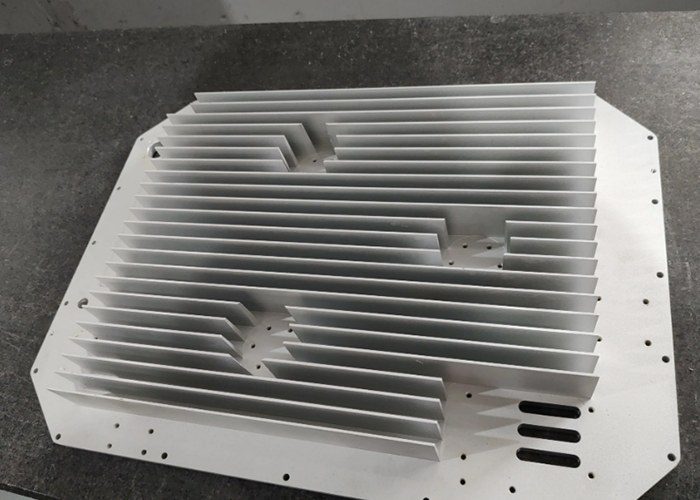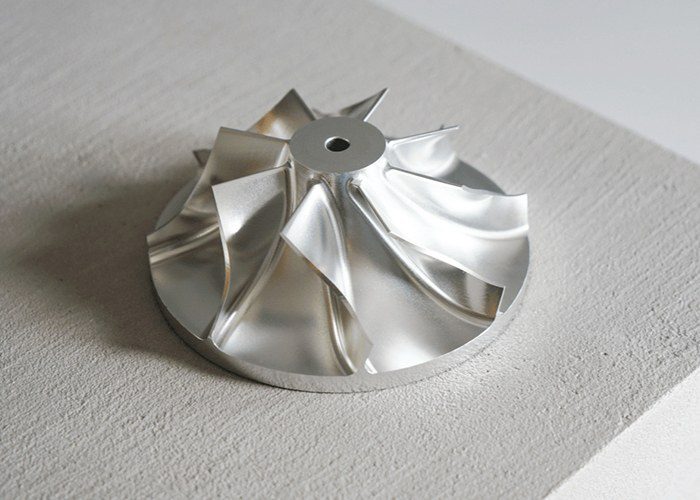
In the relentless pursuit of perfection in modern engineering, the difference between success and failure often comes down to microns. Whether it’s the housing of a smartphone, a critical component for an aerospace turbine, or a custom medical implant, the demand for complex, durable, and flawlessly accurate parts has never been higher. At the heart of this industrial revolution lies a service that has redefined the limits of physical production: Precision CNC Machining.
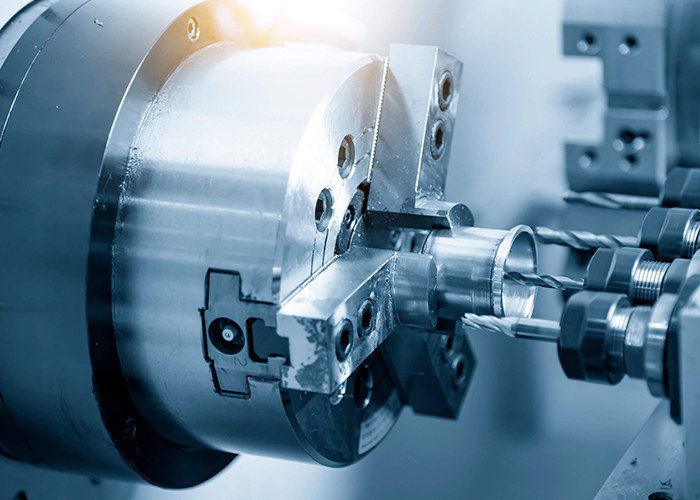
CNC (Computer Numerical Control) machining is a subtractive manufacturing process in which pre-programmed software controls the movement of factory tools and machinery. However, when the word “precision” is added to this service, the paradigm shifts from simple mass production to the creation of components with tolerances that can be as tight as +/- 0.0001 inches (0.00254 mm). This article explores the mechanics, advantages, and critical applications of high-precision CNC machining services in the contemporary global market.
The Technical Anatomy of Precision
To understand the value of these services, one must first understand the machinery involved. Precision CNC machining typically utilizes a fleet of advanced equipment, including 3-axis, 4-axis, and 5-axis milling machines, CNC lathes, routers, and EDM (Electrical Discharge Machining) units.
The 5-axis machining center represents the gold standard in precision services. Unlike standard milling, which moves the tool in three linear axes (X, Y, Z), 5-axis machining adds two rotational axes. This capability allows a part to be machined from five sides in a single setup. The advantage is twofold: it drastically reduces production time, but more importantly, it eliminates human error associated with re-clamping and repositioning a workpiece. In precision work, every time a part is moved, the margin for error grows. By executing complex geometries in one go, precision services maintain integrity that is mathematically absolute.
The Advantages Over Traditional Manufacturing
Why do industries pay a premium for precision CNC services rather than opting for conventional lathes or manual milling? The answer lies in repeatability and complexity.
- Unwavering Repeatability: Once a design is coded into the machine’s software (G-code), the service can produce 1,000 identical parts or 100,000 identical parts without variance. If the first part is accurate, the 50,000th part will be equally accurate. This consistency is physically impossible to achieve with human-operated machinery.
- Material Versatility: A top-tier precision CNC service is not limited to aluminum or steel. These machines handle titanium, Inconel (superalloys), brass, copper, hardened tool steels, and engineering plastics like PEEK and Delrin. This versatility allows engineers to design without the constraint of “material unworkability.”
- Speed to Market: While the initial setup and programming take time, the actual machining cycle is incredibly fast. For prototyping, precision CNC services can turn a digital CAD file into a physical metal part in 24 hours. This rapid prototyping allows manufacturers to test form, fit, and function instantly.
Critical Industries Relying on Precision
The existence of several modern industries depends entirely on the availability of high-quality precision CNC machining services.
- Aerospace: In an airplane, failure is not an option. Turbine blades, landing gear components, and structural brackets require tolerances that ensure safety under extreme stress and temperature. A variance of a few microns in a fuel system nozzle can alter the thrust of an engine.
- Medical: The human body does not accept “almost perfect” implants. Hip replacements, spinal screws, surgical instruments, and dental implants require mirror finishes and exact geometries to ensure biocompatibility and fit. Precision CNC services are used to machine titanium and stainless steel for sterile, non-reactive surgical tools.
- Automotive & Motorsports: High-performance racing engines demand components that fit perfectly to handle extreme RPMs. Custom pistons, transmission cases, and brake calipers are produced via precision machining to reduce friction and maximize horsepower.
- Defense & Military: To function reliably in adverse conditions, firearm receivers, optical mounts, and guidance system housings demand both durability and precision.
The Role of Quality Control (QC)
A claim of “precision” is meaningless without verification. Reputable CNC machining services do not simply run machines; they run rigorous quality assurance protocols. This typically involves on-machine probing where the tool touches the part to check its dimensions while still in the machine. Post-production, parts move to Coordinate Measuring Machines (CMM).
Using a CMM, a probe touches hundreds of points on a part to create a 3D map of its dimensions, comparing it directly to the original CAD model. This process generates a detailed report, often referred to as a “First Article Inspection” (FAI). Only when the FAI passes the strictest standards (such as ISO 9001 or AS9100 for aerospace) does the production run continue.
Challenges and the Future
Despite its strengths, precision CNC machining faces challenges. The barrier to entry is steep—a single 5-axis machine can cost hundreds of thousands of dollars. Furthermore, skilled machinists who can program, set up, and operate these complex machines are in short supply.
However, the future is bright. The integration of IoT (Internet of Things) and AI into CNC services is leading to “smart factories.” Machines now monitor their own tool wear in real-time and adjust cutting speeds to maintain precision without human intervention.
Moreover, the rise of hybrid manufacturing (combining 3D printing with CNC finishing) is expanding possibilities. Additive manufacturing builds the near-net shape, and precision CNC machining adds the critical surface finishes and tight tolerances that printing alone cannot achieve.
Conclusion
Precision CNC Machining Service is far more than just cutting metal; it is the art of transforming digital blueprints into physical reality with absolute fidelity. For engineers and businesses, outsourcing to a professional precision machining service unlocks the ability to produce complex, durable, and accurate parts without the capital expense of buying the machinery themselves.
From saving lives in an operating room to ensuring a rocket reaches orbit, the silent, calculated dance of the CNC spindle is the unsung hero of our material world. As technology pushes toward nanoscale accuracy, the demand for these services will only intensify, solidifying precision machining as the true backbone of modern manufacturing.