
In today’s fast-paced industrial landscape, precision, speed, and scalability are non-negotiable. Original Equipment Manufacturers (OEMs) across automotive, aerospace, medical devices, electronics, and consumer goods rely on a proven technology to turn raw materials into high-performance components: OEM CNC Machining. This powerful combination of design ownership and computer-controlled manufacturing has reshaped how products are developed, prototyped, and mass-produced. Below, we explore the fundamentals, benefits, material considerations, and quality assurance practices that make OEM CNC machining an indispensable pillar of global supply chains.
What Is OEM CNC Machining?
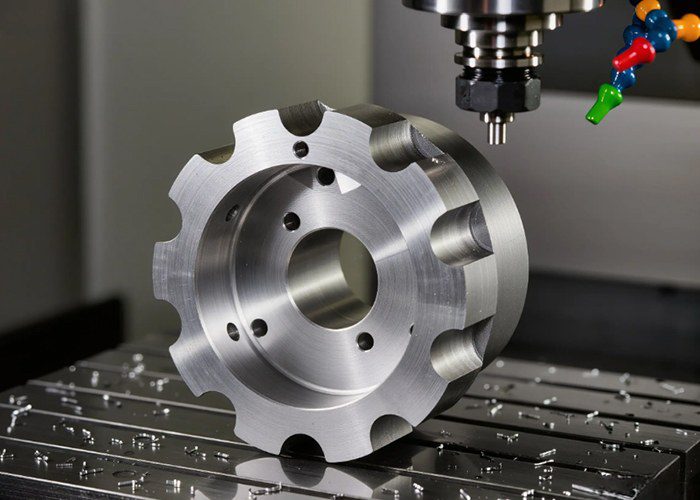
OEM stands for Original Equipment Manufacturer – a company that produces parts or sub-assemblies that are later sold to another company, which then integrates them into a final product under its own brand. CNC (Computer Numerical Control) machining is a subtractive manufacturing process where pre-programmed software controls the movement of factory tools and machinery, such as mills, lathes, routers, and grinders.
When combined, OEM CNC machining refers to the outsourced or in-house production of custom-designed components using automated cutting tools, strictly following the OEM’s specifications. Unlike standard off-the-shelf parts, each component is machined from a solid block (or billet) of material according to digital blueprints – often CAD (Computer-Aided Design) files. This approach allows OEMs to focus on system integration, branding, and marketing while leaving precision fabrication to specialized CNC partners.
Why OEMs Choose CNC Machining Over Other Methods
1. Unmatched Precision and Repeatability
CNC machines operate with tolerances as tight as ±0.005 mm (0.0002 inches). For OEMs producing engine pistons, surgical tools, or drone housings, such accuracy ensures that every part fits perfectly within larger assemblies. Once a program is verified, the machine can produce thousands of identical parts without deviation – a critical requirement for safety-critical industries.
2. Wide Material Compatibility
CNC machining works with an extensive range of engineering materials:
- Metals: Aluminum (6061, 7075), stainless steel (303, 304, 316L), brass, copper, titanium, Inconel.
- Plastics: ABS, POM (Delrin), Nylon, PEEK, PTFE, polycarbonate.
- Composites & foams for prototyping.
This versatility allows OEMs to source diverse components – from lightweight aluminum brackets to wear-resistant steel gears – under one manufacturing roof.
3. No Minimum Order Quantities (MOQ)
Unlike injection molding that requires expensive molds (thousands to hundreds of thousands of dollars), CNC machining has low setup costs. OEMs can order 1, 10, or 10,000 parts economically. This is ideal for prototyping, bridge production during tooling delays, or low-volume, high-mix manufacturing.
4. Fast Turnaround and Design Iteration
With digital workflows, design changes are implemented by simply editing the G-code. No need to modify physical tooling. Urgent revisions can be machined overnight, enabling agile product development. Many OEMs receive functional prototypes within 3–5 days.
5. No geometric limitations (for 5-axis)
Advanced multi-axis CNC machines (4-axis, 5-axis) can produce complex undercuts, curved surfaces, and deep cavities in a single clamping. This reduces errors from repositioning and allows geometries impossible with 3-axis milling.
Key Applications Across OEM Industries
| Industry | Typical CNC-Machined OEM Components |
|---|---|
| Automotive | Transmission housings, brake calipers, suspension mounts, sensor brackets |
| Aerospace | Turbine blades, structural ribs, wing fittings, landing gear parts |
| Medical | Bone plates, surgical drill guides, implantable device casings (Ti or PEEK) |
| Electronics | Heat sinks, smartphone chassis, connector pins, EMI shields |
| Robotics/Drone | Motor mounts, frame arms, gearboxes, camera gimbals |
| Industrial Equipment | Valve bodies, pump impellers, bearing carriers, manifold blocks |
Quality Control: How Reputable CNC Shops Guarantee OEM Standards
OEMs cannot afford defective parts – a single faulty component can cause recalls, liability, or system failure. Consequently, professional OEM CNC machining partners implement rigorous quality management systems, typically certified to ISO 9001:2015 or industry-specific standards (AS9100 for aerospace, ISO 13485 for medical).
In-process inspections: Using touch probes inside the CNC machine, critical dimensions are checked in real time.
Post-process metrology: CMM (Coordinate Measuring Machine), optical comparators, and surface roughness testers verify every feature against the CAD model.
First Article Inspection (FAI): Before full production, the first machined part undergoes exhaustive measurement, documented in an FAIR (First Article Inspection Report).
Statistical Process Control (SPC): For high volumes, data from random samples tracks process capability indices (Cp, Cpk) to predict drift.
Many OEMs also request certificates of conformance, material test reports, and even 100% inspection for mission-critical dimensions.
Cost-Effectiveness – Debunking the “CNC is Expensive” Myth
While CNC machining has higher per-unit cost than die casting or injection molding at extreme volumes (100k+ pieces), it offers superior cost efficiency for most OEM scenarios:
- Zero tooling amortization – no molds to pay for upfront.
- Minimal scrap – advanced nesting software reduces wasted material.
- Low inventory cost – just-in-time production eliminates warehousing.
- No post-processing needed – as-machined surfaces often meet functional requirements, eliminating secondary polishing or finishing.
For annual volumes under 10,000 units, CNC machining is typically more cost-effective than castings or molded parts. Many OEMs also use CNC for “risk-free” pilot runs before committing to hard tooling.
Design Tips for Optimizing OEM CNC Machining
To reduce cost and lead time, follow these DFM (Design for Manufacturability) guidelines:
- Avoid deep cavities with small radii – use end mills with radius ≥ 1.5× depth.
- Standardize hole sizes – use common drill diameters to reduce tool changes.
- Add chamfers instead of sharp internal corners – relieves stress and improves tool life.
- Limit threads to standard sizes (M3–M12) – custom threads require special taps.
- Specify tolerances only where necessary – ±0.1 mm is cheaper than ±0.01 mm.
Future Trends: Smart Factories and On-Demand CNC
The OEM-CNC relationship is evolving with Industry 4.0. Cloud-based CNC platforms now allow OEMs to upload CAD files, get instant quotes, and track production in real time. Automated tool changers, robotic part loading, and AI-driven toolpath optimization further reduce human intervention. For OEMs, this means shorter lead times, transparent pricing, and the ability to rapidly scale production across global machine networks.
Conclusion
OEM CNC machining is far more than a simple cutting process – it is a strategic enabler of innovation. It bridges the gap between concept and reality, delivering precision metal and plastic components that meet the rigorous demands of modern engineering. Whether you are a startup needing five prototype brackets or a multinational requiring 5,000 transmission housings, CNC machining offers the accuracy, material choice, and flexibility that traditional methods cannot match. By partnering with an experienced CNC shop that prioritizes quality assurance and DFM collaboration, OEMs can reduce time-to-market, lower total costs, and stay ahead in an increasingly competitive world. The machines are only getting smarter – and the parts they produce, only better.


