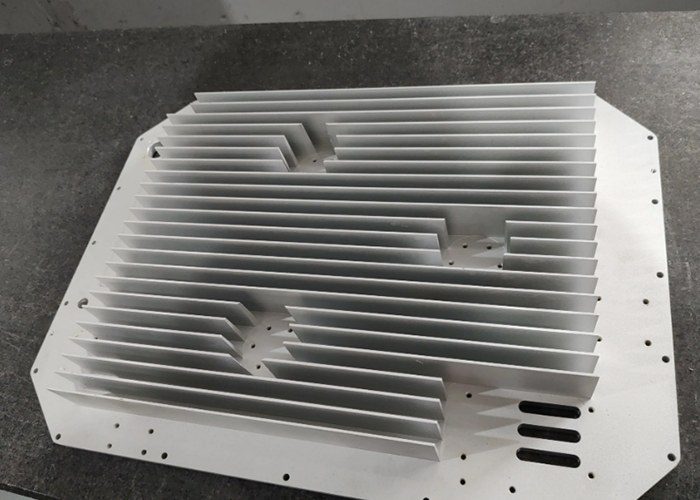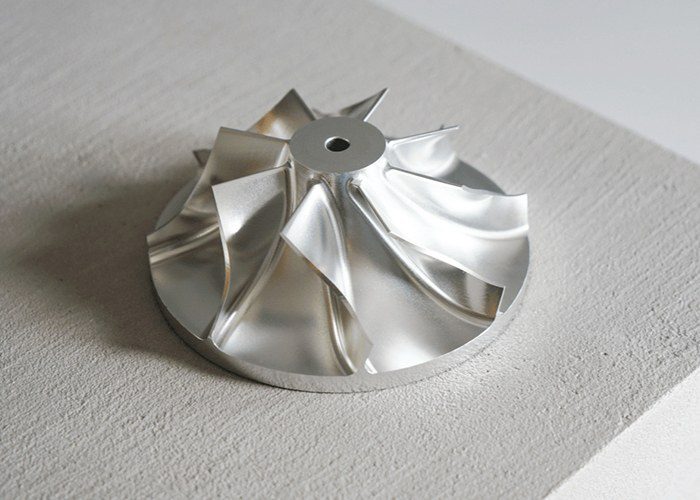
In an age where technological advancement accelerates at breakneck speed, the components that power our world often go unnoticed. Yet, behind every smooth-running engine, life-saving medical device, and reliable aircraft lies a fundamental enabler: the precision CNC machined part. This manufacturing process, which combines computer-controlled automation with advanced tooling, is the bedrock upon which modern high-performance industries are built.
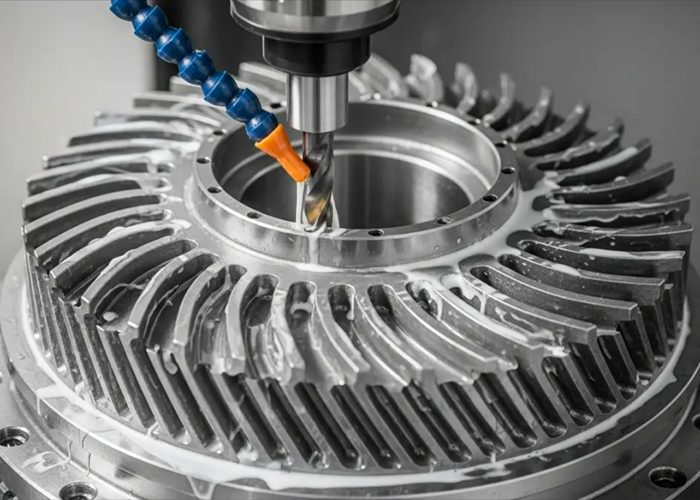
What Defines a Precision CNC Machined Part?
At its core, precision CNC machining is a subtractive manufacturing process that creates custom components by systematically removing material from a solid workpiece. While standard CNC machining might produce parts with tolerances of about 0.12 to 0.2 millimeters, precision machining operates on an entirely different level—achieving tolerances as tight as 0.0001 inches (0.0025 millimeters). This is the difference between a part that simply fits and one that performs flawlessly under extreme conditions.
The process begins with a digital blueprint—a 3D CAD model that captures every dimension, feature, and tolerance requirement. Computer-Aided Manufacturing (CAM) software then translates this model into G-code, the language that directs the CNC machine’s every cut and movement. Advanced multi-axis machines, often with four, five, or more controlled axes, can perform simultaneous operations with minimal human intervention, producing complex geometries that would be impossible to achieve manually.
The Precision Imperative: Why It Matters
The demand for such exacting standards is not arbitrary—it stems from the unforgiving requirements of industries where failure is not an option. In aerospace, a turbine blade must endure extreme pressure, vibration, and temperature while maintaining structural integrity. In medical device manufacturing, a surgical instrument with a surface defect can compromise sterility, and an implant with a dimensional error can endanger a patient’s life. In automotive engineering, even a fraction of a millimeter of misalignment in a camshaft component can lead to inefficiency, premature wear, or catastrophic failure.
Precision CNC machining delivers not only accuracy but also consistency and repeatability. Once a program is proven, the machine can produce thousands of identical parts with minimal variation. This repeatability is essential for assembly-line manufacturing, where components from different production runs must fit together seamlessly.
Advantages Beyond Accuracy
The benefits of precision CNC machining extend well beyond dimensional precision. The automation inherent in CNC processing reduces human error and dramatically increases production efficiency. Complex parts that once required hours of skilled manual labor can now be produced in a fraction of the time.
Furthermore, precision-machined parts typically require little to no additional finishing. The surface quality achieved directly from the machine often eliminates costly polishing and deburring processes, reducing both production time and cost. The versatility of CNC machining is another significant advantage—it can work with an extraordinary range of materials, from aluminum and stainless steel to titanium, composites, and even ceramics.
Applications Across Industries
The reach of precision CNC machining is virtually limitless. In aerospace and defense, it produces everything from satellite brackets to jet engine blades, forming the backbone of mission-critical systems. In the automotive sector, it manufactures engine components, transmission parts, and fuel injectors with the consistency required for mass production. The medical device industry relies on precision machining for surgical instruments, implants, and custom prosthetic components that must meet stringent regulatory standards. In electronics, precision-machined enclosures, heat sinks, and sensor housings are essential for managing thermal performance and electromagnetic interference.
The Future: Smarter, Faster, More Integrated
As we look toward the future, precision CNC machining is evolving rapidly. Artificial intelligence is now being integrated into machining systems, enabling predictive maintenance, real-time parameter optimization, and automated toolpath generation. Hybrid manufacturing—combining additive (3D printing) and subtractive processes within a single machine—is emerging as a powerful trend, offering unprecedented flexibility and reducing material waste.
The global precision machining market reflects this momentum, with projections indicating substantial growth in the coming years. As industries continue to demand higher performance, tighter tolerances, and faster delivery, precision CNC machining will remain at the forefront of manufacturing innovation.
Conclusion
Precision CNC machining parts are far more than metal components—they are the quiet heroes behind the technologies that define modern life. From the aircraft that carry us across oceans to the medical devices that save lives, these precisely engineered parts embody the marriage of digital design and physical manufacturing. In a world that demands ever-greater performance, reliability, and efficiency, the importance of precision CNC machining will only continue to grow.