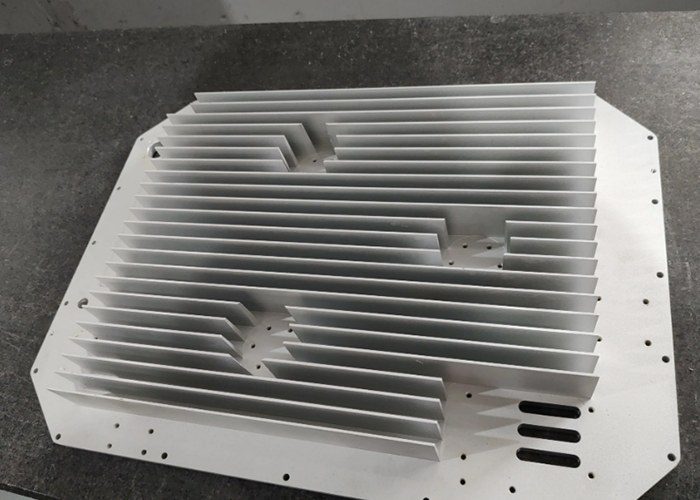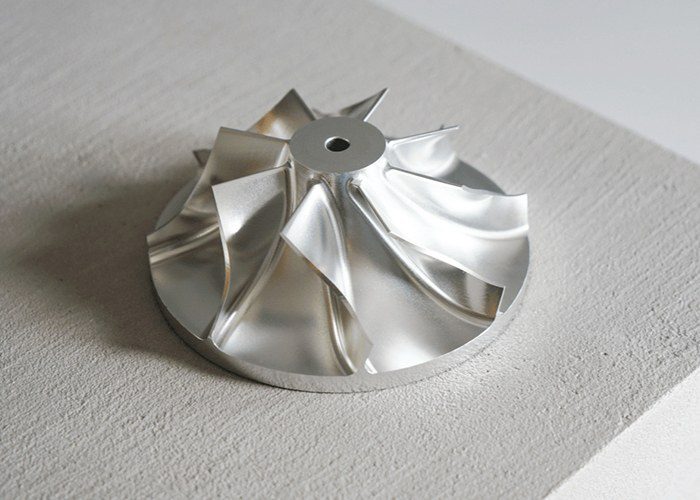
In today’s fast-paced manufacturing landscape, the ability to produce high-quality, precision-engineered metal components on demand has become a cornerstone of industrial competitiveness. Custom CNC (Computer Numerical Control) machining of metal parts represents the pinnacle of modern subtractive manufacturing—a process that transforms solid metal blocks into intricate, functional components with unparalleled accuracy and repeatability. From aerospace turbines to medical implants and automotive powertrains, custom CNC machined metal parts are the invisible backbone of countless products that define our modern world.
Understanding the CNC Machining Process
At its core, CNC machining is a computer-controlled manufacturing process that removes material from a solid workpiece to create precise, custom-shaped parts. The journey begins with a three-dimensional Computer-Aided Design (CAD) model, which is then converted into machine-readable G-code—a programming language that directs the cutting tools along precise paths to achieve the dimensions and surface finish specified in the design.
The process typically unfolds in several stages: design and CAD modeling, CAM programming to generate toolpaths, machine setup with appropriate workholding and cutting tools, and finally the machining execution itself—often divided into roughing, semi-finishing, and finishing operations. This digital-to-physical workflow bridges the gap between concept and reality, enabling manufacturers to produce parts that perfectly match their digital blueprints.
Key CNC Machining Methods: Milling and Turning
Custom metal parts are primarily produced through two fundamental CNC methods: milling and turning. CNC milling uses rotating cutting tools to remove material from a stationary workpiece, making it ideal for producing flat, contoured, and complex surfaces. The capability of multi-axis milling—from 3-axis systems for simple geometries to 5-axis machines for intricate, multi-surface parts—allows manufacturers to create highly complex components in a single setup, reducing positioning errors and improving overall accuracy.
CNC turning, on the other hand, rotates the workpiece while a stationary cutting tool removes material. This method excels at producing cylindrical parts such as shafts, pins, and threaded components, offering fast cycle times and cost efficiency for rotationally symmetric geometries. The fundamental distinction between the two lies in motion: turning rotates the workpiece, while milling rotates the tool. Understanding this difference is essential for engineers and procurement professionals seeking to optimize both cost and part geometry.
The Critical Role of Material Selection
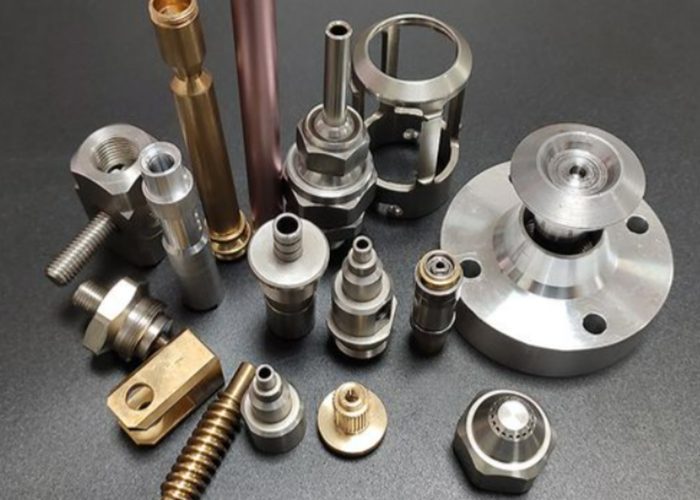
Choosing the right metal for a custom CNC machining project is one of the most consequential decisions in the manufacturing process. The selected material directly impacts part performance, durability, machinability, surface quality, cost, and lead time. Common materials include aluminum alloys such as 6061 and 7075, prized for their lightweight properties and excellent machinability; stainless steels like 304 and 316, valued for corrosion resistance and strength; titanium alloys, chosen for high strength-to-weight ratios in demanding applications; and brass and copper, favored for electrical conductivity and aesthetic finishes.
Each material presents unique trade-offs. Aluminum 6061 offers approximately 90% machinability relative to the baseline 1212 free-cutting steel, while titanium Grade 5 presents greater challenges at just 20–30% machinability due to its low thermal conductivity. These differences influence tool wear, machining time, and ultimately, production costs—making informed material selection essential for balancing performance requirements with economic considerations.
Advantages Driving Global Demand
Custom CNC machining of metal parts offers compelling advantages that explain its widespread adoption across industries. Precision and repeatability stand at the forefront—CNC machines can achieve tolerances as tight as ±0.01mm or better, ensuring that every part conforms exactly to design specifications. This level of accuracy is simply unattainable through manual machining methods.
It also offers the added benefit of easily producing complex geometries. Multi-axis CNC systems can create intricate shapes, curved surfaces, and internal features that would be impossible or prohibitively expensive with conventional manufacturing techniques. Furthermore, CNC machining offers remarkable flexibility, supporting both rapid prototyping and high-volume production using the same machines and setups. This scalability allows companies to move seamlessly from design validation to full-scale manufacturing without retooling.
Cost efficiency, particularly for medium to high-volume production, further strengthens the case for CNC machining. While initial setup costs may be higher than some alternatives, the automated precision of CNC machining significantly reduces per-part costs in repeated production runs. Additionally, the process minimizes material waste compared to traditional methods, contributing to both economic and environmental sustainability.
Applications Across Critical Industries
The versatility of custom CNC machined metal parts has made them indispensable across a broad spectrum of industries. In aerospace and defense, CNC machining produces mission-critical components such as turbine blades, structural parts, landing gear components, and satellite brackets—all demanding the highest levels of accuracy and reliability. The automotive sector relies on CNC machining for engine components, transmission housings, shafts, valve assemblies, and suspension parts, where consistency and precision are paramount.
The medical device industry represents another vital application area. CNC machining enables the production of surgical instruments, orthopedic implants, dental components, and other precision medical devices requiring micron-level accuracy and biocompatible materials. In robotics and industrial automation, CNC-machined components form the structural and mechanical foundation of robotic arms, joints, gear housings, and end-effectors, delivering the strength and precision that repetitive, high-load operations demand.
Industry Trends and the Future Outlook
The global market for CNC machining services continues to expand at a remarkable pace. The global CNC metal cutting service market was valued at approximately USD 52.7 billion in 2024 and is projected to reach USD 88.6 billion by 2031, representing a compound annual growth rate of 7.7%. This growth is driven by increasing demand for customized, precision-engineered components across automotive, aerospace, medical, and electronics sectors.
Several key trends are shaping the industry’s evolution. First, the shift toward non-standard, application-specific parts continues to accelerate, with custom machining becoming the preferred solution for unique design requirements. Second, advancements in multi-axis machining technology—particularly 5-axis systems—enable the production of increasingly complex parts with fewer setups and greater accuracy. Third, the integration of automation, AI-driven process planning, and digital manufacturing platforms is streamlining production workflows, reducing lead times, and enhancing quality control.
Conclusion
Custom CNC machining of metal parts has evolved from a specialized manufacturing technique into a fundamental enabler of modern industrial innovation. By combining digital precision with material versatility and scalable production capabilities, CNC machining empowers engineers and manufacturers to transform ambitious designs into tangible, high-performance components. As industries continue to push the boundaries of what is possible—demanding tighter tolerances, more complex geometries, and faster time-to-market—custom CNC machining will remain an indispensable tool in the global manufacturing arsenal, driving progress across aerospace, automotive, medical, robotics, and beyond.