
In today’s fast-paced industrial landscape, the demand for high-precision components is greater than ever. Original Equipment Manufacturers (OEMs) across sectors such as automotive, aerospace, medical devices, electronics, and robotics rely on custom-machined parts that meet exact specifications. Among the most efficient and accurate methods for producing such components is CNC turning. When combined with OEM requirements, CNC turning parts become the backbone of reliable, scalable, and cost-effective production.
Understanding CNC Turning
CNC (Computer Numerical Control) turning is a subtractive manufacturing process in which a rotating workpiece is fed against a stationary cutting tool to remove material and create cylindrical or contoured parts. Unlike conventional lathes, CNC turning centers are fully automated, controlled by pre-programmed software and G-code instructions. This automation ensures repeatability, tight tolerances, and the ability to produce complex geometries.
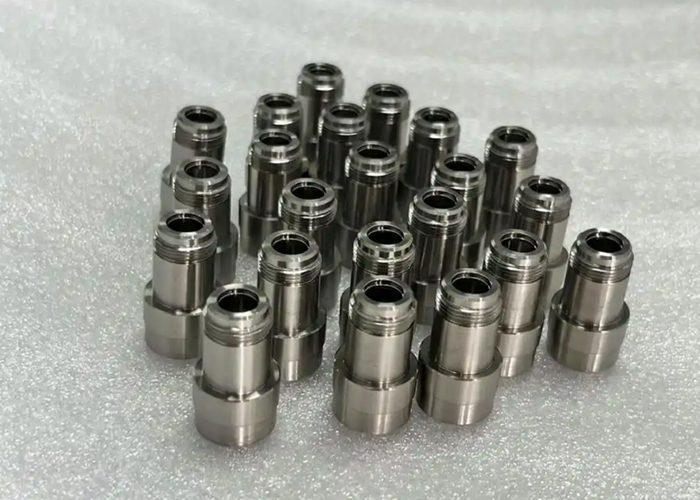
OEM CNC turning parts are not off-the-shelf items; they are engineered according to client-provided drawings, 3D models, or functional samples. The process is ideal for manufacturing shafts, bushings, pins, connectors, threaded parts, pulleys, rollers, and numerous other rotational-symmetric components. Materials commonly used include aluminum, stainless steel, brass, copper, titanium, plastics like PEEK and Delrin, and even exotic alloys.
Why OEMs Choose CNC Turning
For OEMs, outsourcing turned parts to a specialized CNC turning shop offers multiple strategic advantages:
- Precision and Consistency – CNC turning machines achieve tolerances as tight as ±0.005 mm (or even finer with Swiss-type lathes). This repeatability ensures that every part in a production run of thousands or millions is identical to the first, reducing assembly issues and warranty claims.
- Customization – Every OEM has unique design requirements. CNC turning allows for variable diameters, internal and external threads, knurling, grooves, chamfers, and cross-holes. Secondary operations like milling, drilling, and tapping can often be performed on live-tooling turning centers in a single setup, reducing handling and improving accuracy.
- Material Versatility – From soft plastics to hardened steel, CNC turning adapts to different machinabilities. Experienced shops can recommend optimal feed rates, tool coatings, and coolants to achieve superior surface finishes (down to 0.2 μm Ra) and dimensional stability.
- Scalability – CNC turning works equally well for prototypes (as few as 5–10 pieces) and high-volume production (millions of parts). Rapid setup using CAM software and quick-change tooling means low-volume orders remain economical.
- Reduced Lead Times – Modern CNC lathes with bar feeders can run lights-out 24/7. For urgent OEM needs, turned parts can be delivered in days rather than weeks, accelerating time-to-market.
The Quality Assurance Ecosystem
OEM CNC turning parts must undergo rigorous quality control. Reputable manufacturers implement ISO 9001:2015 or AS9100D (aerospace) management systems. Key QC measures include:
- First Article Inspection (FAI) – A complete dimensional and material check of the first part before mass production.
- In-Process Monitoring – Automated probes and laser systems verify critical dimensions at set intervals.
- Final Inspection – Using CMMs (coordinate measuring machines), optical comparators, surface testers, and thread gauges.
- Traceability – Each batch or individual part may be marked with serial numbers or barcodes to track material certificates, machining parameters, and inspection records.
Common Applications Across Industries
- Automotive: Engine valve stems, transmission shafts, brake pistons, sensor housings.
- Medical: Bone screws, surgical instrument handles, implantable pins (biocompatible grades).
- Aerospace: Hydraulic fittings, actuator rods, landing gear components (high-strength alloys).
- Electronics: Connector pins, heat sink bosses, enclosure standoffs.
- Robotics & Automation: Precision rollers, encoder shafts, end-effector mounts.
Design Tips for OEM CNC Turning Parts
To optimize manufacturability and cost, engineers should consider:
- Avoid unnecessarily deep internal bores beyond standard tooling reach.
- Specify realistic tolerances – over-tightening increases inspection time and scrap rates.
- Add chamfers or radii at internal corners to extend tool life.
- Choose standard stock diameters to reduce material waste and secondary roughing.
- If possible, reduce the number of setups by designing for live tooling.
Conclusion
OEM CNC turning parts represent a marriage of precision engineering and flexible manufacturing. By leveraging advanced CNC lathes, skilled programmers, and robust quality systems, suppliers deliver components that fit perfectly, perform reliably, and support the OEM’s brand reputation. Whether you need a simple bushing or a complex stepped shaft with cross-drilled holes, CNC turning offers the speed, accuracy, and consistency that modern production demands.
Selecting the right partner – one with the right machines, materials expertise, and a commitment to continuous improvement – is the final piece of the puzzle. With that alliance, your next product can achieve new levels of performance and economy.


