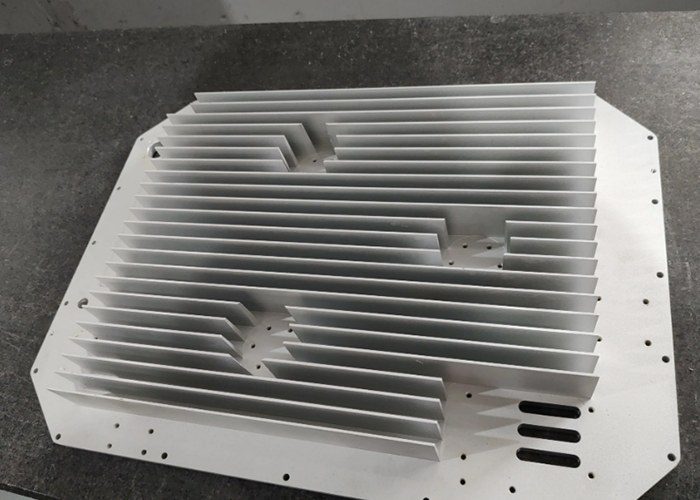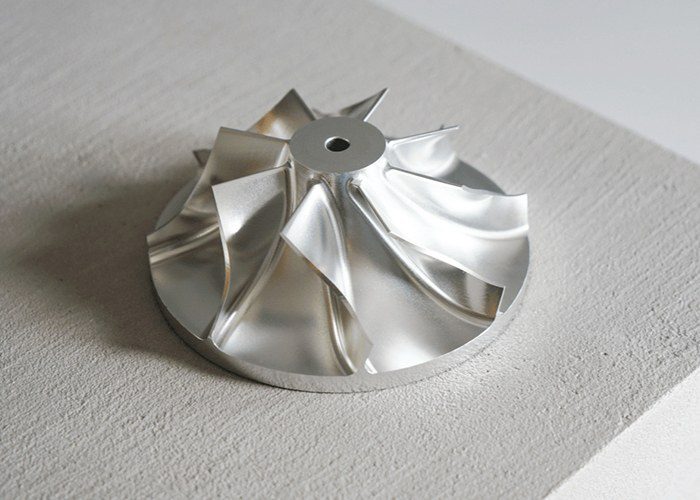
In the modern manufacturing landscape, CNC machined stainless steel parts have become indispensable across a wide range of industries. From medical implants to aerospace components, these parts offer an unmatched combination of strength, corrosion resistance, and dimensional accuracy. This article explores the intricacies of CNC machining for stainless steel, its advantages, applications, and best practices.
What is CNC Machining?
CNC (Computer Numerical Control) machining is a subtractive manufacturing process where pre-programmed computer software dictates the movement of factory tools and machinery. For stainless steel parts, this typically involves milling, turning, drilling, or grinding. The process can produce complex geometries with tolerances as tight as ±0.005 mm, something traditional manual machining cannot consistently achieve.
Why Stainless Steel?
Stainless steel is an alloy of iron, chromium (at least 10.5%), and often nickel, molybdenum, or other elements. Its popularity in CNC machined parts stems from several key properties:
- Corrosion resistance: The chromium forms a passive oxide layer that protects against rust and chemical attack.
- High strength-to-weight ratio: Ideal for load-bearing applications.
- Temperature tolerance: Performs well in both cryogenic and high-heat environments.
- Hygiene and cleanability: Non-porous surface prevents bacterial growth, making it perfect for medical and food processing equipment.
- Aesthetic appeal: Can be polished to a mirror finish or given a brushed look.
Common grades used in CNC machining include 303 (free-machining), 304 (general purpose), 316 (marine grade), and 17-4 PH (precipitation-hardening).
The CNC Machining Process for Stainless Steel
Machining stainless steel is more challenging than aluminum or plastics due to its toughness and work-hardening tendency. Here’s how skilled machinists tackle it:
- Material selection and preparation: The right grade is chosen based on application requirements. Bars, rods, or blocks are cut to size.
- Fixturing: Stainless steel parts must be securely clamped to prevent vibration, which can cause tool chatter and poor surface finish.
- Tooling: Carbide tools with specialized coatings (e.g., TiAlN or AlTiN) are used. These withstand the high heat generated during cutting.
- Cutting parameters: Lower cutting speeds (compared to aluminum) but higher feed rates help avoid work hardening. Coolant is essential—flood coolant or high-pressure mist removes chips and reduces friction.
- Machining operations:
- CNC milling creates flat surfaces, slots, pockets, and 3D contours.
- CNC turning produces cylindrical features like shafts, bushings, and threaded components.
- Multi-axis machining (4-axis or 5-axis) allows complex parts to be completed in one setup, improving accuracy.
- Deburring and finishing: After machining, sharp edges are removed. Secondary operations may include passivation (removing free iron to enhance corrosion resistance), electropolishing, bead blasting, or heat treating.
Quality Control
Precision stainless steel parts demand rigorous inspection. Common methods include:
- Coordinate Measuring Machines (CMM) for dimensional verification
- Optical comparators for profile checks
- Surface roughness testers
- Hardness testing (Rockwell or Vickers)
- Non-destructive testing (dye penetrant or ultrasonic) for critical applications
Many shops are ISO 9001 or AS9100 certified, ensuring consistent quality.
Applications Across Industries
The unique properties of CNC machined stainless steel parts make them essential in:
- Aerospace: Landing gear components, hydraulic fittings, engine mounts—where failure is not an option.
- Medical: Surgical instruments, orthopedic implants (often 316L or 17-4 PH), and dental tools. Biocompatibility and sterilizability are key.
- Automotive: Fuel injector bodies, turbocharger components, exhaust flanges, and transmission parts.
- Food and beverage: Valves, pumps, nozzles, and conveyor system parts. Stainless steel resists acidic foods and cleaning chemicals.
- Marine: Shafts, propellers, underwater connectors—316 stainless steel withstands saltwater corrosion.
- Oil and gas: Downhole tools, valve bodies, and pipeline fittings exposed to sour gas or seawater.
- Industrial automation: Robot end-effectors, bearing housings, and precision gearing.
Advantages Over Other Manufacturing Methods
Compared to casting, forging, or 3D printing, CNC machined stainless steel parts offer:
- No minimum order quantity: Ideal for prototyping and low-volume production.
- Excellent surface finish: Often eliminates secondary grinding.
- Full material density: Unlike some additive processes, no porosity or internal voids.
- Design flexibility: Changes can be made quickly by editing the CAD file.
- Short lead times: For simple parts, delivery can be within days.
Challenges and Solutions
Machining stainless steel does present difficulties:
- Work hardening: If a tool rubs instead of cuts, the surface hardens. Solution: maintain aggressive chip loads and sharp tools.
- Heat generation: Excessive heat dulls tools and distorts parts. Solution: use through-spindle coolant or high-pressure systems.
- Built-up edge (BUE): Stainless can weld itself to the cutting edge. Solution: apply proper tool coatings and lubricants.
Future Trends
The field of CNC machined stainless steel parts is evolving. Automation with robotic part loaders, in-process gauging, and AI-driven tool wear prediction are increasing efficiency. Hybrid manufacturing (combining CNC machining with additive processes) allows repair of expensive stainless steel components. Additionally, sustainable practices like dry machining (using minimum quantity lubrication) and recycling stainless steel chips are gaining traction.
Conclusion
CNC machined stainless steel parts represent a cornerstone of precision engineering. Their robustness, coupled with the exactness of computer-controlled machining, makes them the go-to choice for demanding applications. Whether you need a single prototype or a million-piece production run, understanding the capabilities and limitations of this process ensures optimal design and performance. As technology advances, we can expect even tighter tolerances, faster turnaround, and greener practices—solidifying stainless steel’s role in the future of manufacturing.