
In the grand narrative of human progress, few elements have been as consistently pivotal as our ability to shape metal. From the bronze tools of ancient civilizations to the titanium alloys powering modern jet engines, the story of industry is, at its core, the story of metal working parts. These components—ranging from microscopic screws to massive structural beams—are the unsung heroes of the modern world. They are the silent, durable building blocks that enable everything from the car we drive to the smartphone in our pocket and the infrastructure that supports our daily lives.
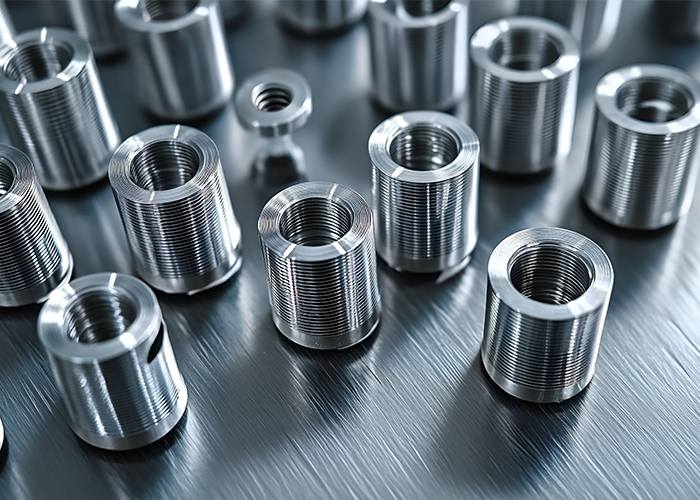
Metal working parts are defined by their transformation from raw, often unassuming ore into high-precision instruments of function. This transformation is a complex interplay of physics, chemistry, and engineering prowess. The journey of a metal part typically begins with a design, often a computer-aided design (CAD) model that specifies dimensions, tolerances, and material specifications with micron-level accuracy. The choice of material is the first critical decision. Is the part destined for high-stress aerospace applications, requiring the strength-to-weight ratio of aluminum or Inconel? Does it need the corrosion resistance of stainless steel for medical implants? Or the electrical conductivity of copper for a circuit board? Each material dictates a unique path through the manufacturing process.
The actual creation of these parts falls into several broad categories, each with its own advantages and artistic nuance. Subtractive manufacturing, commonly known as machining, remains a cornerstone. Here, craftspeople and CNC (Computer Numerical Control) machines use lathes, mills, and grinders to carve a finished part from a solid block of material. Watching a CNC mill in operation is to witness a ballet of precision; a rotating carbide drill bit moves at thousands of revolutions per minute, shearing away metal in a cascade of iridescent chips to reveal a part with surfaces so smooth they can seem liquid. The skill lies not just in the cutting, but in managing heat, tool wear, and the inherent stresses within the metal to ensure the final product does not warp or fracture.
In contrast, additive manufacturing, or 3D printing, has revolutionized the field by building parts layer by layer from metal powder. This approach allows for geometries that were previously impossible—intricate internal lattices that reduce weight while maintaining strength, or complex cooling channels within a single component. While subtractive manufacturing removes material to create a part, additive manufacturing adds it, minimizing waste and opening new frontiers in design optimization.
Forming processes represent another vital category. Forging, for instance, involves hammering or pressing heated metal into shape. This is not merely a shaping process; it refines the metal’s internal grain structure, aligning it with the contours of the part to create exceptional strength. A forged connecting rod in an automobile engine or a landing gear component on an aircraft is far more reliable under cyclic stress than a cast or machined equivalent. Casting, on the other hand, offers the ability to create large, complex shapes by pouring molten metal into a mold. From engine blocks to industrial pump housings, casting provides a cost-effective method for producing durable parts in high volumes.
Regardless of the manufacturing method, the journey of a metal part does not end with its shape. Secondary processes are what imbue it with its final properties and precision. Heat treatment is a critical alchemy; through carefully controlled cycles of heating and cooling, the microstructure of the metal is altered to achieve desired levels of hardness, ductility, or tensile strength. A gear must be hard on its surface to resist wear, yet tough at its core to absorb shock—a duality achieved through processes like carburizing or induction hardening. Surface finishing, from anodizing aluminum to electroplating with zinc or chromium, adds a final layer of defense against corrosion and wear, while also often providing a pleasing aesthetic.
The application of metal working parts spans the entire spectrum of human activity. In the medical field, surgical instruments and orthopedic implants demand biocompatible metals like titanium and cobalt-chrome, machined to tolerances measured in microns to ensure patient safety. In energy, the blades of a gas turbine operate in an environment of extreme heat and centrifugal force, relying on advanced superalloys and precision cooling hole drilling to maintain their integrity. In the automotive sector, the shift toward electric vehicles is creating new demand for lightweight structural components and complex battery enclosures.
Quality assurance in this field is paramount. A single defective part can lead to catastrophic failure. As such, metrology—the science of measurement—is integral. Parts are inspected using coordinate measuring machines (CMMs), laser scanners, and even X-ray computed tomography to verify that every internal and external feature conforms to the original design. This commitment to quality ensures that a bolt in a bridge, a valve in a refinery, or a bracket in a satellite will perform its duty reliably for decades.
Looking to the future, the metal working industry is on the cusp of a new era driven by automation, data, and sustainability. The integration of artificial intelligence into CNC machining allows for real-time optimization of cutting parameters, reducing cycle times and extending tool life. The pressure to decarbonize is spurring innovation in green steel production and more energy-efficient manufacturing processes. Furthermore, the development of new materials, such as high-entropy alloys and metal matrix composites, promises parts that can withstand even more extreme environments.
In conclusion, metal working parts are far more than simple industrial commodities. They are the physical manifestation of engineering knowledge, material science, and human ingenuity. Each part, whether forged in fire or sintered by laser, carries with it a legacy of precision and purpose. As technology continues to evolve, the methods of shaping metal will become ever more sophisticated, but the fundamental role of these parts will remain unchanged: to provide the strong, reliable, and precise foundation upon which our world is built. They are, and will continue to be, the backbone of industry.


