In the world of manufacturing and engineering, standardization is often hailed as a virtue. Nuts, bolts, brackets, and bearings produced to universal specifications allow for mass production, easy replacement, and global supply chains. However, there exists a parallel universe of manufacturing that is far more complex, demanding, and ultimately, more transformative: the realm of custom non-standard parts.
These are the components that do not appear in any catalogue. They cannot be purchased off the shelf from a distributor. They are born out of necessity—when an existing solution fails to meet the unique demands of a specific application. Whether in aerospace, medical devices, robotics, or high-performance automotive engineering, custom non-standard parts are the unsung heroes that enable innovation to push beyond the boundaries of the ordinary.
Defining the Non-Standard
What exactly constitutes a “non-standard” part? In essence, it is any component manufactured to a specification that falls outside of industry-standard dimensions, materials, or tolerances. While a standard bolt follows ISO or ANSI guidelines, a non-standard part might feature a unique thread pitch, a proprietary geometric shape, or be crafted from an exotic alloy like Inconel or titanium that is difficult to machine.
These parts are typically produced in small quantities—sometimes as a single prototype, other times in batches of a few hundred. The goal is not economies of scale, but precision, functionality, and absolute fidelity to the engineer’s vision.
The Drivers of Customization
The demand for custom non-standard parts is driven by several critical factors.
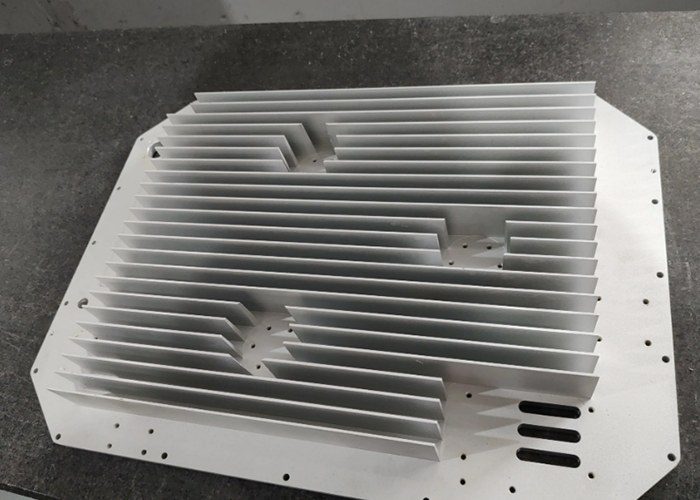
First, performance optimization is paramount. In industries like motorsports or aerospace, weight is the enemy. Engineers often require components that are skeletonized to reduce mass without compromising structural integrity—a feature impossible to find in standard parts. Similarly, thermal management may require a heat sink with a specific fin density or a cooling channel geometry that only a custom casting can provide.
Second, legacy equipment and repairs represent a massive sector for custom parts. A factory running a production line from the 1980s may find that the original manufacturer no longer exists, or the parts are obsolete. Rather than scrapping millions of dollars worth of functional machinery, manufacturers turn to machine shops to reverse-engineer and fabricate replacement components. In these cases, the non-standard part is a lifeline for operational continuity.
Third, intellectual property and proprietary design necessitate uniqueness. A medical device company developing a new surgical robot cannot use off-the-shelf actuators for critical joints; they must design custom components that fit within the spatial constraints of the human body and meet stringent FDA sterilization requirements. These parts become trade secrets, giving companies a competitive edge.
The Manufacturing Process
Creating a custom non-standard part is a journey that requires a symbiotic relationship between designer and machinist. It begins with Computer-Aided Design (CAD). In the past, creating a unique part was a laborious process of manual drafting and trial-and-error machining. Today, advanced software allows for complex geometries, including organic shapes and internal lattices, which can be simulated for stress points before any material is cut.
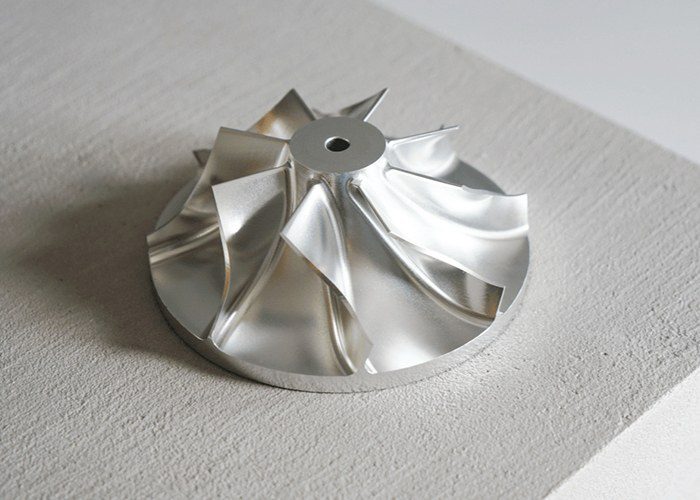
The actual fabrication relies heavily on Computer Numerical Control (CNC) machining. Multi-axis CNC mills and lathes are the workhorses of custom manufacturing. A 5-axis CNC machine can manipulate a block of aluminum or stainless steel to create an object with undercuts, angled holes, and complex contours in a single setup, ensuring tolerances as tight as +/- 0.0005 inches.
However, the landscape is rapidly evolving with the advent of additive manufacturing (3D printing) . For non-standard parts, 3D printing is revolutionary. It allows for the creation of geometries that are impossible to achieve with subtractive methods. A hydraulic manifold, for instance, can be printed as a single unit with internal channels that curve and split, reducing weight and eliminating the leak points found in traditionally assembled manifolds.
Material Selection
The choice of material for a custom non-standard part is often what distinguishes a mediocre solution from an exceptional one. While standard parts are typically limited to common grades of steel, aluminum, or plastic, custom parts can utilize specialized materials.
For high-temperature environments, such as inside a jet engine or a semiconductor manufacturing tool, materials like Hastelloy or Waspaloy are used. For medical implants, medical-grade titanium or PEEK (polyether ether ketone) polymers are required for their biocompatibility and osseointegration properties. In corrosive marine environments, custom components are often machined from duplex stainless steel or specialized bronzes. The ability to select the exact material for the environment ensures that the non-standard part does not just fit geometrically, but also survives the operational lifespan demanded of it.
The Quality Assurance Challenge
One of the biggest hurdles in custom non-standard manufacturing is quality assurance. Without a standardized blueprint to reference, every custom part requires a unique inspection protocol. This often involves First Article Inspection (FAI), where the first part off the production line is measured in its entirety to ensure it meets every dimension on the engineering drawing.
Coordinate Measuring Machines (CMMs) and optical scanners are used to verify that the physical part matches the digital twin. Because these parts are often mission-critical—such as a landing gear component or a heart valve tooling—failure is not an option. Documentation is also a key component; traceability of the material batch and machining parameters is often required to comply with industry standards like AS9100 (aerospace) or ISO 13485 (medical).
The Future of Custom Manufacturing
As we look to the future, the role of custom non-standard parts is set to expand. The rise of Industry 4.0 and digital supply chains is making it easier than ever to order bespoke components. Platforms that allow instant quoting of CNC machining or 3D printing are democratizing access to custom manufacturing, allowing startups and solo inventors to access capabilities that were once reserved for large corporations.
Furthermore, the concept of distributed manufacturing is gaining traction. Instead of ordering a bulk shipment of custom parts from a centralized factory, companies are beginning to store digital inventories. When a part is needed—whether for a repair or a new product—the file is sent to a local manufacturing facility or micro-factory to be produced on demand. This reduces warehousing costs and drastically shortens lead times.
Conclusion
Custom non-standard parts represent the intersection of engineering creativity and manufacturing capability. They are the solutions to problems that standardized components cannot solve. In a world where products are becoming increasingly specialized and performance requirements more demanding, the ability to produce high-quality, precise, one-off or small-batch components is not just a convenience—it is a competitive necessity.
From the CNC machinist programming a complex toolpath to the additive manufacturing engineer building a part layer by layer, the craftspeople who produce these parts enable the future of technology. While they may not have the volume of mass production, custom non-standard parts carry a weight far greater than their physical mass: they carry the burden of innovation itself.