
In the modern manufacturing landscape, few materials and processes share as synergistic a relationship as aluminum and Computer Numerical Control (CNC) machining. From the smartphones in our pockets to the airframes soaring above our heads, CNC processing of aluminum parts is the backbone of high-precision, high-performance engineering. This article explores the intricacies of this process, examining why aluminum has become the quintessential metal for machining, the technological nuances of CNC processing, its diverse applications, and the challenges that manufacturers face in pursuit of perfection.
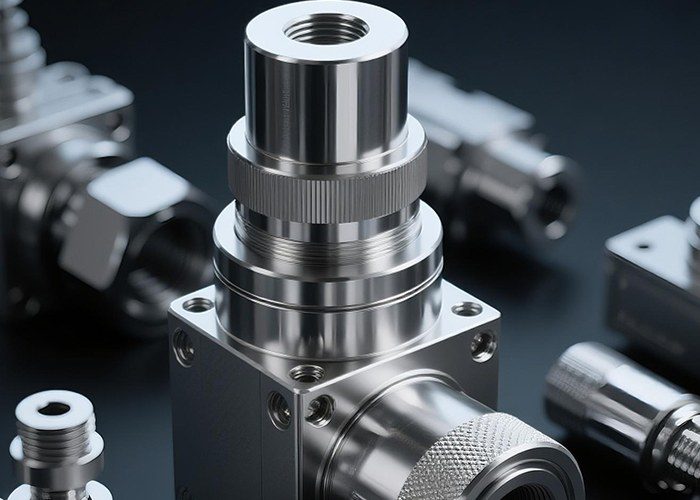
The Inherent Advantages of Aluminum
The dominance of aluminum in CNC machining is no accident; it is a result of a unique set of physical properties that align almost perfectly with the capabilities of modern milling and turning centers. First and foremost is its machinability. Unlike ferrous metals such as stainless steel or cast iron, aluminum is relatively soft and generates less friction during cutting. This allows for significantly faster spindle speeds and feed rates—often three to six times faster than steel—without causing excessive tool wear.
Furthermore, aluminum boasts an exceptional strength-to-weight ratio. For industries like aerospace and automotive, where every gram counts, aluminum provides the structural integrity of steel at roughly one-third the density. It also possesses natural corrosion resistance due to its oxide layer, high thermal and electrical conductivity, and the ability to maintain toughness at cryogenic temperatures. When combined with the precision of CNC machining, these attributes allow engineers to design complex, lightweight geometries that would be impossible to achieve through traditional casting or manual fabrication.
The CNC Process: From Solid Block to Finished Component
The journey of an aluminum part begins typically as a wrought material—either as 6061 or 7075 billet, extruded bar stock, or plate. The choice of alloy is critical. For general engineering and structural components, 6061 aluminum is the workhorse, valued for its versatility, weldability, and excellent corrosion resistance. For high-stress applications, such as aerospace fittings or rock climbing equipment, 7075 aluminum (often referred to as “aircraft grade”) is preferred due to its superior ultimate tensile strength, though it is more difficult to machine and less resistant to corrosion.
The CNC processing itself involves several stages, typically executed on 3-axis, 4-axis, or advanced 5-axis machining centers.
- Fixturing and Setup: The process begins with securing the aluminum stock. Due to aluminum’s tendency to flex under pressure—especially in thin-wall applications—vacuum chucks, custom soft jaws, or low-profile clamps are often used to minimize vibration and deformation.
- High-Speed Machining (HSM): Modern CNC processing of aluminum relies heavily on High-Speed Machining strategies. Using tools designed with specific helix angles (often 35° to 45°) and polished flutes to prevent chip welding, machines run at 10,000 to 30,000 RPM. The strategy focuses on maintaining a consistent chip load—taking lighter radial depths of cut at extremely high feed rates. This distributes heat into the chip rather than the part or the tool, preventing the aluminum from melting or sticking to the cutting edge, a common issue known as Built-Up Edge (BUE).
- Coolant and Lubrication: Heat management is paramount. While many metals require flooding coolant to protect the tool, aluminum machining often utilizes high-pressure through-spindle coolant or even minimum quantity lubrication (MQL) to evacuate chips efficiently. Because aluminum expands significantly with heat, effective cooling ensures that the final part maintains tight dimensional tolerances, often measured in microns.
Key Applications Across Industries
The versatility of CNC aluminum parts has made them indispensable across a broad spectrum of industries.
- Aerospace: In this sector, safety and weight are paramount. CNC machining produces bulkheads, wing spars, fuselage frames, and intricate hydraulic manifold blocks. The ability to produce “organic” shapes using 5-axis machining allows for topology-optimized parts that maintain strength while removing every gram of unnecessary material.
- Automotive: From high-performance racing to electric vehicles (EVs), aluminum CNC parts are critical. EV battery housings, motor mounts, transmission cases, and suspension components rely on CNC processing for the precise geometries required to dissipate heat and protect sensitive electronics.
- Medical and Robotics: The medical field demands biocompatibility and absolute precision. CNC-processed aluminum is used for surgical instruments, robotic end-effectors, and structural components for MRI machines, where the non-magnetic properties of aluminum are crucial.
- Consumer Electronics: The unibody chassis of laptops, smartphones, and smartwatches are almost exclusively made from CNC-machined aluminum. This process allows for the tight tolerances necessary for water resistance (IP67/IP68 ratings) and the smooth, anodized aesthetic finish that consumers demand.
Challenges and Solutions
Despite its advantages, CNC processing of aluminum is not without hurdles. The primary challenge is chip management. Aluminum tends to form long, stringy chips that can wrap around the tool, causing tool breakage or surface finish defects. To combat this, programmers use high-pressure coolant systems and toolpath strategies like trochoidal milling, which breaks chips into small, manageable crescents.
Another significant challenge is stress relief. Aluminum billets contain internal stresses from the extrusion or rolling process. When material is removed via CNC, these stresses are released, causing parts to warp or distort. Experienced machinists address this by roughing the part first, allowing it to stress-relieve (sometimes through thermal stabilization), and then finishing the part to final tolerances.
Surface Finishing and Post-Processing
The final step in CNC processing often involves surface finishing. Because aluminum is reactive, it is rarely left in its raw machined state. Common post-processing techniques include:
- Anodizing: An electrochemical process that thickens the natural oxide layer. Type II anodizing provides color and corrosion resistance, while Type III (hard coat) provides wear resistance suitable for moving mechanical parts.
- Media Blasting: Sand or glass bead blasting creates a uniform matte finish that hides tool marks.
- Chemical Film (Alodine): Commonly used in aerospace, this provides corrosion resistance while maintaining electrical conductivity, which is essential for grounding electronic components.
Conclusion
CNC processing of aluminum parts represents a pinnacle of modern subtractive manufacturing. It is a discipline that demands not only advanced machinery—often costing hundreds of thousands of dollars—but also a deep understanding of material science, tooling geometry, and thermal dynamics.
As industries push toward electrification, automation, and sustainability, the demand for lightweight, precise, and recyclable aluminum components will only intensify. With advancements in 5-axis automation, in-process probing, and adaptive machining, the capability to produce complex aluminum parts faster and more accurately than ever before continues to evolve. For engineers and manufacturers, mastering the art of CNC aluminum processing is not just about cutting metal; it is about delivering the reliability, performance, and precision that define the modern world.


