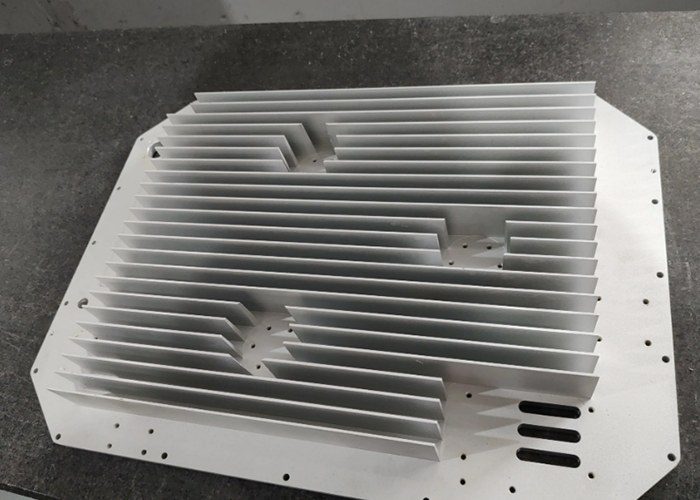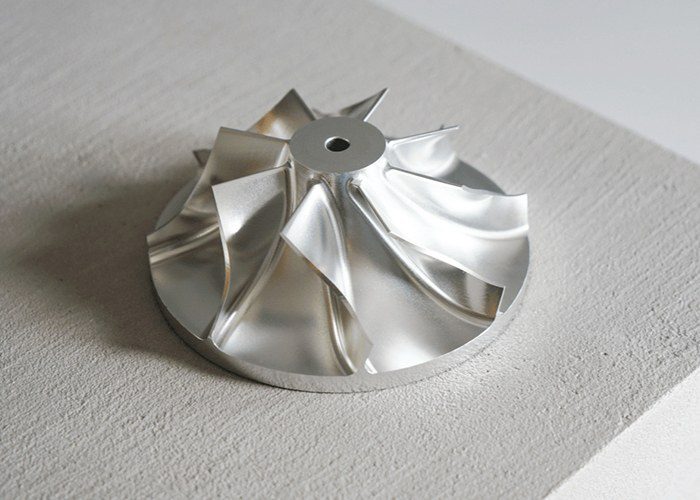
In the relentless pursuit of industrial efficiency, the human eye often overlooks the silent workhorses that make production possible. While we marvel at finished automobiles, aircraft, and electronic devices, the real magic lies in the tools that build those tools. At the heart of manufacturing lies the niche world of Metal Machining Machine Parts – the critical components that ensure lathes, mills, grinding machines, and CNC (Computer Numerical Control) centers can cut, shape, and finish raw metal with micron-level accuracy.
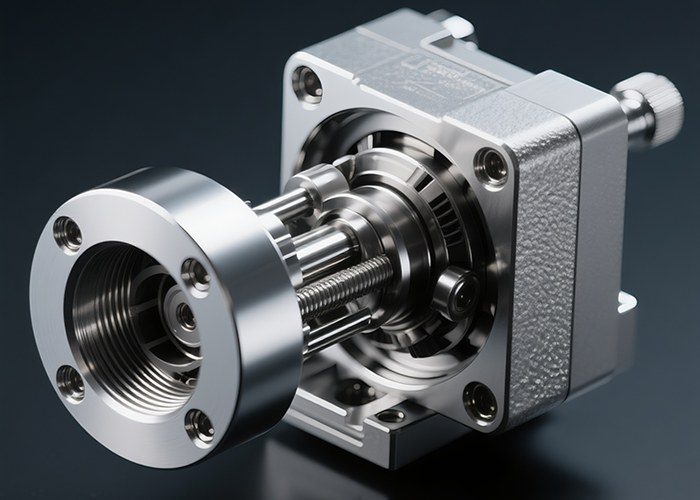
The phrase “metal machining” implies the removal of material to create a desired geometry. However, the machine parts designed for this process must possess properties that defy typical engineering standards. They are not merely structural; they are the interface between brute hydraulic force and sub-millimeter precision.
The Core Components of a Machining Center
Look inside a standard milling machine or lathe to understand the value of these parts. The Spindle Assembly is arguably the most critical. This rotating axis holds the cutting tool or the workpiece. High-speed machining spindles can rotate at 30,000 RPM or more. The bearings within this assembly are not standard ball bearings; they are often hybrid ceramic bearings that resist thermal expansion. Without perfectly balanced spindles, a $100,000 CNC machine is useless, producing chatter marks and scrapping expensive titanium or Inconel alloys.
Equally vital are the Linear Guides and Ball Screws. In modern machining, motion must be smooth and backlash-free. Linear guides use recirculating balls to provide frictionless movement for the machine table. When a machine executes a G-code command to move 0.005 inches, it is the ball screw – a precision-ground shaft with a helical raceway – that translates rotary motion into linear motion. These parts are hardened to 60 HRC (Rockwell Hardness C scale) and then ground to tolerances measured in microns. A single speck of dust in a ball nut can ruin the surface finish of a mold for medical implants.
The Challenge of Material Selection
Not all metal is created equal. The parts used in metal machining must be harder than the metal they are positioning. Consequently, manufacturers rely heavily on Alloy Steels (like 4140 or 4340) for structural parts due to their high fatigue strength. For wear components like ways and bushings, Tool Steel (such as A2 or D2) is standard, often treated with nitriding to create a diamond-hard case.
However, a quiet revolution has occurred in the use of Cast Iron, specifically Ductile or Gray Iron (Grey Iron). While it sounds archaic, cast iron is the preferred material for machine bases and frames. Why? It possesses exceptional “damping capacity.” Unlike steel, which rings like a bell when vibrated, cast iron absorbs vibration. In metal machining, vibration is the enemy of precision. Therefore, a lathe bed made of cast iron is superior to a welded steel fabrication because it literally sucks the kinetic energy out of the cutting process, leading to better surface finishes.
The Art of Manufacturing the Machines
Producing these parts requires a “chicken and egg” paradox: you need a machine tool to make machine tool parts. This process, known as “Mother Machine” machining, demands the highest level of craftsmanship.
For critical components like the Turret (the tool-holding mechanism on a CNC lathe), the manufacturing process involves multiple stages. First, the raw forging is normalized to relieve internal stresses. Then, a high-powered milling machine roughs out the shape. Next comes stress-relieving heat treatment. Finally, a precision grinder finishes the surfaces. Grinding is often the last step for metal machining parts because grinding produces a superior surface finish (often 16 Ra or better) and holds tighter tolerances (.0001 inch) than traditional cutting.
Wear, Tear, and Maintenance
Even the hardest metal parts fail eventually. In the world of machining, “downtime is bleeding money.” Therefore, the design of these parts often includes wear compensation. For example, Dovetail slides on manual mills have adjustable gibs – strips of brass or turcite (a polymer material) that can be tightened as the cast iron wears down.
Modern maintenance is shifting toward predictive analytics. Smart machine parts now exist with embedded sensors. A ball screw might have a sensor that measures torsional vibration, alerting the operator that the balls are spalling (flaking) before the screw snaps and crashes the machine head into the table. Similarly, spindle bearing temperature sensors are standard, as heat is the number one killer of metal machining precision.
The Future: Additive and Hybrid Manufacturing
The future of metal machining machine parts is being written in 3D printed metal. Additive manufacturing (AM) allows engineers to create Topology Optimized parts. A traditional cast iron angle bracket is solid and heavy. An additively manufactured steel bracket uses lattice structures inside to make it 50% lighter while retaining 95% of the stiffness.
Furthermore, hybrid machines are emerging that combine Laser Powder Bed Fusion with 5-axis milling. These machines print a near-net shape and then immediately machine it to a perfect finish. This means that complex parts, such as a spindle housing with internal cooling channels shaped like a kidney (impossible to drill), can be produced in one setup.
Conclusion
Metal machining machine parts are the unsung heroes of the supply chain. They are the marriage of metallurgy and mechanics. From the cast iron bed that absorbs violent vibrations to the ceramic bearing that spins at the speed of sound, every component must be flawless. As we push toward Industry 4.0 and the need for faster, cleaner, and more precise manufacturing, the demand for these specialized parts will only grow. They prove a simple engineering truth: to make things perfectly, the machine itself must be a masterpiece.