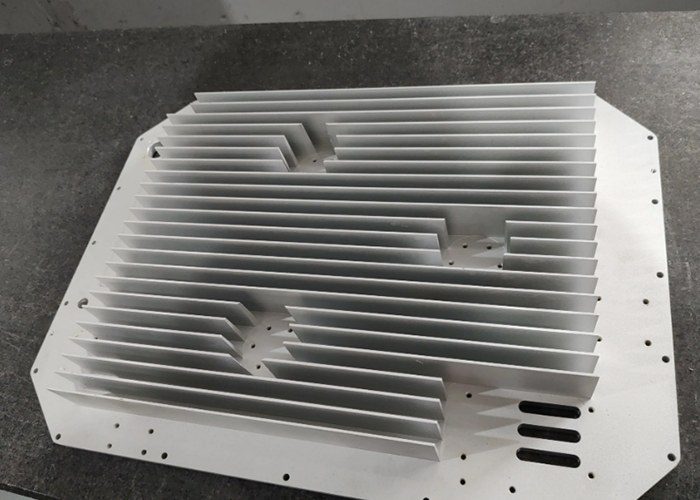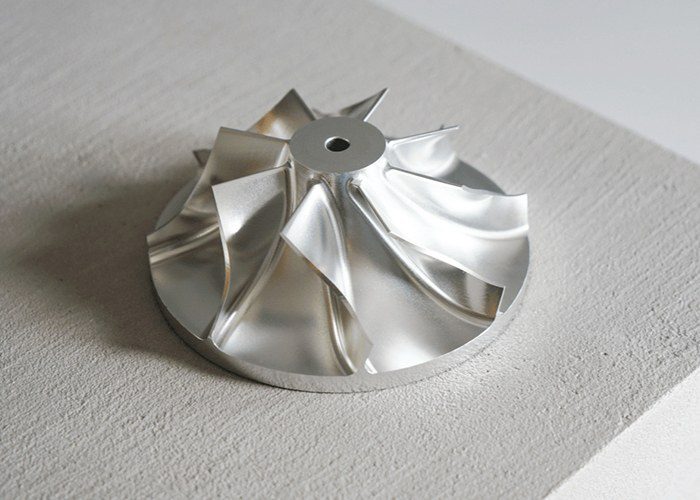
In the ever-evolving landscape of industrial manufacturing, the demand for high-precision, durable, and complex machine parts has never been greater. From the engines of aerospace vehicles to the intricate components of medical devices, the quality of each part directly impacts the performance and safety of the final product. At the heart of this precision-driven industry lies Computer Numerical Control (CNC) machining—a transformative technology that has redefined how machine parts are designed, prototyped, and mass-produced. This article delves into the fundamentals, advantages, and applications of CNC machining for creating superior machine parts.
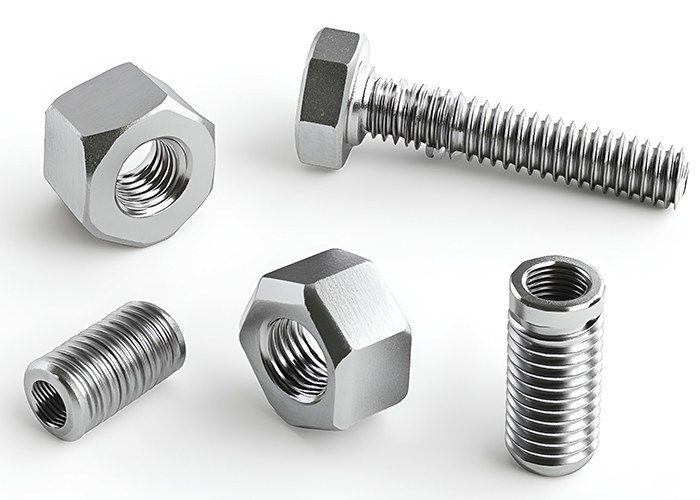
Understanding CNC Machining
CNC machining is a subtractive manufacturing process in which pre-programmed computer software controls the movement of factory tools and machinery. Unlike manual machining, which requires operators to control levers and wheels, CNC systems automate the process, ensuring unparalleled consistency and accuracy. Common CNC machines include mills, lathes, routers, grinders, and multi-axis machining centers. Each of these tools is capable of removing material from a solid block (called a “blank” or “workpiece”) to create a custom-designed part based on digital 3D models—typically created in CAD (Computer-Aided Design) software.
The workflow is straightforward yet powerful. First, an engineer designs the part using CAD. This model is then converted into a set of machine-readable instructions known as G-code. The CNC machine reads this code and executes precise movements across multiple axes (typically 3 to 5). The result is a finished part that often requires minimal post-processing.
Precision and Complexity Achievable
When it comes to machine parts, precision is non-negotiable. Tolerances—the allowable deviation from a specified dimension—often need to be within ±0.005 inches or even tighter, depending on the application. CNC machining consistently achieves tolerances as tight as ±0.0001 inches (±0.00254 mm). This level of accuracy ensures that components such as gears, shafts, bearings, and housings fit together seamlessly, reducing friction, wear, and energy loss.
Furthermore, CNC machining excels at producing complex geometries that would be impossible or prohibitively expensive to create using conventional methods. Undercuts, deep cavities, angled holes, and organic curves can all be machined with high repeatability. Multi-axis CNC machines, particularly 5-axis models, can approach a part from virtually any direction, allowing manufacturers to produce intricate machine parts in a single setup—reducing errors that accumulate when parts are repositioned manually.
Materials for CNC Machined Machine Parts
Another strength of CNC machining is its versatility with materials. The choice of material depends on the part’s function, load requirements, environmental exposure, and cost. Common materials for CNC machined machine parts include:
- Metals: Aluminum (lightweight, corrosion-resistant, easy to machine), stainless steel (high strength and corrosion resistance, ideal for medical and food-grade parts), brass, copper, titanium (excellent strength-to-weight ratio, widely used in aerospace), and tool steels (for high-wear components like molds and dies).
- Plastics: ABS, polycarbonate, Delrin (acetal), and PEEK (polyether ether ketone) are frequently machined for lightweight, electrically insulating, or chemical-resistant machine parts.
- Composites: Carbon fiber and fiberglass-reinforced materials are also machined, though they require specialized tooling to avoid delamination.
Key Advantages of CNC Machining for Machine Parts
Several distinct advantages make CNC machining the go-to method for producing critical machine components:
- Repeatability: Once a program is validated, a CNC machine can produce thousands of identical parts with virtually no variation. This is essential for industries that rely on interchangeable components.
- Speed and Efficiency: Modern CNC machines operate at high spindle speeds and feed rates, significantly reducing production time. Automated tool changers and coolant systems allow for continuous operation, even for complex parts.
- Reduced Human Error: Automation minimizes the risk of mistakes caused by operator fatigue or misinterpretation of blueprints. The result is lower scrap rates and material savings.
- Scalability: CNC machining is equally effective for one-off prototypes and full-scale production runs. This flexibility is invaluable for engineers testing new designs or for custom machinery manufacturers.
- Surface Finish Quality: Post-machining surface finishes can range from as-machined (slight tool marks) to mirror-like polished surfaces. For parts that require low friction or high cleanliness (e.g., hydraulic valves), excellent surface finish can be achieved without secondary operations.
Common Applications
CNC machined machine parts are everywhere. In the automotive industry, engine blocks, cylinder heads, transmission components, and brake calipers are routinely machined. In robotics, precision joints, frames, and actuator housings depend on CNC accuracy. In industrial automation, gears, cams, and feed screws are produced to exacting standards. Even in consumer electronics, aluminum chassis and heat sinks are CNC machined for aesthetics and thermal performance.
Limitations and Considerations
No process is perfect. CNC machining has inherent limitations, including material waste (since it is subtractive) and higher per-part costs for very large production runs compared to injection molding or casting. Additionally, certain internal features (e.g., deep, narrow channels) may require specialized tooling or electrical discharge machining (EDM). However, for the vast majority of functional machine parts—especially those requiring tight tolerances, structural integrity, and material variety—CNC machining remains the gold standard.
Conclusion
CNC machining has revolutionized the production of machine parts by delivering unmatched precision, repeatability, and design freedom. As digital design tools become more sophisticated and CNC hardware continues to evolve (with faster spindles, smarter controls, and integrated automation), the capabilities will only expand. For manufacturers, engineers, and inventors, understanding CNC machining is not just a technical asset—it is a gateway to turning complex ideas into reliable, high-performance mechanical realities. Whether you need a single critical replacement gear or a thousand identical brackets, CNC machining offers the speed, accuracy, and quality that modern industry demands.