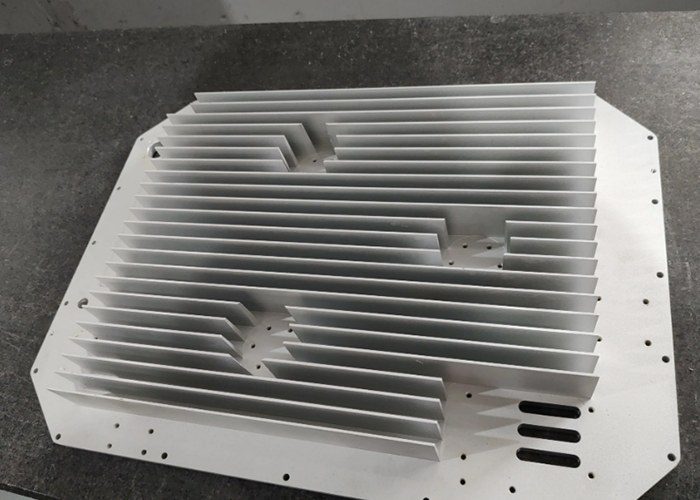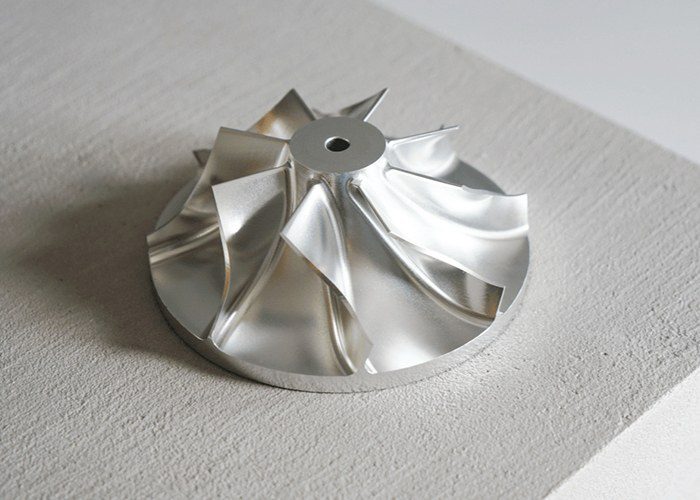
In the landscape of modern industrial production, few technologies have reshaped manufacturing as profoundly as Computer Numerical Control (CNC) processing. From the smallest medical implant to massive aerospace structural components, CNC-processed mechanical parts are everywhere—often unseen, but absolutely essential. This article explores the principles, advantages, materials, and future trends of CNC processing, shedding light on why it has become the gold standard for precision part production.
What Is CNC Processing?
CNC processing refers to the automated control of machining tools (such as mills, lathes, routers, and grinders) by means of a computer executing pre-programmed sequences of machine control commands. Unlike manual machining, which relies on handwheels and operator skill, CNC machining translates digital 3D models (typically CAD files) into precise toolpaths that guide cutting tools to remove material from a solid block or workpiece. The result is a finished mechanical part that matches the digital design with tolerances often measured in microns.
The technology emerged in the late 1940s and 1950s, evolving from punched-tape numerical control (NC) to today’s sophisticated, multi-axis machining centers. Modern CNC machines can operate on five or more axes simultaneously, enabling the creation of complex geometries that would be impossible or prohibitively expensive to achieve manually.
Key Advantages of CNC Processing for Mechanical Parts
Why has CNC machining become the go-to method for producing mechanical parts across industries? The reasons are compelling:
- Unmatched Precision and Repeatability: CNC machines consistently hold tolerances of ±0.005 inches (0.127 mm) or tighter. High-end systems can achieve ±0.0001 inches. Once a program is verified, the machine can produce thousands of identical parts with virtually no variation—critical for interchangeable components in engines, pumps, or robots.
- Complex Geometries: Multi-axis CNC milling and turning allow undercuts, angled holes, curved surfaces, and intricate internal features. For example, a turbine blade with airfoil profiles and cooling channels can be machined from a single piece of superalloy.
- Material Versatility: CNC processing works with an extensive range of materials: metals (aluminum, steel, stainless steel, titanium, brass, copper, Inconel), plastics (ABS, Delrin, nylon, PEEK, polycarbonate), composites (carbon fiber, fiberglass), and even wood and foam. Each material requires specific cutting speeds, feed rates, and tool coatings, but CNC systems adapt easily.
- Efficiency and Automation: Once set up, a CNC machine can run unattended—overnight or over weekends—using tool changers, coolant systems, and part catchers. For high-volume production, CNC processing is far faster than manual methods. For low-volume or prototype runs, it eliminates the need for expensive molds or dies.
- Reduced Human Error: Automation minimizes mistakes from fatigue, distraction, or inconsistent technique. Skilled machinists still program and supervise, but the cutting process itself follows a deterministic digital path.
The Typical CNC Workflow for Mechanical Parts
Producing a mechanical part via CNC processing involves several distinct steps:
- Design (CAD): The engineer creates a 3D solid model using software like SolidWorks, Fusion 360, or Inventor. The model includes all dimensions, tolerances, surface finishes, and material specifications.
- CAM Programming: Computer-Aided Manufacturing (CAM) software generates the toolpaths—the routes that the cutting tool will follow. The programmer defines tool selection (end mills, drills, taps, etc.), spindle speeds (RPM), feed rates (inches per minute), depth of cuts, and strategies such as roughing (rapid bulk material removal) and finishing (achieving final dimensions and surface finish).
- Machine Setup: The operator secures the workpiece (e.g., using a vise, chuck, or fixture), loads the required cutting tools into an automatic tool changer, and sets the machine’s coordinate system (zero points). For complex parts, multiple setups or a 5-axis machine may be needed.
- Simulation and Proofing: Most CAM software offers simulation showing material removal and detecting collisions or excessive tool loads. Many shops run a “dry run” with no material to verify safety.
- Machining: The CNC machine executes the program. Coolant (oil or water-based) is often applied to reduce heat and friction, flush away chips, and improve surface finish.
- Inspection and Post-Processing: After machining, parts are measured using calipers, micrometers, CMM (coordinate measuring machines), or optical comparators. Secondary operations—deburring, heat treating, anodizing, plating, or polishing—may follow.
Common Types of CNC Processing
Different mechanical part geometries call for specific CNC processes:
- CNC Milling: Uses rotating multi‑point cutting tools to machine a stationary workpiece by removing material. Ideal for flat, curved, or irregular surfaces; slots; pockets; and holes. 3-axis mills handle simple parts; 4- and 5-axis mills tackle undercuts and complex contours.
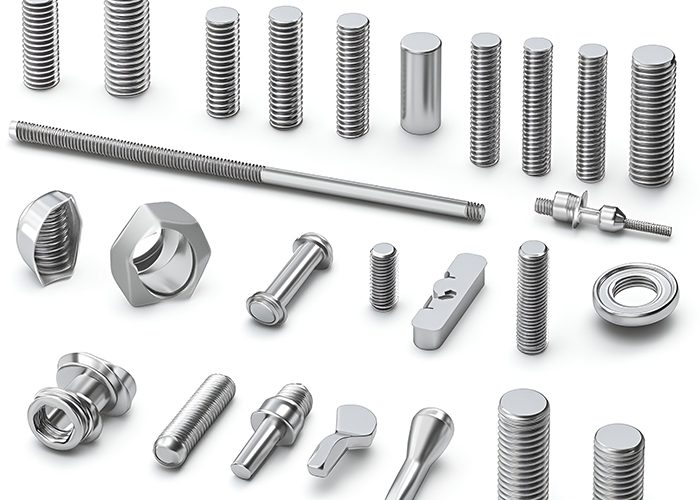
- CNC Turning (Lathe): Rotates the workpiece while a stationary single-point tool cuts away material. Perfect for cylindrical parts: shafts, bushings, pulleys, and threaded components. Live tooling equipped lathes can also mill or drill off-axis holes.
- CNC Grinding: Uses an abrasive wheel to achieve very fine surface finishes and tight tolerances, often as a finishing step for hardened steel or carbide parts.
- CNC Electrical Discharge Machining (EDM): Uses electrical sparks to erode conductive materials, ideal for hardened metals or complex cavities that traditional cutters cannot reach.
Industries That Rely on CNC Mechanical Parts
Virtually every sector that builds physical products depends on CNC processing:
- Aerospace: Turbine blades, engine mounts, landing gear components, structural brackets. Materials such as titanium and Inconel demand high-rigidity CNC machines equipped with advanced cooling systems.
- Automotive: Engine blocks, transmission housings, brake calipers, camshafts, custom racing parts. High-volume production often uses CNC for prototyping and low-volume specialty parts.
- Medical: Orthopedic implants (hip and knee joints), surgical instruments, dental abutments, and custom prosthetics. Biocompatible materials such as titanium or PEEK are common.
- Electronics: Heat sinks, enclosures for smartphones and laptops, connectors, semiconductor manufacturing fixtures. Fine features and small sizes demand precision micro-machining.
- Industrial Machinery: Gears, bearings, hydraulic valve bodies, robotic arm components, mold and die bases.
Materials Commonly Used in CNC Processing
The choice of material heavily influences machining parameters and tooling:
- Aluminum (6061, 7075) : Easy to machine, lightweight, excellent strength-to-weight ratio. Used in aerospace, automotive, consumer products.
- Stainless Steel (303, 304, 316) : Corrosion-resistant but gummy; requires sharp tools and proper speeds. Common in medical and food equipment.
- Brass and Copper: High machinability; used in electrical connectors, plumbing fittings, decorative parts.
- Titanium (Grade 5) : Extremely strong, lightweight, biocompatible—but notoriously difficult to machine (work-hardens, poor thermal conductivity). Needs rigid setups and low speeds.
- Plastics (Delrin, Nylon, PEEK, PTFE) : Easy to cut but may melt or chip. Used in bearings, seals, insulators, and medical devices.
Challenges and Limitations
Despite its strengths, CNC processing is not without drawbacks:
- High Initial Cost: Professional CNC machines range from 50,000toover50,000toover500,000. Tooling, software, and training add expense.
- Material Waste: Subtractive manufacturing removes material (often >80% of the original block becomes chips), which can be inefficient for expensive metals compared to additive manufacturing (3D printing).
- Size Constraints: Parts must fit within the machine’s work envelope (e.g., 40″ × 20″ × 20″ for a typical vertical mill). Larger parts require specialized machines.
- Tool Wear: Cutting tools degrade over time, affecting dimensional accuracy and surface finish. Regular monitoring and replacement are necessary.
The Future of CNC Processing for Mechanical Parts
CNC technology continues to evolve. Key trends include:
- Integration with Additive Manufacturing: Hybrid machines that combine 5-axis milling with laser metal deposition allow printing near-net shapes and then finishing them with CNC precision—ideal for repair and complex geometries.
- AI and Adaptive Machining: Machine learning algorithms analyze vibration, cutting forces, and tool wear in real-time, automatically adjusting feeds and speeds to optimize tool life and surface quality.
- Industrial Internet of Things (IIoT) : Connected CNC machines feed production data (uptime, tool status, part counts) to centralized dashboards, enabling predictive maintenance and just-in-time scheduling.
- Multi-Axis Democratization: Once reserved for high-end aerospace, 5-axis CNC machines are becoming more affordable and accessible, allowing small job shops to produce complex parts in a single setup.
Conclusion
CNC processing of mechanical parts is a cornerstone of modern industry. Its ability to transform digital designs into physical components with micron-level accuracy, repeatability, and material flexibility has enabled innovations from jet engines to artificial joints. While not the right choice for every application (extreme volumes may favor casting or forging; very complex internal shapes may favor 3D printing), CNC machining remains indispensable for prototyping, low-to-medium volume production, and high-precision finishing. As automation and intelligence deepen, CNC systems will continue to drive manufacturing forward—one precisely cut chip at a time.