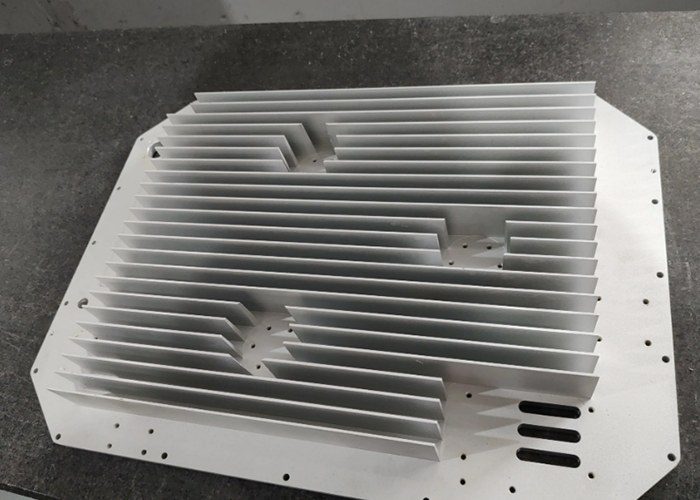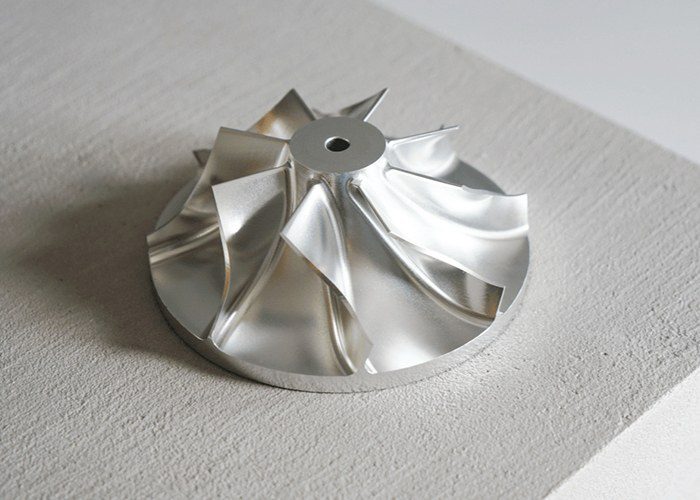
In the vast ecosystem of modern manufacturing, few processes are as fundamental—or as transformative—as mechanical machining. At its core, mechanical machining is the controlled removal of material from a workpiece to achieve a desired geometry, dimension, and surface finish. It is the process that turns raw ingots, billets, and castings into the precision components that drive every industry, from aerospace and automotive to medical devices and energy production. Without machining, the complex, high-stakes world of machine parts would simply not exist.
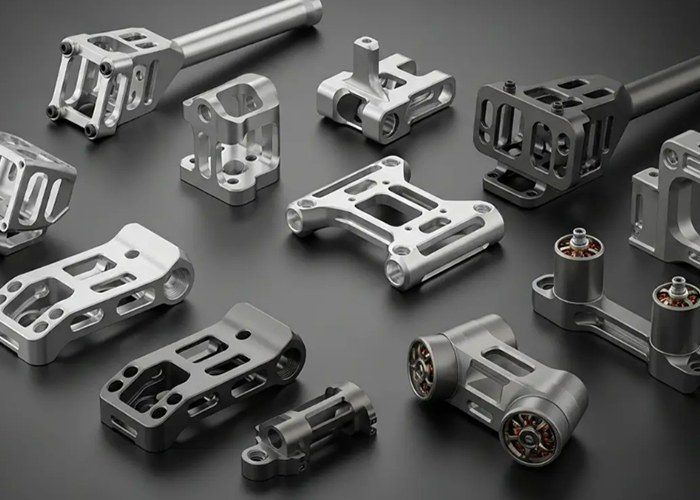
The journey of a machine part begins not on the shop floor, but in the mind of an engineer. A digital blueprint, often a Computer-Aided Design (CAD) model, defines every contour, hole, and tolerance. This model is then translated into a language that machining tools can understand—G-code, which directs the movements of cutting tools with micron-level precision. This digital-to-physical translation is where the “science” of machining meets its “art.”
The Core Processes
Mechanical machining encompasses a family of processes, each suited to specific tasks. This uses the passive voice common in engineering textbooks and places the process name at the forefront. This is the go-to method for creating cylindrical parts like shafts, pins, and bushings. Milling, on the other hand, uses a rotating multi-tooth cutter to shape a stationary workpiece. It is incredibly versatile, capable of producing flat surfaces, slots, gears, and complex 3D contours. Drilling, boring, and reaming are dedicated hole-making operations, each refining the diameter and finish of a hole for specific fastening or bearing applications. Finally, grinding, an abrasive process, is used to achieve ultra-fine surface finishes and tight tolerances that cannot be attained by traditional cutting tools. Each of these processes is a specialized tool in the machinist’s arsenal.
The Machines: The Heart of the Operation
The machines that perform these operations have evolved dramatically. The manual lathes and milling machines of the past, which required skilled operators to hand-crank wheels and levers, have been largely superseded by Computer Numerical Control (CNC) machines. A CNC machining center is a marvel of mechatronics—integrating powerful motors, rigid cast-iron frames, precision ball screws, and advanced control systems. These machines can automatically change tools, apply cutting fluids, and maintain exacting tolerances over long production runs.
In the realm of high-end manufacturing, the “multi-axis” machine reigns supreme. A 5-axis machining center provides synchronized motion of the cutting tool and workpiece across five axes. This capability allows a single setup to produce incredibly intricate parts—like turbine blades or hip implants—that would otherwise require multiple setups on simpler machines. This reduces error, improves accuracy, and drastically shortens lead times.
The Materials: The Crucible of Choice
The choice of material carries no less importance than the machining operation itself. The machinability of a material—its ease of cutting—dictates tool selection, cutting speeds, and feed rates. Common materials include:
- Steel alloys: The workhorses of industry, offering a balance of strength, toughness, and cost. Stainless steels add corrosion resistance for demanding environments.
- Aluminum alloys: Lightweight, easy to machine, and often used in aerospace and automotive applications where weight is a primary concern.
- Titanium alloys: Exceptionally strong, lightweight, and corrosion-resistant, but notoriously difficult to machine. Its low thermal conductivity and high strength cause rapid tool wear, requiring specialized techniques and tooling.
- Plastics and composites: Polymers like PEEK and PTFE are machined for seals, insulators, and medical implants. The rise of carbon-fiber composites demands machining strategies that prevent delamination and fiber pull-out.
The Machinist: The Unseen Hand
While CNC machines are automated, they are not autonomous. The modern machinist is a highly skilled professional who combines the instincts of a craftsman with the knowledge of a materials scientist and a programmer. They select the appropriate cutting tools (coated carbides, ceramics, or cubic boron nitride), determine the optimal spindle speed and feed rate, and write the code that guides the machine. They also inspect the parts using precision measuring instruments like micrometers, height gages, and coordinate measuring machines (CMMs), ensuring that every dimension falls within the specified tolerance—often measured in thousandths or even millionths of an inch.
Quality and Precision: The Non-Negotiable Imperative
In high-stakes industries like aerospace, a single flawed part can be catastrophic. Therefore, quality assurance is baked into every stage of the machining process. Statistical Process Control (SPC) actively monitors machining parameters in real time, instantly flagging any deviations. In-process probing uses the machine’s own tools to measure a part while it is still set up, allowing for automatic adjustments to correct for tool wear. After machining, parts may undergo non-destructive testing (NDT) methods like dye-penetrant inspection or ultrasonic testing to detect microscopic cracks.
The Future Landscape
The field of mechanical machining is not static. We are witnessing the dawn of the “smart factory,” where CNC machines are connected to the Industrial Internet of Things (IIoT). These machines communicate with each other and with central servers, providing data on tool life, energy consumption, and part quality. Artificial Intelligence (AI) is being used to predict tool failure and optimize machining parameters dynamically. Furthermore, the integration of additive manufacturing (3D printing) with subtractive machining is creating a new paradigm: “hybrid manufacturing.” This allows for the near-net shape creation of parts that are then finished to precision via machining.
Conclusion
Mechanical machining is far more than just cutting metal. It is a sophisticated, multi-faceted discipline that lies at the foundation of our technological civilization. It is the silent, precise, and relentlessly innovative force that turns raw materials into the machine parts that power our world. From the gears in a car to the engines in a jet, from the instruments in a surgical suite to the turbines in a power plant, the products of mechanical machining are everywhere, a testament to human ingenuity and the enduring quest for precision. As we march into an age of even greater automation and connectivity, the fundamental principles of material removal, process control, and unwavering quality will remain the essential pillars of manufacturing.