
In the modern industrial landscape, the ability to manufacture complex spare parts with high precision and efficiency is paramount. Computer Numerical Control (CNC) machining has emerged as the gold standard for producing intricate components that meet the demanding requirements of aerospace, automotive, medical, and energy sectors. Whether producing turbine blades with micron-level tolerances or bespoke medical implants, CNC machining manufactures parts characterized by both intricate geometries and mission-critical functionality. This article explores the key technologies, advantages, applications, and quality considerations involved in CNC machining complex spare parts.
The Technological Foundation: Multi-Axis Machining
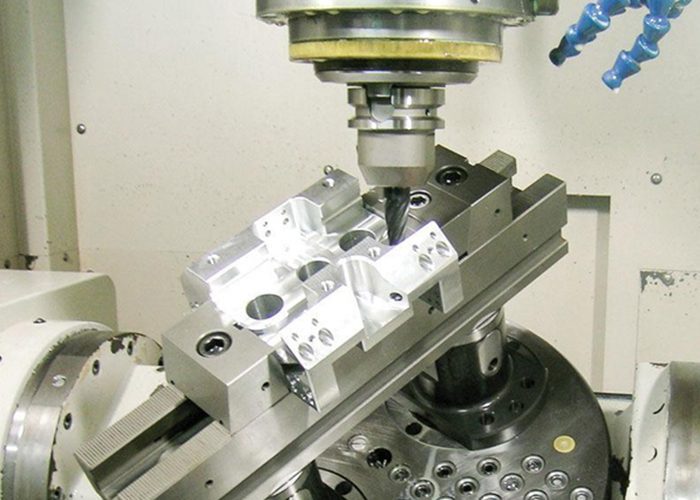
At the heart of complex spare parts manufacturing lies multi-axis CNC machining technology. Unlike traditional 3-axis machines, which are limited to linear movements, modern 5-axis machining centers coordinate three linear axes (X, Y, Z) with two rotational axes, enabling continuous synchronized toolpath control. This capability allows the cutting tool to maintain the optimal orientation relative to the workpiece surface at all times, making it possible to machine complex contours and free-form surfaces efficiently.
The advantages of multi-axis machining are substantial. First, it minimizes clamping errors by allowing multiple surfaces of a complex part to be machined in a single setup, avoiding the accumulation of positioning errors caused by repeated clamping. Second, it improves tool accessibility, enabling tools to reach areas that are difficult or impossible to access with conventional machining, such as undercuts and deep cavities. Third, it optimizes cutting conditions by automatically adjusting the tool’s orientation, which improves cutting force distribution and prevents deformation of thin-walled parts. Fourth, it enhances process integration, allowing operations such as rough milling, finishing, drilling, and tapping to be completed on a single platform.
Material Versatility and Selection
One of the key advantages of CNC machining is the wide variety of materials that can be processed. This includes both metals and engineering plastics, providing exceptional flexibility when selecting materials for specific applications. Commonly machined metals include aluminum alloys, various steel and stainless-steel variants, and tool steels. Aerospace designs call for strength-to-weight efficiency, while medical devices hinge on biological safety. The ability to work with such a diverse range of materials makes CNC machining suitable for everything from functional prototypes to components destined for real-world use.
Quality Assurance and Precision Control
Given the critical nature of complex spare parts, quality control is paramount. Renowned for its superior dimensional accuracy, CNC machining is ideally suited to meet the exacting requirements of high-precision spare parts. Advanced inspection tools, such as Coordinate Measuring Machines (CMMs) and non-destructive testing methods, are employed to verify dimensional accuracy and structural integrity. In-process measurement and statistical process control ensure that every part adheres to the highest quality standards.
Modern CNC machining centers are also equipped with intelligent systems that monitor variables such as tool wear and thermal drift, automatically adjusting feed rates and spindle speeds to maintain cutting integrity. This level of control is essential for achieving tolerances within 0.01mm across entire parts and ensuring that replacement components meet or exceed original equipment manufacturer specifications.
Applications Across Industries
Thanks to its sheer versatility, CNC machining has cemented its status as an indispensable asset in countless industrial sectors. In aerospace, it is used to manufacture turbine blades, aero-engine components, and structural parts that demand exceptional precision and reliability. In the automotive sector, CNC machining produces complex engine components, transmission housings, and suspension brackets. The medical field relies on CNC machining for surgical instruments, orthopedic implants, and dental components. Additionally, the energy sector benefits from CNC-machined components for power generation equipment.
Whether producing a single one-off spare part or a recurring small series, CNC machining offers the flexibility to meet diverse production requirements. This is particularly valuable for maintenance and repair operations, where aviation departments often need to produce small batches of replacement parts quickly.
Challenges and Considerations
Despite its many advantages, machining complex spare parts presents challenges. Poor process planning can lead to part deformation and scrap. Overly tight tolerances increase machining difficulty, tool wear, and inspection workload. Additionally, complex structures without staged machining plans are prone to deformation. To address these issues, engineers must align design intent with CNC machining realities, ensuring that designs are manufacturable and that tolerances are specified only where functionally required.
The Future of Complex Spare Parts Manufacturing
As manufacturing demands continue to evolve, CNC machining remains at the forefront of innovation. The integration of additive manufacturing with CNC machining is opening up hybrid concepts that combine the design freedom of 3D printing with the dimensional accuracy and surface quality of CNC machining. This approach significantly reduces development times and enables the production of geometries that would be difficult or impossible to achieve using a single process alone.
As such, CNC machining complex spare parts remains fundamental to modern precision engineering.. Through advanced multi-axis technology, material versatility, rigorous quality control, and continuous innovation, CNC machining enables industries to maintain and enhance their operations with reliable, high-performance components. As technology continues to advance, the capabilities of CNC machining will only expand, further solidifying its role as an essential manufacturing process for the most demanding applications.


