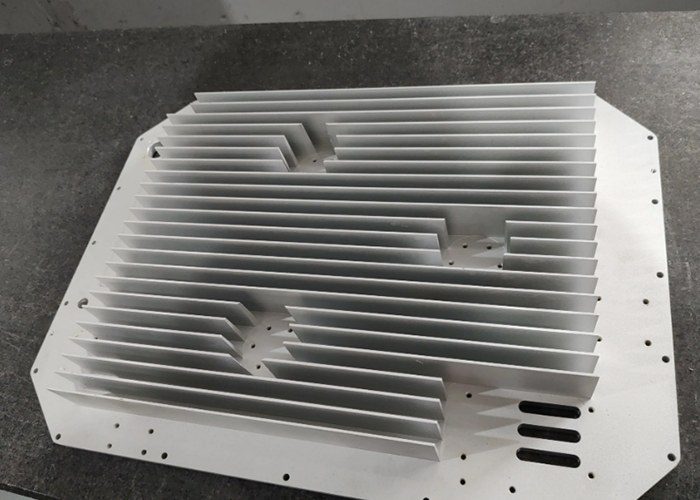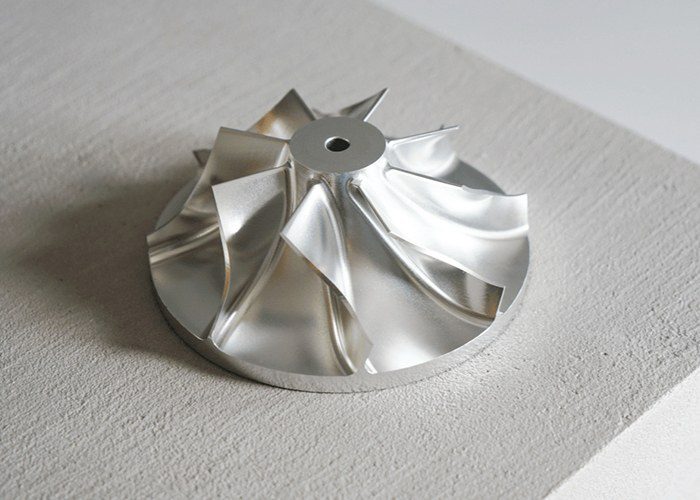
In today’s manufacturing landscape, precision is not merely a competitive advantage—it is an operational necessity. High precision CNC (Computer Numerical Control) machining services have emerged as the definitive solution for producing components that meet exacting specifications, behave predictably in real-world conditions, and remain consistent from prototype through full-scale production. This technology has become indispensable across industries where even microscopic deviations can compromise performance, safety, and reliability.
Defining High Precision CNC Machining
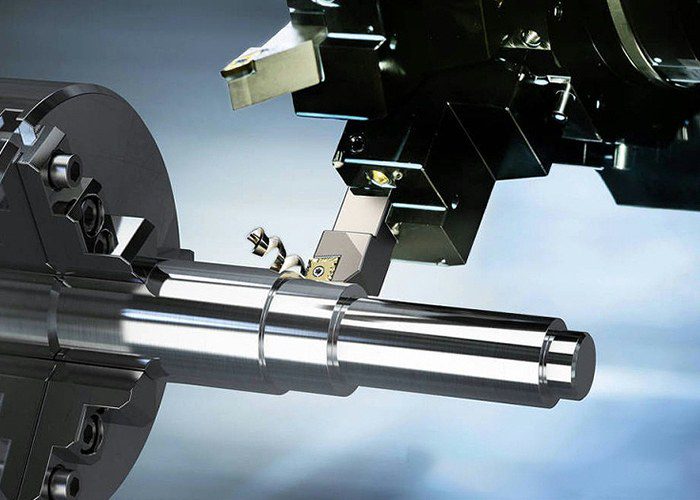
At its core, high precision CNC machining is a subtractive manufacturing process that uses computer-controlled machine tools to remove material from a workpiece with extreme accuracy. For CNC specialists, precision is defined as the technical capability to consistently achieve tolerances of 0.01 millimeters or tighter. Advanced operations routinely achieve positional accuracy within 8 microns and repeatability within 4 microns, with some ultra-precision systems delivering sub-micron accuracy and exceptional repeatability of ±1 micron positioning accuracy.
This level of precision requires far more than high-end equipment alone. It demands a deep understanding of thermal stability, tool deflection, and material harmonics. Machine rigidity and tooling quality form the foundation—a rigid frame dampens vibrations that cause “chatter,” while high-quality tools resist deflection to ensure the cutting edge remains exactly on path. Equally critical is thermal stability: because metals expand and contract with temperature shifts, climate-controlled environments are essential to prevent dimensional drift.
The Technological Foundation: Multi-Axis Capability
The evolution from 3-axis to 5-axis CNC machining represents a fundamental transformation in precision manufacturing. While traditional 3-axis machines operate along X, Y, and Z linear axes, 5-axis technology integrates two rotary axes to achieve true five degrees of freedom. This advancement enables complete part machining in a single setup, eliminating the cumulative positioning errors that occur each time a workpiece is repositioned.
Multi-axis CNC machines allow for the simultaneous execution of multiple processes on a single part, saving time and increasing production accuracy. Components that once required four separate operations on a 3-axis machine can now be completed in one setup, with simpler fixturing, reduced handling, and superior accuracy. The precision benefits are measurable: positioning accuracy remains stable within 0.005mm, and in demanding applications like aero-engine blade manufacturing, 5-axis machining achieves a 99% pass rate compared to 85% with 3-axis systems.
Critical Applications Across Industries
High precision CNC machining serves as the backbone of manufacturing across multiple high-performance industries. In aerospace, tolerances are often within ±2–10 μm and surface finishes must achieve Ra 0.2 μm or better. Components such as turbine blades, aircraft landing gear parts, and fuel system components are manufactured using advanced CNC techniques. The stakes are immense—even a 5 μm error in a hydraulic manifold or turbine blade can ground an aircraft.
The medical device industry demands equally rigorous standards. CNC Swiss machining is instrumental in producing surgical instruments, orthopedic implants, and dental components. The technology’s ability to work with biocompatible materials and achieve extremely tight tolerances ensures that medical devices function accurately and reliably within the human body. In the automotive sector, high precision machining produces fuel injectors, valve components, transmission parts, and high-voltage drivetrain components.
Beyond these sectors, high precision CNC machining serves the defense, electronics, robotics, and energy industries. Robotics applications, for instance, demand precision machining for gear housings, motor mounts, and arm joints—where even minor dimensional deviations can reduce performance.
Key Advantages of High Precision CNC Services
The advantages of high precision CNC machining extend far beyond dimensional accuracy. First and foremost is repeatability: once programmed, CNC machines can produce identical geometries consistently across entire production runs. Computer-controlled precision reduces human error, ensuring that the first part and the thousandth part perform identically.
Material versatility represents another significant benefit. Modern CNC machining centers work with an extensive range of materials, including aluminum, stainless steel, titanium, Inconel, nickel-based alloys, and engineering plastics. This flexibility allows manufacturers to select the optimal material for each application without compromising machinability.
Furthermore, high precision CNC machining delivers superior surface finish quality, often achieving polished-like surfaces directly from the machining process—eliminating unnecessary secondary operations. The technology also enables design flexibility, shorter lead times, and faster prototyping. Studies show that advanced CNC systems can reduce material waste by 40% while improving production speed by 30%.
Looking Forward: The Future of Precision Machining
The high precision CNC machining industry continues to evolve rapidly. The global high-speed precision CNC machine tools market is projected to grow from USD 18.76 billion in 2024 to USD 27.28 billion by 2031. Key trends shaping the future include AI-powered automation and predictive maintenance, hybrid manufacturing that combines additive and subtractive processes, and digital thread integration across the supply chain.
AI-driven systems are already automating toolpath generation, optimizing feed rates, and adjusting parameters in real time using sensor data. Machine learning algorithms predict tool wear, schedule preventive maintenance, and strengthen quality control to reduce defects and improve consistency. These advances promise to push the boundaries of what is achievable in precision manufacturing, enabling even tighter tolerances, faster production cycles, and greater sustainability.
High precision CNC machining services represent the convergence of advanced engineering, sophisticated software, and meticulous process control. From aerospace turbine blades that must withstand extreme temperatures to medical implants that must fit perfectly within the human body, this technology makes possible the components that define modern life. As industries continue to demand ever-greater precision, complexity, and efficiency, high precision CNC machining will remain at the forefront of manufacturing innovation—transforming ambitious designs into reliable, high-performance realities