In the high-stakes world of modern manufacturing, the Computer Numerical Control (CNC) Machining Center is the undisputed king of the shop floor. Whether it’s a vertical machining center (VMC) carving aerospace-grade aluminum or a horizontal machining center (HMC) producing complex automotive dies, these machines represent millions of dollars in capital investment. However, owning a state-of-the-art machining center is only half the battle. The true determinant of profitability, uptime, and long-term success lies in one critical, yet often overlooked, element: CNC Machining Center Service.
This is not merely about fixing a machine when it breaks. Comprehensive service is a holistic, proactive strategy designed to maximize the lifecycle of your equipment. It is the art and science of keeping mechanical precision, electronic logic, and software functionality in perfect harmony.
The Evolution of Service: From Breakdown Maintenance to Predictive Care
Historically, machine shop service was reactive. The spindle would crash, the tool changer would jam, or the coolant pump would fail, and the call for service would go out. The machinist would wait—sometimes for days—while expensive downtime accumulated. Today, the paradigm has shifted entirely.
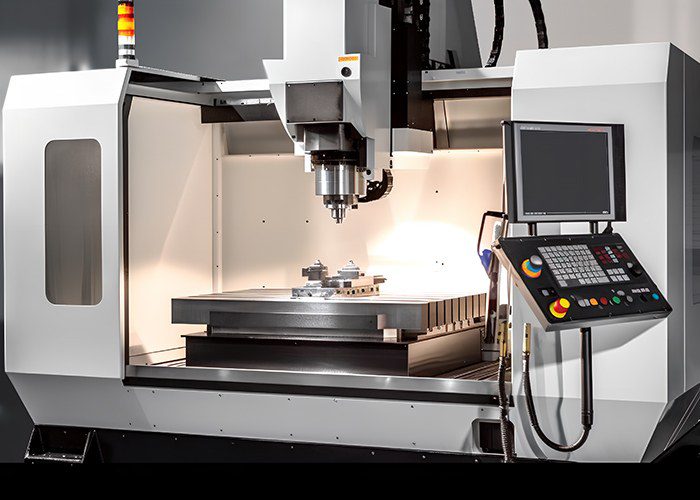
Modern CNC Machining Center Service is a data-driven discipline. With the advent of Industry 4.0 and the Industrial Internet of Things (IIoT), service technicians now utilize vibration analysis, thermal imaging, and real-time load monitoring. They don’t just ask, “What broke?” They ask, “What are the trends?” By analyzing spindle vibration patterns, a skilled service provider can predict bearing failure weeks before it happens, allowing the shop to schedule maintenance during a planned downtime window rather than in the middle of a critical production run.
The Core Pillars of Professional Service
A robust service agreement for a CNC Machining Center rests on four essential pillars: Mechanical, Electronic, Software, and Training.
1. Mechanical Restoration and Alignment
The heart of any machining center is its iron—the bed, column, and table. Over time, even the most rigid castings can suffer from level shifts or crash damage. Professional service includes laser calibration for volumetric accuracy. Technicians use laser interferometers to measure and compensate for positioning errors in the X, Y, and Z axes. Furthermore, ballbar tests analyze circular interpolation, diagnosing servo mismatch, backlash, or stick-slip issues. Without this mechanical precision, a machine claiming 5-micron accuracy is effectively a heavy drill press.
2. Electronic and Control System Diagnostics
The “brain” of the machine is the CNC controller (Fanuc, Siemens, Heidenhain, Mitsubishi, etc.). Service goes far beyond swapping out a blown fuse. It involves deep-level parameter backup, drive tuning, and power supply analysis. As machines age, capacitors dry out and servo drives lose efficiency. A specialized service technician can re-tune the servo loops to eliminate chatter or hunting, restoring the machine’s original surface finish quality. Moreover, they manage the complex ladder logic that governs the automatic tool changer (ATC) and pallet changers, ensuring seamless automation.
3. Software and Firmware Updates
Many shops forget that a CNC machine is a computer. Just like a PC, the firmware and software require updates. Service providers ensure that the Post Processor aligns with the latest version of the CAM software. They also manage data backup strategies. A hard drive crash on a 2015 machining center can render the machine a brick if the proprietary system files and PLC parameters are not backed up correctly. Professional service includes cloning hard drives and migrating legacy software to modern storage solutions.
4. Preventative Maintenance Schedules
The most valuable aspect of service is the scheduled visit. A proper preventative maintenance (PM) routine includes:
- Spindle Chiller Maintenance: Checking coolant levels and flow rates.
- Way Cover and Lubrication Inspection: Ensuring that way oil (lube) is reaching the linear guides and ball screws. Starvation of lubrication is the number one cause of accuracy loss.
- Chip Conveyor and Coolant Filtration: Preventing “bird nesting” and ensuring the high-pressure coolant through the spindle is debris-free.
The Economic Impact: Calculating the ROI of Service
The reluctance to invest in professional CNC service usually stems from short-term cost thinking. A standard PM visit might cost $1,500 to $3,000, while a major spindle rebuild costs $15,000 to $25,000. However, the hidden cost is downtime.
Consider a high-volume production cell running automotive parts at a cycle time of 2 minutes. If that machine goes down for 48 hours due to a preventable spindle failure, the loss is not just the repair bill. If the part profit margin is $5 per piece, the lost production of 1,440 parts results in $7,200 in lost profit, plus the $15,000 repair, plus expedited shipping fees. That single failure could cost nearly $25,000 and damage customer delivery scores. Effective service prevents this calculus.
Choosing a Service Partner: What to Look For
Not all service providers are equal. When vetting a CNC Machining Center Service company, manufacturers should demand three things:
- OEM or Factory-Trained Technicians: Generic electricians are not CNC service techs. The technician must understand the specific idiosyncrasies of your machine brand (e.g., Haas, Mazak, DMG MORI, Okuma).
- Remote Diagnostics Capability: Modern service includes “Secure Remote Access.” A technician in a call center should be able to log into your machine’s control (with your permission) to check alarm histories and parameters before driving to your facility.
- Inventory of Critical Spares: A service company without spindles, drives, or ballscrews in their warehouse is just a consulting firm. They must have the inventory to support rapid repair.
The Future of CNC Service
As we look toward 2030, CNC Machining Center Service will become increasingly autonomous. We are already seeing “self-diagnosing” machines that send push notifications to the service provider’s cloud. Augmented Reality (AR) is entering the field; a junior maintenance person can wear AR glasses, and a senior service tech miles away can overlay arrows and instructions directly onto the machine’s real-world image.
Conclusion
In conclusion, CNC Machining Center Service is not a cost center; it is a profit protection strategy. It is the discipline that transforms a depreciating asset into a consistent revenue generator. Whether you run a job shop with three machines or an aerospace facility with fifty, the reliability of your production line is directly proportional to the quality of service you purchase. Do not wait for the crash alarm. Invest in precision, invest in uptime, and invest in professional CNC Machining Center Service.