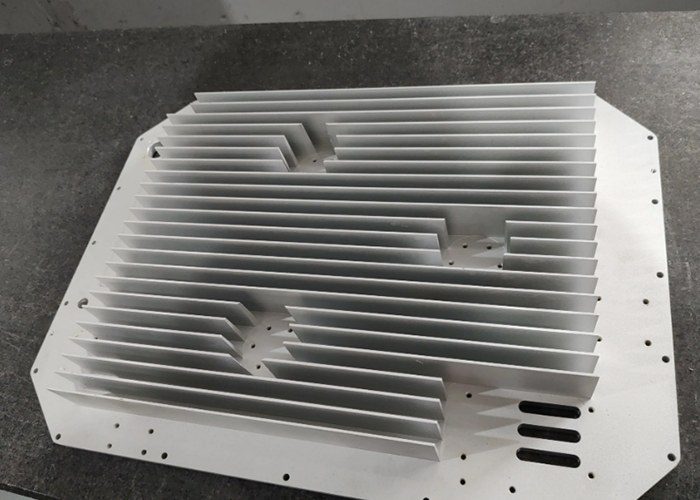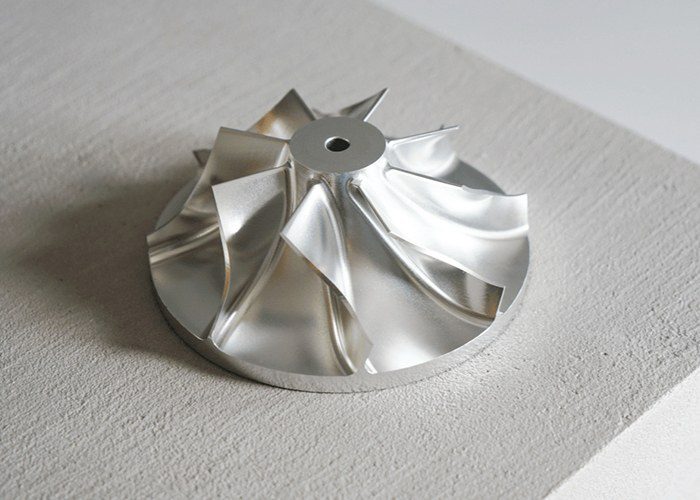
In an era defined by miniaturization, automation, and extreme performance, the humble mechanical component has undergone a quiet revolution. The phrase “High Precision Precision Parts” might initially seem redundant, but in the lexicon of modern manufacturing, it represents a distinct and critical tier of engineering. It refers to components manufactured with tolerances measured in micrometers (µm) or even nanometers (nm)—where a single micron, one-thousandth of a millimeter, can mean the difference between flawless operation and catastrophic failure. These are not merely “precise” parts; they are the enabling backbone of advanced technology, from jet engines and MRI machines to the smartphone in your pocket.
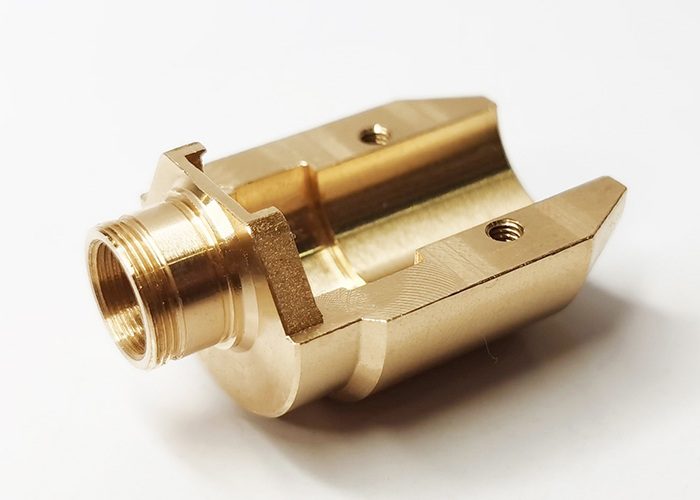
Defining the Standard: What Makes a Part “High Precision”?
Standard precision machining typically holds tolerances around ±0.1 mm. High precision, however, pushes the boundary to ±0.005 mm (5 microns) and below. To visualize this, consider a human hair, roughly 70 microns thick. A high precision part can be manufactured with errors up to ten times smaller than that hair’s width. Achieving such fidelity requires more than sharp tools—it calls for a deep command of materials science, thermodynamics, and metrology.. Every variable—cutting speed, coolant temperature, tool wear, even the vibration of a passing truck—must be controlled. This is the domain of Swiss-type lathes, precision CNC grinders, and non-traditional machining like electrical discharge machining (EDM) and laser ablation.
The Art and Science of Manufacturing
Producing high precision parts is as much an art as a science. The process typically begins with a meticulously designed CAD model, but the real challenge lies in the CAM (Computer-Aided Manufacturing) programming. Toolpaths must be optimized not just for speed, but for stress distribution, ensuring that the workpiece does not deform under its own clamping force. In high precision work, the machine itself is often housed in a climate-controlled cleanroom. A temperature change of just 2°C can expand a 100mm steel part by over 2 microns, throwing off the entire tolerance. Furthermore, advanced metrology is woven into the production cycle. Coordinate Measuring Machines (CMMs), laser interferometers, and white light profilometers verify dimensions continuously, creating a closed-loop feedback system that compensates for tool wear in real time.
Critical Applications Across Industries
The demand for high-precision components spans virtually every high-tech sector.
In aerospace and defense, these parts appear in fuel injection nozzles, gyroscope housings, and turbine blades. A micron-level error in a fuel nozzle can lead to incomplete combustion, reducing thrust or increasing emissions. At 40,000 RPM, an out-of-tolerance balance ring inside a jet engine can generate destructive vibrations..
The medical device industry relies on them for implants, surgical robotics, and diagnostic equipment. Orthopedic knee and hip replacements require ball-and-socket joints with surface finishes that mimic natural cartilage—roughness measured in nanometers. A single burr or deviation can cause premature wear, toxicity, or implant rejection.
Semiconductor manufacturing is perhaps the most demanding customer. The machines that print microchips—photolithography steppers—use lenses and mirrors polished to atomic-level precision. The wafer handling robots move silicon wafers with positioning repeatability under one micron. Without these parts, Moore’s Law would have died decades ago.
Finally, the automotive industry, especially the electric vehicle (EV) sector, depends on high precision components for battery cell manufacturing, inverter housings, and active suspension systems. As EVs push for higher energy density and longer range, every gram and every micron of slop must be eliminated.
Challenges and the Future
Despite technological advances, producing high precision parts remains fraught with challenges. Material selection is paramount: some alloys, like Inconel or titanium, are notoriously difficult to machine without work hardening. Cost is another barrier: a single high-precision part may require hours of machining and multiple quality inspections, making it orders of magnitude more expensive than a standard part.. Additionally, the shortage of skilled machinists and metrologists who understand the interplay of physics and geometry is a growing bottleneck.
Looking ahead, the field is evolving rapidly. Hybrid manufacturing, which combines additive (3D printing) and subtractive processes, allows for complex internal geometries that are then finish-machined to high tolerances. Artificial intelligence is being deployed to predict tool wear and optimize cutting parameters dynamically, reducing scrap rates. Furthermore, ultra-precision machining using single-point diamond turning is pushing boundaries into the sub-nanometer range, opening doors for quantum computing components and next-generation optics.
In conclusion, high precision precision parts are the silent workhorses of the 21st century. They are the physical manifestation of our desire to control matter at the smallest scales. As industries continue to demand greater efficiency, durability, and miniaturization, the importance of these components will only grow. The engineer who can design them, the machinist who can make them, and the inspector who can verify them are the unsung heroes enabling our technological future. In a world obsessed with software and AI, it is worth remembering that every digital bit ultimately relies on an atom placed exactly where it belongs.