
In the rapidly evolving landscape of industrial production, Custom Precision CNC Machining has emerged as a cornerstone of innovation. Demand for complex, tight-tolerance parts—from aerospace components to medical implants—is growing exponentially. This article explores the intricacies of custom precision CNC machining, its advantages, key applications, and why it stands as the gold standard for bespoke manufacturing.
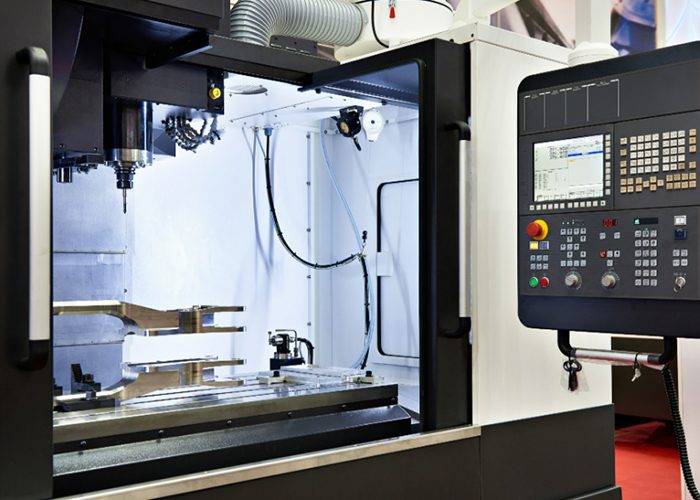
Understanding Custom Precision CNC Machining
CNC (Computer Numerical Control) machining is a subtractive manufacturing process in which pre-programmed software controls the movement of factory tools and machinery. When combined with the terms “custom” and “precision,” it refers to the production of unique, non-standard components with exceptionally tight tolerances—often as low as ±0.0001 inches (±0.0025 mm). Unlike mass production, custom CNC machining focuses on creating parts tailored to specific client requirements, whether in small batches or single prototypes.
The process typically involves milling, turning, drilling, and grinding, executed by multi-axis machines (3-axis, 4-axis, or even 5-axis) that manipulate the workpiece from multiple angles. Advanced CAD (Computer-Aided Design) and CAM (Computer-Aided Manufacturing) software convert engineering blueprints into machine-readable code (G-code), ensuring repeatability and eliminating human error.
Why Choose Custom Precision CNC Machining?
- Unmatched Accuracy and Consistency
Precision is the lifeblood of industries like robotics and automotive racing. Custom CNC machining delivers dimensional accuracy that manual methods cannot achieve. Once a program is verified, every produced part is identical to the first, making it ideal for assemblies requiring interchangeable components. - Complex Geometries with Ease
Traditional machining struggles with undercuts, deep cavities, or freeform surfaces. With 5-axis CNC technology, custom parts with intricate contours, angled holes, and organic shapes become feasible. This capability allows engineers to design for performance rather than manufacturing limitations. - Wide Material Compatibility
Custom precision machining works with an extensive range of materials: aluminum alloys (6061, 7075), stainless steel (304, 316), titanium, brass, copper, engineering plastics (PEEK, Delrin, nylon), and even exotic superalloys like Inconel. Each material can be machined with optimized parameters to achieve desired mechanical properties and surface finishes. - Speed to Market for Prototypes and Low-Volume Production
Unlike injection molding which requires expensive molds, CNC machining has no tooling costs (except for fixtures). This makes it perfect for iterative prototyping and low-to-medium volume runs (1–10,000 units). Design changes are as simple as editing a CAD file, slashing development cycles from months to days.
Critical Parameters in Custom CNC Machining
To achieve true precision, several factors must be meticulously controlled:
- Tolerances: Standard machining holds ±0.005 in. (±0.127 mm); precision machining tightens to ±0.0005 in. (±0.0127 mm); ultra-precision work can reach ±0.0001 in. Tighter tolerances increase machining time and cost, so they are applied only to functional features like bearing seats or mating surfaces.
- Surface Finish: Measured in Ra (micrometers). Typical machined finish is 32–63 μin (0.8–1.6 μm), but custom applications may require 16 μin (0.4 μm) for low-friction or high-seal surfaces. Secondary processes like bead blasting, anodizing, or electropolishing can enhance both aesthetics and corrosion resistance.
- Fixturing and Toolpath Optimization: Workholding must be rigid to prevent vibration (chatter). High-speed machining (HSM) strategies, such as trochoidal milling, reduce tool loads and heat buildup, preserving accuracy on thin walls or deep ribs.
Industries Transformed by Custom Precision CNC Machining
- Aerospace: Turbine blades, structural brackets, fuel system components – all demand lightweight alloys and zero-defect quality. CNC machining with 5-axis capability produces airfoil geometries and complex manifolds in materials like titanium and Inconel.
- Medical and Dental: Surgical instruments, bone screws, spinal implants, and dental copings require biocompatible finishes and micron-level tolerances. Micro-CNC machining can create features as small as 50 μm for minimally invasive devices.
- Automotive Motorsports: Custom pistons, intake manifolds, and suspension components are machined from billet aluminum for high strength-to-weight ratio. One-off race parts are often produced overnight using CNC.
- Electronics and Semiconductor: Heat sinks, enclosure housings, and waveguide components need precise cutouts and flatness. High-speed drilling of microvias in copper-clad laminates is another niche application.
- Defense and Optics: Lens housings, gun triggers, and night-vision goggle frames benefit from the repeatability and ruggedness of CNC-machined metal parts.
Comparison: CNC Machining vs. 3D Printing vs. Casting
| Feature | CNC Machining | 3D Printing (Metal) | Investment Casting |
|---|---|---|---|
| Material range | Very broad | Limited powders | Moderate |
| Surface finish | Excellent (Ra ≤0.8 μm) | Rough (needs post-processing) | Cast texture |
| Tolerances | ±0.0005 in. typical | ±0.005 in. | ±0.010 in. |
| Setup cost | Low | Low | High (patterns/tooling) |
| Part size | Up to 10+ feet | Typically small | Medium to large |
While 3D printing excels for topology-optimized internal lattice structures, CNC machining remains superior for high-stress, high-finish, dimensionally critical parts. Often, hybrid processes (machining of additively manufactured near-net shapes) offer the best of both worlds.
Challenges and Solutions in Custom Precision CNC
- Thermal deformation: Friction generates heat, expanding the workpiece and tool. Solution: coolant flood, air blast, or cryogenic cooling; adaptive toolpaths that compensate for thermal growth.
- Tool wear on hard materials: Machining hardened steel or titanium quickly dulls cutters. Use of PCD (polycrystalline diamond) or CBN (cubic boron nitride) inserts, along with optimized feed rates, extends tool life.
- Vibration and chatter: Leads to poor surface finish and broken tools. Mitigation: variable flute pitch end mills, increased rigidity (short tool overhang), spindle speed tuning.
The Future of Custom Precision CNC Machining
Industry 4.0 is pushing CNC machining toward smart, automated systems. Real-time sensors detect tool wear and adapt parameters on the fly. Digital twins simulate the entire machining process before metal is cut, predicting collisions and optimizing cycles. Moreover, multi-tasking machines that combine turning, milling, and grinding in one setup reduce errors from refixturing.
Another trend is the rise of desktop precision CNC mills (e.g., Pocket NC, Bantam Tools), making custom prototyping accessible to small startups and even hobbyists. Meanwhile, at the industrial end, hybrid machines that integrate laser metal deposition with CNC milling enable repair of high-value parts.
Conclusion
Custom Precision CNC Machining is not merely a manufacturing process; it is an enabler of modern engineering. Its ability to transform raw blocks of metal or plastic into functional masterpieces with microscopic accuracy empowers designers to push boundaries without compromise. Whether you need one life-saving surgical tool or a thousand racing pistons, custom CNC machining delivers speed, reliability, and unrivaled precision. As technology advances, it will continue to drive innovation across every sector that demands the perfect part – exactly as imagined.


