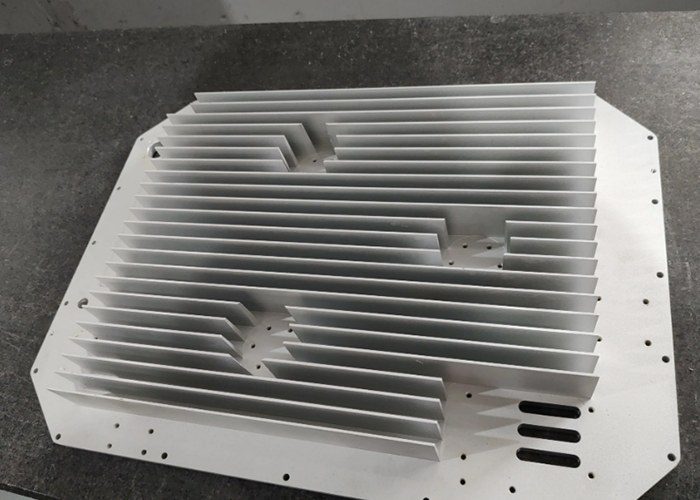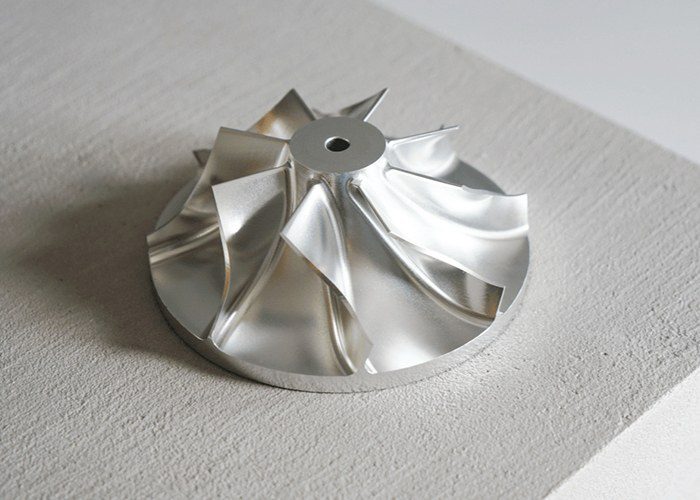
In the world of modern manufacturing, standardization is often celebrated. Nuts, bolts, brackets, and shafts produced to ISO or ANSI specifications are the silent workhorses of industry. However, true innovation rarely follows a template. When engineers design a revolutionary medical implant, a lightweight aerospace bracket, or a specialized robotics component, they often find that “standard” simply does not work. This is where CNC Machining of Non-Standard Parts becomes not just a service, but a critical enabler of progress.
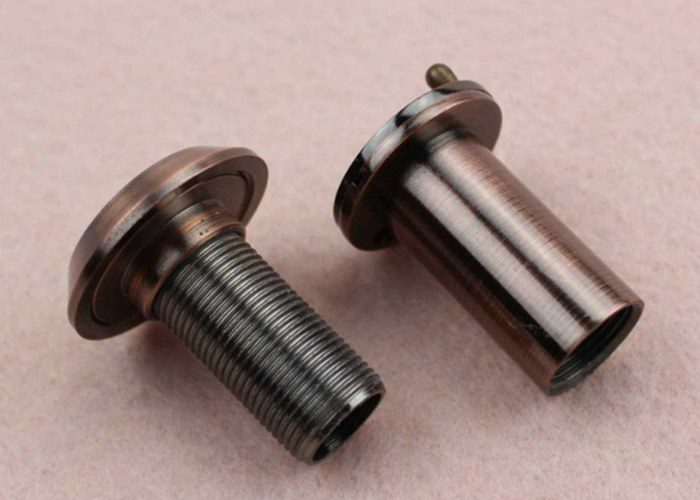
Defining the “Non-Standard”
A non-standard part is any component that does not conform to pre-existing catalog dimensions, common geometric shapes, or traditional material specifications. These parts are typically characterized by:
- Complex Geometries: Freeform surfaces, organic curves, or internal lattice structures that cannot be produced by conventional molding or manual machining.
- Custom Tolerances: Requirements for precision that exceed general industry standards (e.g., ±0.005 mm in a unique assembly).
- Specialized Materials: Exotic alloys (Inconel, titanium), advanced polymers (PEEK, Torlon), or composites that are difficult to process on standard equipment.
- Low Volume & High Mix: Typically required in quantities ranging from one to one hundred units, primarily for prototyping, R&D, or niche applications.
Why CNC is the Ideal Solution for Customization
While 3D printing has gained traction for rapid prototyping, CNC (Computer Numerical Control) machining remains the gold standard for non-standard parts that demand superior mechanical properties, surface finishes, and material integrity. Subtractive manufacturing offers unique advantages:
1. Material Versatility
CNC machining is material-agnostic. Whether the engineer needs a non-standard heat sink made of pure copper or a structural bracket machined from hardened 7075 aluminum, CNC delivers. Unlike additive manufacturing, it does not alter the base material’s intrinsic properties.
2. Superior Mechanical Strength
Cutting a part from a solid block of material results in a homogeneous structure without layer lines or porosity. For non-standard parts used in load-bearing or high-fatigue environments (automotive suspension, hydraulic valves), this is non-negotiable.
3. Tight Tolerances on Odd Shapes
With their multi-axis flexibility, modern 5-axis CNC machines can approach a workpiece from almost any angle. This allows machinists to produce non-standard features—such as helical gears with variable pitch or enclosures with compound-angle ports—in a single setup, ensuring perfect feature-to-feature alignment.
The Engineering Workflow
Creating a non-standard part is an exercise in collaboration between design and manufacturing. The typical process involves:
Step 1: Design Validation (DFM)
The engineer provides a CAD file (STEP or IGES). The CNC specialist reviews the design for “Machinability.” Non-standard features like deep internal cavities or sharp internal corners are evaluated. Often, the machinist will suggest subtle modifications—adding a tiny fillet radius or altering draft angles—that dramatically reduce cost without compromising function.
Step 2: Programming & Tool Path Generation
Using CAM (Computer-Aided Manufacturing) software, the machinist writes a custom program. For non-standard geometry, this is rarely a simple 2D contour. It involves complex 3D surfacing tool paths, often using ball-nose end mills to “sculpt” the final shape.
Step 3: Fixturing Innovation
Standard parts fit into standard vices. Non-standard parts often do not. The machinist may need to design and fabricate a custom jig or soft jaw to hold the irregular workpiece securely. This “fixturing” step is often the most creative part of the job.
Step 4: Verification
Because there is no “standard gauge” to check against, non-standard parts rely on Coordinate Measuring Machines (CMM) or laser scanning. The physical part is compared directly to the original CAD model to ensure every complex surface matches the digital intent.
Real-World Applications
The demand for non-standard CNC parts is exploding across several sectors:
- Medical: Custom surgical guides that match a specific patient’s bone structure; orthopedic implants with porous surfaces for osseointegration.
- Aerospace & Defense: One-off replacement components for legacy aircraft whose original molds are no longer available, and custom sensor housings for drones..
- Automotive Motorsport: Intake manifolds with unique runner lengths; custom caliper brackets for high-performance brake systems.
- Robotics: Structural links that minimize weight while maximizing stiffness; custom end-of-arm tooling (EOAT) for specific pick-and-place tasks.
Overcoming the Challenges
It is important to acknowledge that machining non-standard parts is more expensive and slower than mass-producing standard ones. The cost drivers include extended programming time, specialized cutting tools, and slower feed rates due to complex geometry. However, for the client, the alternative is often worse: redesigning an entire assembly to fit a standard part, which may compromise performance or add unnecessary weight.
To mitigate costs, successful projects rely on Design for Manufacturability (DFM) principles early in the design phase. A conversation between the engineer and the machinist can turn an “impossible” part into a costly but feasible one.
The Future: Automation and AI
The future of non-standard CNC machining is smart automation. We are already seeing the rise of “lights-out” machining, where robots load irregular blanks onto 5-axis mills. Furthermore, AI-driven CAM software is learning to automatically generate tool paths for complex freeform surfaces that would have taken a human programmer days to code. This reduces lead times and brings the production of non-standard parts nearly on par with standard ones.
Conclusion
CNC machining of non-standard parts is the bridge between imagination and physical reality. It allows engineers to break the mold—literally—without worrying about the restrictions of off-the-shelf inventory. While it requires more skill, better software, and innovative fixturing, the result is a part that performs exactly as required, no compromises.
Whether you are repairing a 50-year-old factory press or building the next generation of surgical robots, remember that “non-standard” does not mean impossible. With modern multi-axis CNC technology, the only real limit is the physics of the material itself.