In the relentless pursuit of precision, efficiency, and repeatability, modern manufacturing has placed its trust in automation. At the heart of this industrial revolution lies the CNC Metal Machining Service. Standing for Computer Numerical Control, CNC machining has transformed how we design, prototype, and produce metal components, from the tiniest medical implant to massive aerospace structural parts. This article delves into the intricacies, advantages, and critical applications of professional CNC metal machining services.
What Exactly Is CNC Metal Machining?
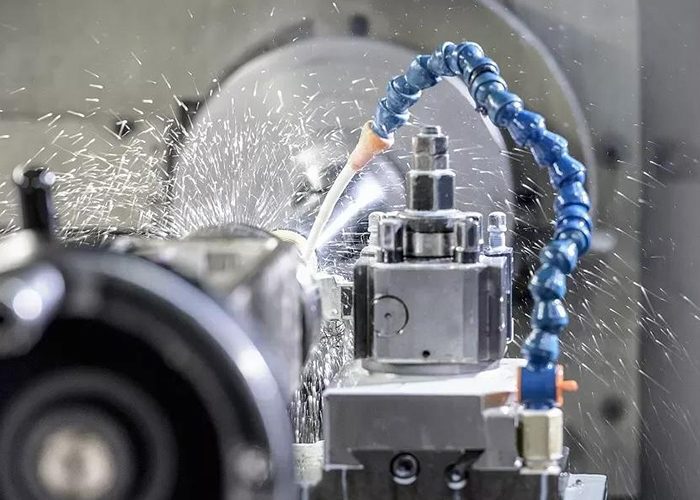
CNC metal machining is a subtractive manufacturing process. Unlike 3D printing, which builds objects layer by layer, machining starts with a solid block of metal—known as a workpiece or blank—and removes material to achieve a desired shape. The “CNC” aspect means that all movements of the cutting tools and the workpiece are guided by pre-programmed computer software and G-code. This eliminates the need for manual handwheels or levers, transferring the skill from physical dexterity to digital programming.
A typical CNC metal machining service encompasses several core processes: milling, turning (lathe), drilling, and grinding. Advanced shops often combine these capabilities in multi-axis machines, such as 5-axis machining centers, which can approach a part from virtually any angle in a single setup. This capability is crucial for complex geometries that would otherwise require multiple machines and manual repositioning, introducing potential errors.
Why Outsource to a Professional CNC Metal Machining Service?
For many businesses—from startups to OEMs—investing in in-house CNC equipment is prohibitively expensive. High-quality machining centers cost hundreds of thousands of dollars, and they demand skilled operators, maintenance, tooling inventories, and floor space. This is where dedicated CNC metal machining services provide unmatched value.
- Uncompromising Precision and Tolerances
Professional machining services operate industrial-grade equipment that consistently holds tolerances within ±0.005 inches (0.127 mm) as a standard, and often as tight as ±0.0002 inches (0.005 mm) for specialized jobs. For industries like aerospace and medical devices, where a micron of error can mean failure, this level of precision is non-negotiable. - Material Versatility
A premier CNC service works with an extensive range of metals, including aluminum (6061, 7075), stainless steels (303, 304, 316L), brass, copper, titanium, Inconel, and tool steels. Each metal presents its own set of challenges: aluminum demands high spindle speeds and efficient chip evacuation, whereas titanium requires rigid tooling and lower speeds to avoid work hardening. Experienced machinists understand these nuances. - Scalability from Prototype to Production
One of the greatest strengths of CNC machining is its seamless scalability. A service provider can machine a single prototype to test form and fit, then, using the exact same program and fixturing, scale up to runs of 1,000 or 100,000 parts. Unlike injection molding, there are no expensive molds to create, making CNC ideal for low-to-medium volume production. - Complex Geometries and Undercuts
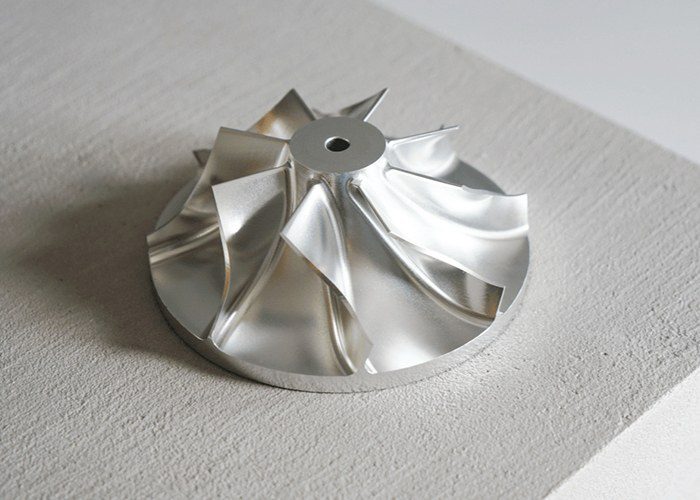
With multi-axis capabilities (4-axis and 5-axis machining), service providers can produce parts with complex curves, deep cavities, angled features, and undercuts that would be impossible on manual equipment. 5-axis machining also drastically reduces cycle times by allowing the tool to remain optimally oriented to the cutting surface, producing superior surface finishes.
The Step-by-Step Process of a Typical CNC Metal Machining Service
A professional service adheres to a rigorous workflow to ensure both high quality and timely delivery.:
- Design & CAD Modeling: The client provides a 3D solid model (STEP, IGES, or native CAD file). Design for Manufacturability (DFM) analysis is performed to identify any features that are impossible or costly to machine.
- CAM Programming: A CNC programmer uses Computer-Aided Manufacturing (CAM) software to generate toolpaths and G-code. This step simulates the entire machining process, detecting collisions and optimizing feed rates, spindle speeds, and coolant usage.
- Material Selection & Preparation: The appropriate metal stock is sourced and cut to size. Certification of material (e.g., ASTM, ASME) is often provided for regulated industries.
- Machining: The workpiece is fixtured onto the machine bed, and the program is run. For complex parts, multiple operations (milling then turning) may be required.
- Quality Inspection: Finished parts are inspected using coordinate measuring machines (CMM), optical comparators, and handheld micrometers. Statistical process control (SPC) reports are often delivered with the order.
- Surface Finishing (Optional): Services may include anodizing (for aluminum), passivation (for stainless steel), powder coating, bead blasting, or electroplating.
- Packaging & Shipping: Parts are deburred, cleaned, and carefully packaged to ensure they are not damaged during transit.
Critical Applications Across Industries
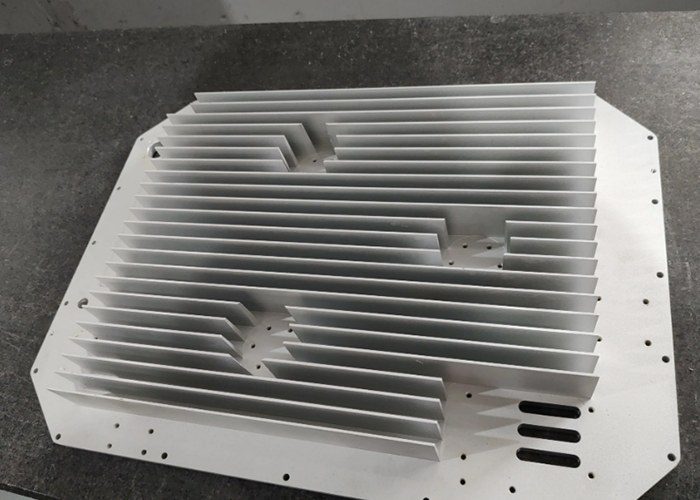
CNC metal machining services are ubiquitous. In the aerospace industry, they produce turbine blades, landing gear components, and structural brackets from high-strength alloys like Inconel and titanium. The medical field relies on CNC for surgical instruments, orthopedic implants (knee and hip replacements), and bone screws made from biocompatible stainless steel or titanium. The automotive sector uses CNC for engine blocks, transmission housings, suspension components, and custom racing parts. Even the electronics industry depends on CNC for heat sinks, enclosures, and connectors.
What to Look for in a CNC Metal Machining Partner
When choosing a service provider, look beyond the hourly rate. Evaluate their equipment list (do they have 5-axis capabilities?), their quality certifications (ISO 9001:2015 or AS9100D for aerospace), and their typical lead times. A transparent partner will provide instant quoting, design feedback, and clear communication throughout production.
Conclusion
CNC Metal Machining Service is not merely a means of cutting metal; it is an enabler of innovation. By combining the raw strength of metals with the microscopic precision of computer-controlled tools, these services allow engineers to push the boundaries of what is physically possible. Whether you need a single, high-tolerance prototype or a sustained production run of thousands of parts, partnering with an experienced CNC machining service is the most reliable path to turning a digital design into a physical reality. In a world that demands perfection, CNC machining delivers—chip by precise chip.