In the relentless march of modern manufacturing, precision is not merely a quality—it is a currency. Industries ranging from aerospace to medical devices demand components that fit within tolerances thinner than a human hair. At the heart of this precision engineering lies a dynamic duo: CNC Milling and CNC Turning services. Together, they form the backbone of subtractive manufacturing, transforming raw metal or plastic blocks into fully functional, mission-critical parts. Understanding this service isn’t just for engineers—it’s essential for anyone who brings a physical product to life.
The Core Distinction: Milling vs. Turning
While often offered under the same roof, milling and turning are fundamentally different processes. The simplest way to distinguish them is by looking at which part moves.
CNC Turning is the art of creating cylindrical geometry. In a turning center (or lathe), the workpiece rotates at high speeds while a stationary cutting tool traverses along it. Imagine a potter’s wheel: the clay spins, and the potter’s hands shape the outside and inside. CNC turning excels at producing shafts, bushings, pulleys, and threaded components. It is exceptionally efficient for parts with rotational symmetry, offering rapid cycle times and excellent surface finishes on both external and internal diameters (boring).
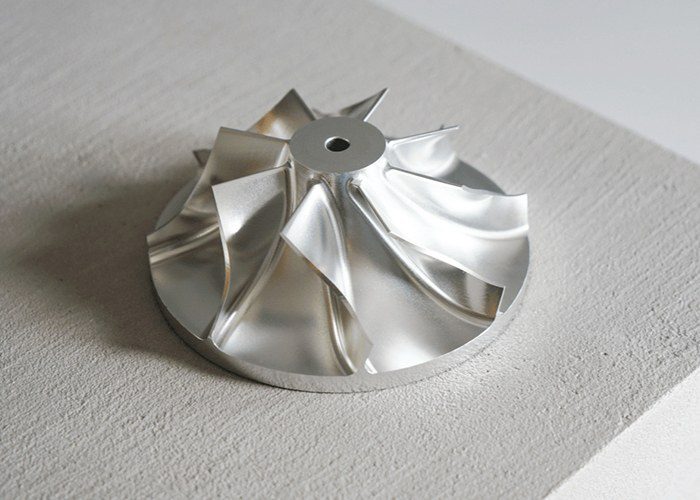
CNC Milling, conversely, keeps the workpiece stationary while the cutting tools spin at thousands of RPM. Milling machines utilize multiple axes (typically 3 to 5) to machine complex geometries, flat surfaces, slots, pockets, and intricate 3D contours. If turning makes a cylinder, milling makes a cube with holes, ribs, or sculpted surfaces. A 5-axis milling center can approach a part from virtually any direction in a single setup, eliminating human error and enabling undercuts and complex organic shapes.
The Symbiosis: Why Combine Them?
The true power of a CNC Milling Turning Service emerges when these two processes are integrated. Many parts are not purely cylindrical nor purely prismatic. Consider a hydraulic manifold: it may have a cylindrical body (turned) with flat mounting surfaces and cross-drilled holes (milled). In the past, this required moving the part between two machines, risking misalignment.
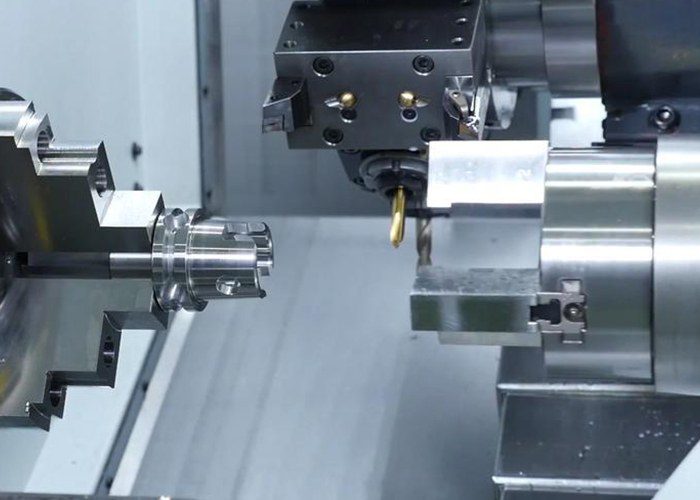
Modern machining centers, known as Mill-Turn centers, combine both capabilities. These machines have spinning workholding (like a lathe) but also live tooling—small milling cutters that can engage while the part is indexed or rotating slowly. This allows a single machine to produce a finished part from a raw bar of stock in one cycle. The advantages are dramatic: reduced lead times, lower labor costs, and perfect concentricity between features.
The Advantages of Professional Services
Why outsource to a CNC milling and turning service rather than buying your own machines? The barriers to entry are high. Industrial-grade CNC machines cost hundreds of thousands of dollars and require skilled programmers, tooling libraries, and climate-controlled facilities. A professional service offers five immediate benefits:
- Uncompromising Tolerances: Professional services operate to ISO 9001 or AS9100 (aerospace) standards. They routinely hold tolerances of ±0.005 mm (0.0002 inches). For medical or defense components, this reliability is non-negotiable.
- Material Versatility: From titanium and Inconel (for jet engines) to acetal and PEEK (for medical implants), a full-service shop maintains the cutting tools and coolants required for exotic materials that would destroy hobbyist equipment.
- Scalability: Whether you need one prototype or 100,000 production units, a CNC service adapts. For low volumes, they use quick-change soft jaws. For high volumes, they design permanent fixtures and automated bar feeders that run lights-out.
- Surface Finish Mastery: What sets a machined part apart from a finished part is its surface texture. Professional services offer secondary operations like anodizing, powder coating, bead blasting, and passivation. They also achieve mirror finishes (Ra 0.4 µm or better) through fine turning and milling strategies.
- Design for Manufacturability (DFM): The greatest value a service provider brings is DFM feedback. An expert machinist will look at your CAD model and suggest fillet radius changes, hole depth reductions, or threading adjustments that cut your cost in half without compromising function.
Applications Across Industries
You interact with CNC milled and turned parts dozens of times per day without realizing it.
- Automotive: Pistons (turned), engine blocks (milled), transmission gears (hobbed/turned), and brake calipers.
- Aerospace: Landing gear struts (turned titanium), turbine blades (5-axis milled), hydraulic fittings (mill-turned).
- Medical: Bone screws (Swiss-turned), surgical guide tools (milled aluminum), implantable housings.
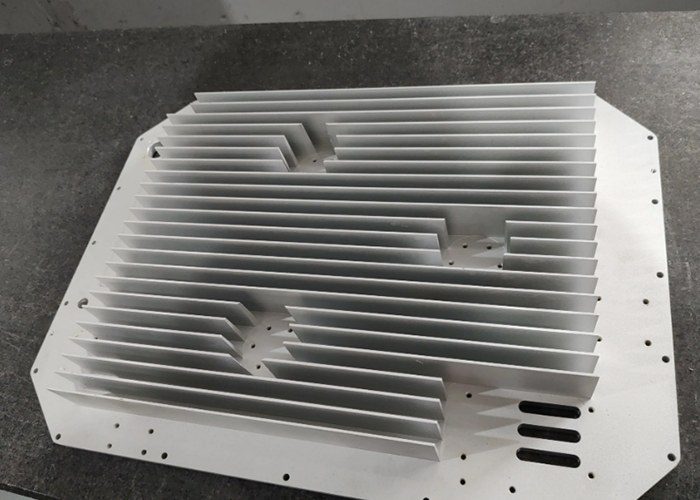
- Electronics: Heat sinks (milled), connector pins (turned), smartphone camera rings (micro-machined).
The Future: Automation and Intelligence
The CNC milling and turning service industry is rapidly evolving. Automation is king: robotic arms now load and unload machines, while pallet changers allow one operator to run six machines simultaneously. Digital integration means your CAD file can be uploaded directly to the shop’s ERP system, generating a quote and machining program within hours. Furthermore, in-process probing allows machines to measure their own work and compensate for tool wear in real-time, ensuring 100% quality without human inspection.
Choosing Your Partner
When selecting a CNC Milling Turning Service, look beyond the price per part. Ask for their capability matrix: maximum turning diameter (often 300-600mm), milling work envelope, and spindle speeds. Request a sample inspection report to see their CMM (Coordinate Measuring Machine) accuracy. Finally, evaluate their communication. The best shops treat your project as their own, warning you of potential design flaws before they become costly errors.
In conclusion, CNC Milling Turning Services are not just cutting metal; they are enabling innovation. By combining rotational speed with positional accuracy, they turn digital dreams into physical reality—one micron at a time. Whether you are prototyping a revolutionary drone or mass-producing a life-saving surgical tool, mastering this service is your shortcut to manufacturing excellence.