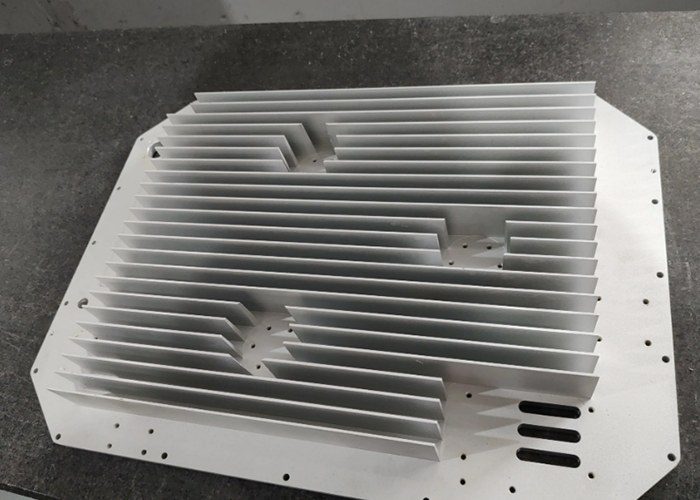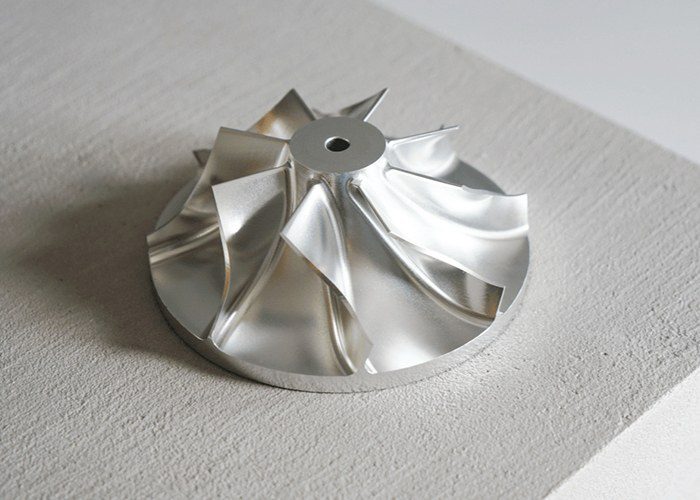
In the vast and demanding landscape of modern industrial production, precision is not a luxury—it is a necessity. From the robust chassis of an excavator to the delicate housing of a medical imaging device, the components that drive our world rely on exacting standards. At the heart of this manufacturing revolution stands CNC milling, a subtractive manufacturing process that has become the undisputed backbone for producing high-quality industrial parts.
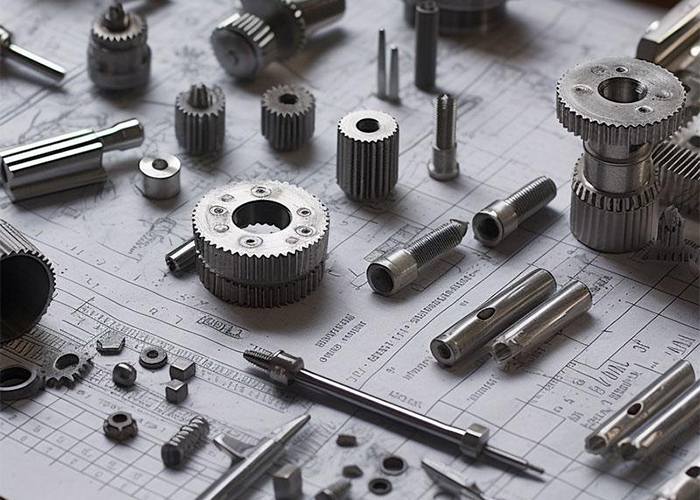
CNC, or Computer Numerical Control, milling removes material from a solid block (known as the workpiece) using rotating multi-point cutting tools. Unlike conventional manual milling, where a human operator controls the handwheels, CNC milling interprets digital design files—typically in CAD (Computer-Aided Design) and CAM (Computer-Aided Manufacturing) formats—to execute toolpaths with microscopic accuracy. The result is a reliable, repeatable process capable of transforming raw metals, plastics, and composites into fully functional industrial components.
Why CNC Milling Dominates Industrial Part Production
The preference for CNC milling in industrial settings is no accident. It offers a combination of attributes that few other manufacturing techniques can match.
First and foremost is precision and accuracy. Modern CNC milling machines can achieve tolerances as tight as ±0.001 inches (0.0254 mm) or even finer. For industries like aerospace, automotive, and hydraulics, where a fraction of a millimeter can mean the difference between a perfect seal and a catastrophic leak, this level of precision is non-negotiable.
Secondly, complexity is not a barrier. Where traditional machining struggles with undercuts, deep cavities, or intricate 3D contours, CNC milling excels. Multi-axis machines—ranging from 3-axis to 5-axis and even 6-axis—can approach a part from virtually any angle. This capability allows engineers to consolidate what might have been a multi-part assembly into a single, monolithic CNC-milled part, reducing assembly time, eliminating potential failure points, and often lowering overall production costs.
Materials: From Aluminum to Titanium
CNC milling’s versatility extends significantly to the range of materials it can handle. Industrial parts are often required to withstand extreme forces, temperatures, and corrosive environments. Common materials include:
- Aluminum Alloys (e.g., 6061, 7075): Lightweight, corrosion-resistant, and easy to machine, aluminum is a favorite for aerospace brackets, automotive components, and electronic housings.
- Stainless Steel (e.g., 304, 316): When strength and corrosion resistance are paramount—think food processing equipment, marine parts, and surgical instruments—stainless steel is the go-to.
- Carbon Steel and Alloy Steels: For heavy-duty applications such as gearboxes, hydraulic manifolds, and structural supports, these materials provide the necessary tensile strength and wear resistance.
- Engineering Plastics (e.g., PEEK, Delrin, Nylon): Lightweight, non-conductive, and chemically resistant, machined plastic parts are crucial in medical devices, semiconductor manufacturing, and fluid handling systems.
- Exotic Alloys (e.g., Inconel, Titanium): Used in jet engines and high-performance racing, these materials are notoriously difficult to machine, but CNC milling with specialized toolpaths and coolants makes them workable.
Key Considerations for Designing CNC Milled Industrial Parts
To maximize the benefits of CNC milling, engineers must follow certain design guidelines. While the process is highly flexible, smart design can dramatically reduce cycle times and costs.
- Avoid Deep, Narrow Cavities: Tools have a limited length‑to‑diameter ratio. Deep pockets may require specialized long-reach tools or multiple setups, increasing cost.
- Use Generous Radii in Internal Corners: A milling cutter is round. Sharp internal corners are impossible to achieve without secondary processing (like EDM). Designing with a radius of at least one-third the cavity depth can significantly speed up machining.
- Consider Workholding: Every part must be securely clamped to the machine bed. Design features such as flat surfaces, through-holes, or sacrificial tabs can make fixturing easier and reduce deformation during cutting.
- Specify Surface Finishes: As‑machined surfaces exhibit visible tool marks. For sealing surfaces or aesthetic parts, specify a surface roughness (e.g., 32 µin Ra) or post-process treatments like anodizing, powder coating, or electropolishing.
The Role of CNC Milling in Low-Volume and High-Mix Production
One of the greatest strengths of CNC milling is its economic viability for low to medium volume production. While injection molding or die casting requires expensive molds with long lead times, CNC milling works directly from digital files. For prototype runs, bridge tooling, or the production of customized industrial parts (e.g., replacement components for legacy machinery), CNC milling offers unmatched agility. Batch sizes typically range from a single piece to several thousand, and the cost per unit predictably declines as quantities increase—mainly due to reduced setup time per part.
Ensuring Quality: Metrology and Process Control
Machining a CNC-milled part is only half the battle; verifying its conformance to specifications is equally vital. Reputable machine shops employ rigorous quality control protocols. This includes in-process probing (where the machine itself measures critical features during the run), followed by post-production inspection using coordinate measuring machines (CMMs), optical comparators, and surface roughness testers. Statistical process control (SPC) charts are often used to monitor variations, ensuring that each part in a production run is identical to the first.
Conclusion
CNC milling is far more than a method of cutting metal—it is an enabler of modern industrial capability. Whether it is a one-off repair part for a century-old pump or a thousand-piece run of aerospace brackets, the process delivers the precision, material flexibility, and repeatability that industries rely upon. As manufacturing moves toward greater automation and Industry 4.0, CNC milling continues to evolve, integrating real-time monitoring, adaptive toolpaths, and even hybrid additive-subtractive workflows. For engineers, designers, and procurement specialists, understanding the nuances of CNC milled industrial parts is not just technical knowledge—it is a strategic advantage in a competitive global market.