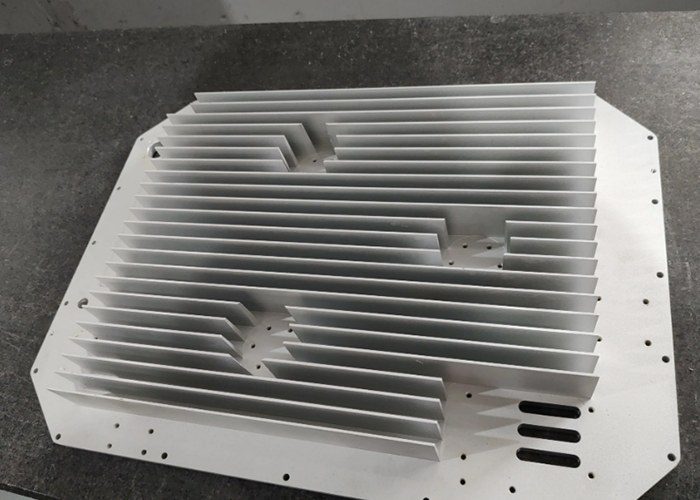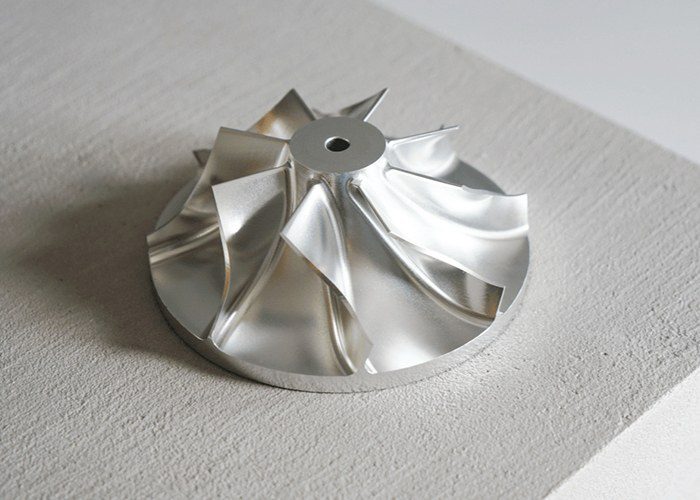
In the vast ecosystem of industrial production, few processes are as ubiquitous or as essential as milling. From the engines that power our vehicles to the surgical instruments that save lives, milling is the subtractive magic that turns raw stock into functional reality. However, while standard off-the-shelf parts serve a purpose, the backbone of high-performance engineering lies in a specialized niche: Custom Milling Components.
These are not simply parts cut from a block of metal; they are the result of a highly strategic collaboration between engineer and machinist, designed to solve problems that generic parts cannot.
Defining the Custom Advantage
A “custom milling component” refers to any part produced via a milling machine—where rotating cutters selectively remove material—that is designed to unique specifications rather than a generic standard. While a standard hex bolt or bushing can be bought from a catalog, custom components are born from necessity. They address specific geometric constraints, unique load requirements, or environmental conditions that standard parts fail to meet.
The true value of custom milling lies in its ability to optimize the relationship between form and function. A standard part forces the engineer to design around its limitations. A custom component allows the engineer to design toward the ideal solution. This shift in perspective unlocks significant gains in efficiency, weight reduction, and overall system longevity.
The Technical Spectrum: What Makes Them Unique?
Custom milling components span an incredible range of complexity. On one end of the spectrum, you have simple modifications, such as a mounting plate with a unique hole pattern. On the other end, you find highly complex, multi-axis parts featuring deep cavities, thin walls, helical gears, and intricate 3D contours.
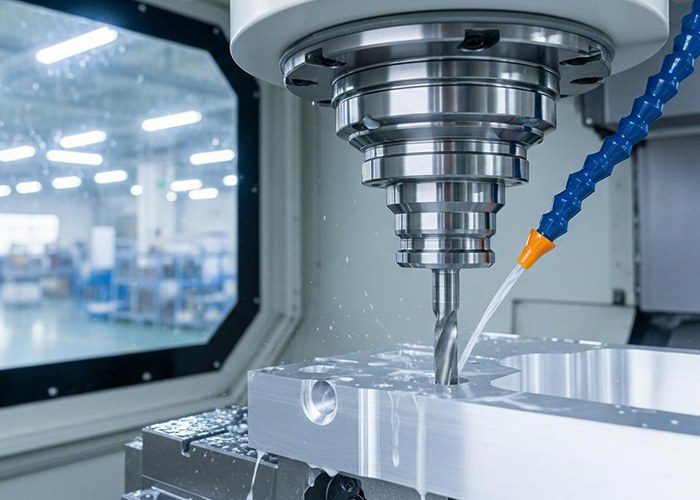
Modern manufacturing relies heavily on CNC (Computer Numerical Control) milling to achieve these outcomes. Unlike manual machining, CNC allows for the precise repetition of complex geometries with tolerances often measured in microns (thousandths of a millimeter). For a custom component to function correctly, every flat surface, every drilled hole, and every contoured edge must align perfectly with the digital blueprint.
Key Industries Driving Demand
The appetite for custom milling components is voracious across several high-stakes industries:
- Aerospace: In an aircraft, weight is the enemy, and failure is not an option. Custom milling produces lightweight structural brackets, turbine blades, and landing gear components. These parts often start as solid blocks of titanium or aluminum, with up to 90% of the material milled away to leave only the essential, high-strength skeleton.
- Medical: The human body does not conform to standard industrial sizes. Custom-milled orthopedic implants (hips, knees, spinal rods) are machined from biocompatible metals like surgical-grade stainless steel or titanium. Similarly, surgical jigs and guides are custom-milled for specific procedures to ensure perfect placement.
- Automotive & Motorsports: A race car is custom parts bound together by ambition. From suspension knuckles to intake manifolds and transmission housings, custom milling allows racing teams to reduce rotational mass and increase structural rigidity in ways mass-produced parts cannot.
- Oil & Gas and Heavy Machinery: During resource extraction from the earth, equipment must withstand extreme pressure, abrasion, and corrosion. Custom milling produces durable valve bodies, pump housings, and hydraulic manifolds designed to withstand years of brutal service.
The Manufacturing Process: From CAD to Reality
The journey of a custom milling component begins not on the shop floor, but on a computer screen. Using CAD (Computer-Aided Design) software, the engineer creates a 3D solid model of the desired part. This file is then translated via CAM (Computer-Aided Manufacturing) software into a set of instructions (G-code) that tells the milling machine exactly how to move.
Depending on the geometry, the machinist will choose between two primary milling configurations:
- Vertical Milling: The spindle moves vertically, and the cutting tool descends onto the workpiece. This is ideal for flat surfaces, slot cutting, and simple pockets.
- Horizontal Milling: The spindle is oriented horizontally, allowing for better chip evacuation and the use of multiple cutters on a single arbor. This is superior for heavy-duty removal and complex, multi-sided parts.
Modern machining often utilizes 5-axis milling, where the cutting tool and the workpiece can move simultaneously across five different axes. This allows a machinist to create a complex component in a single setup, drastically improving accuracy and reducing lead times.
Material Selection: The Foundation of Performance
The “custom” aspect extends deeply into material science. The choice of stock is dictated by the part’s function. Common materials include:
- Aluminum 6061/7075: Lightweight, easy to mill, and corrosion-resistant. Ideal for aerospace and automotive brackets.
- Stainless Steel (303, 304, 17-4): Offers high strength and excellent corrosion resistance. Common in medical and food processing equipment.
- Titanium (Grade 5): The gold standard for strength-to-weight ratio and biocompatibility. It is difficult to machine (gummy and work-hardening), but the results are unparalleled for implants and high-performance racing parts.
- Brass & Bronze: Ideal for electrical components (thanks to its conductivity) and decorative hardware (thanks to its low friction).
- Engineering Plastics (PEEK, Delrin, Nylon): For lightweight, non-conductive, or chemically resistant components.
Advantages Over Alternative Manufacturing
Why choose custom milling over 3D printing (additive manufacturing) or casting?
Precision: Milling offers superior surface finishes and tighter tolerances than most additive processes.
Material Integrity: Unlike casting, which can introduce porosity or internal voids, milling starts with a wrought billet of metal. The resulting part has a consistent, uniform grain structure, offering superior fatigue resistance.
Speed (for small batches): For runs of 1 to 1,000 units, CNC milling is often faster and more cost-effective than producing expensive molds for casting or injection molding.
Challenges and Considerations
Despite its advantages, custom milling is not without challenges. The process generates significant waste (chips and scrap). Furthermore, complex parts require skilled programmers and expensive machinery. Lead times for custom components vary widely—from just a few days for simple brackets to several weeks for complex 5-axis aerospace parts that demand rigorous quality assurance (CMM inspection, X-ray, or dye penetrant testing).
The Future: Smarter, Faster, More Integrated
The future of custom milling components is intelligent. We are seeing the rise of Automated Feature Recognition (AFR) , where CAM software automatically recognizes holes, pockets, and threads in a CAD model and selects the optimal tool paths. Additionally, in-process inspection uses probes inside the milling machine to measure the part during cutting, allowing the machine to automatically compensate for tool wear or thermal expansion.
As the Internet of Things (IoT) expands, we will see more custom components that are not just structural but “smart”—milled with specific pockets or channels to house sensors and wiring for real-time data monitoring.
Conclusion
Custom milling components are the silent heroes of modern industry. They are the discreet titanium plate holding a fractured bone together, the aerodynamic bracket saving fuel on a jet, and the hardened valve controlling the flow of a gas pipeline. They represent the pinnacle of subtractive manufacturing: the ability to start with a simple block of raw material and, through skill, speed, and precision, reveal a part that fits its purpose perfectly.
In a world moving toward mass production, the value of the bespoke remains irreplaceable. For any engineer facing a design challenge where “close enough” is a failure, the answer lies in the precision and versatility of custom milling.