
In an age defined by miniaturization, automation, and relentless demands for efficiency, one category of manufacturing stands as the silent enabler of progress: high precision metal components. These are not merely pieces of metal; they are the critical interfaces where design intent meets physical reality. From the turbine blades in a jet engine to the micro-springs in a surgical stapler, these components dictate performance, safety, and longevity. To appreciate their significance is to understand the intricate dance of material science, advanced machining, and rigorous quality control that brings them to life.
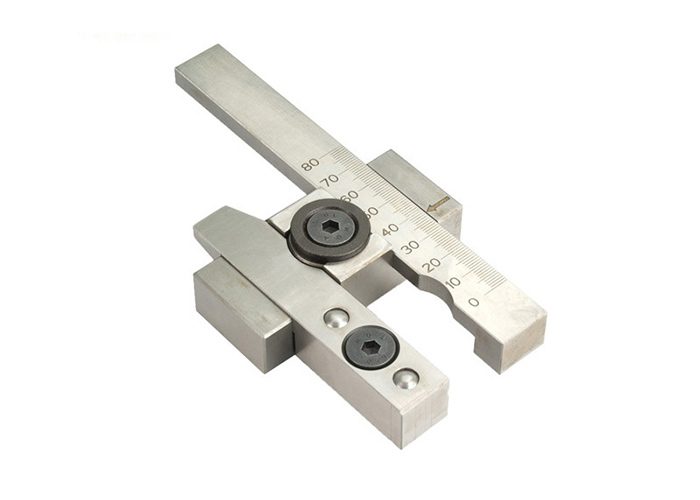
Defining Precision
Precision in this context moves beyond standard machining tolerances. While conventional manufacturing might operate within a few thousandths of an inch, high precision enters the micron and even sub-micron realm. A single micron—one-millionth of a meter—can determine whether a hydraulic valve leaks or whether a bearing fails catastrophically. This level of accuracy is not achieved by accident; it is the result of a meticulously controlled ecosystem encompassing machine tools, cutting fluids, environmental stability, and operator expertise.
The stakes are immense. In aerospace, a fuel injector nozzle with an oversized orifice by a fraction of a millimeter can alter the combustion temperature, reducing thrust and increasing emissions. In medical implants, a hip replacement stem with a surface roughness outside specification can cause undue wear, leading to premature failure and the need for revision surgery. Consequently, the production of these components demands a culture of perfection where statistical process control is as vital as the raw material itself.
The Manufacturing Arsenal
Creating these parts requires an arsenal of sophisticated manufacturing technologies. CNC (Computer Numerical Control) machining remains the cornerstone, with multi-axis milling and turning centers capable of interpolating complex 3D geometries. However, the cutting tool’s geometry, the spindle’s thermal stability, and the rigidity of the workholding must all be optimized to achieve micron-level consistency. For hard materials like titanium or Inconel, which are notoriously difficult to machine, manufacturers turn to Electrical Discharge Machining (EDM), where controlled electrical sparks erode the metal with nearly zero mechanical force, preserving the part’s structural integrity.
Grinding, lapping, and honing represent the finishing stages, where abrasive processes refine surfaces to mirror-like finishes and dimensional accuracies measured in millionths of an inch. These processes are slow, deliberate, and often performed in climate-controlled rooms to negate thermal expansion. The tolerances are so tight that a change in ambient temperature of a few degrees can render a component out of spec before it even leaves the machine.
The Material Factor
Precision is inextricably linked to material behavior. A component machined to perfection at room temperature can warp or distort when exposed to operational heat or stress. Therefore, material selection is a predictive science. Engineers must account for thermal expansion coefficients, tensile strength, fatigue resistance, and corrosion potential. Common choices include tool steels for dies, aluminum alloys for lightweight structural parts, and advanced superalloys for high-temperature applications. Furthermore, heat treatment cycles are often integrated into the production schedule to relieve residual stresses introduced during the initial cutting, ensuring the component remains stable throughout its service life.
Applications Across Industries
The demand for high precision metal components is ubiquitous. In the automotive sector, they are the heart of common-rail diesel systems and advanced transmission gears, directly influencing fuel economy and smoothness. In electronics, they are the delicate pins and connectors that facilitate high-frequency signal transmission in smartphones and servers. The defense and space sectors require components that can survive extreme vibrations, radiation, and temperature gradients while maintaining absolute functionality. Even in consumer goods, precision gears in watches and high-end cameras embody a marriage of artistry and engineering.
The Frontier of Innovation
As industries evolve, so too does the nature of these components. Additive manufacturing, or 3D printing, is beginning to complement traditional subtractive methods, allowing for lattice structures that were previously impossible to machine. However, this does not render conventional precision machining obsolete. Instead, the future lies in hybrid processes—printing near-net shapes and then using precision machining for critical mating surfaces. Additionally, the integration of in-process metrology, where inspection occurs concurrently with machining, is reducing scrap rates and enabling closed-loop adjustments in real-time.
Conclusion
High precision metal components are the unsung heroes of technological advancement. They are the tangible result of human ingenuity, mathematical rigor, and metallurgical science converging to produce objects that operate at the edge of possibility. Without them, modern civilization as we know it—with its safe air travel, life-saving medical devices, and clean energy systems—would simply not exist. As we push toward electric aviation, personalized medicine, and quantum computing, the demand for these microscopic marvels will only intensify, challenging manufacturers to achieve the impossible: absolute perfection in an imperfect world.


