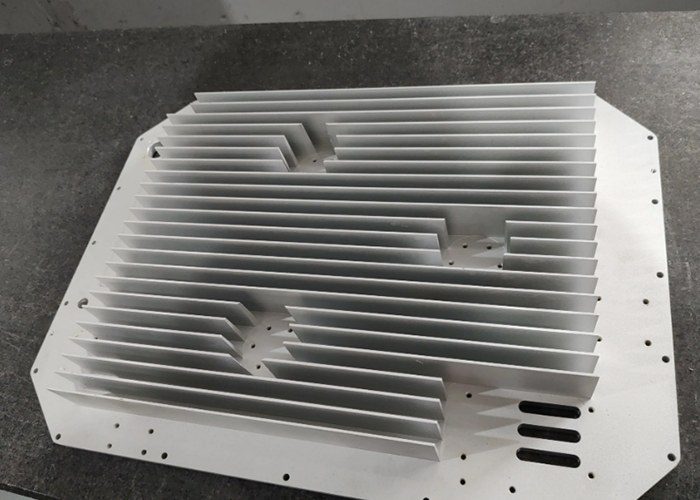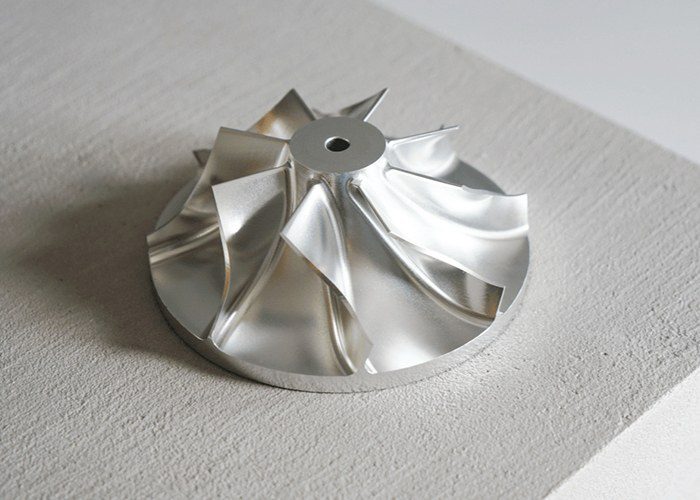
In an era defined by increasing industrial complexity and relentless demand for performance, the role of custom metal spare parts has evolved from a niche necessity to a cornerstone of modern manufacturing. No longer confined to simple replacements for broken components, these precision-engineered solutions are now critical enablers of innovation across aerospace, automotive, medical devices, robotics, and renewable energy. As standard off-the-shelf parts increasingly fall short of meeting the rigorous demands of specialized applications, custom metal fabrication has emerged as the definitive answer to the industry’s most challenging engineering problems.
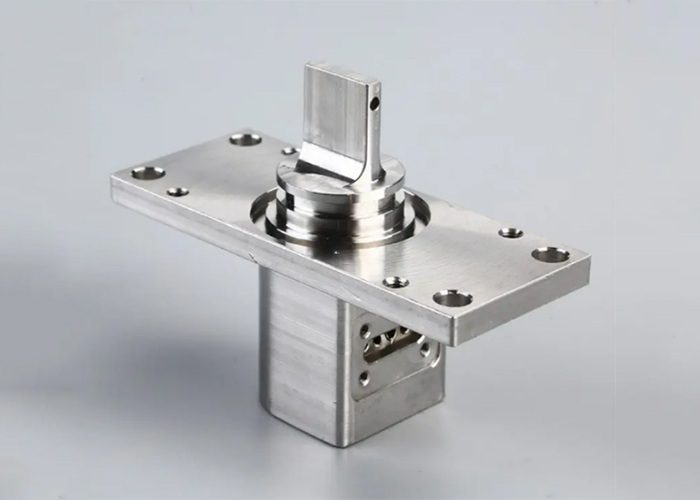
The Growing Market for Customization
The numbers tell a compelling story. The global metal products market reached approximately $2.76 trillion in 2025 and is projected to grow to $2.87 trillion in 2026, with a compound annual growth rate (CAGR) of 3.9%. Within this vast landscape, the custom metal stamping and fabrication segment alone was valued at $3.7 billion in 2025 and is expected to reach $5.05 billion by 2032, growing at a CAGR of 4.6%. Even more striking, the on-demand custom parts manufacturing market—which encompasses metal additive manufacturing, on-demand CNC machining, and related services—was valued at $5.04 billion in 2025 and is projected to surge to $12.51 billion by 2034, representing a robust CAGR of 10.4%. These figures reflect a fundamental shift in how industries source engineered components, moving away from traditional long-lead-time supply chains toward digitally enabled, on-demand production ecosystems.
Advanced Manufacturing Technologies Driving Precision
The creation of custom metal spare parts relies on an impressive arsenal of manufacturing technologies, each suited to specific material requirements and geometric complexities. CNC machining remains the workhorse of the industry, with precision turned product manufacturing alone projected to grow from $104.11 billion in 2025 to $142.66 billion by 2031. Modern CNC centers now achieve surface roughness values below Ra 0.4μm—critical for high-pressure hydraulic systems and other demanding applications. The adoption of multi-axis machining has further revolutionized the field; five-axis machining centers can now produce intricate components in a single setup, holding tolerances within ±0.005 mm while eliminating cumulative tolerance stack-up.
Metal additive manufacturing, or 3D printing, has opened entirely new possibilities for custom part production. This technology builds components layer by layer directly from digital designs, enabling geometries that would be impossible or prohibitively expensive to achieve through subtractive methods. Industries such as motorsport and aerospace have already embraced metal 3D printing for producing customized cooling ducts, turbine blades, and other high-performance components. The technology also offers significant sustainability advantages, reducing material waste by up to 78% compared to traditional subtractive manufacturing.
Other critical processes include metal injection molding (MIM) for complex, small-scale components; precision forging for parts requiring exceptional strength; and custom stamping and sheet metal fabrication for high-volume production runs. The integration of these diverse capabilities within single manufacturing facilities has given rise to “one-stop” service providers capable of delivering fully finished, assembly-ready components.
Materials Science: The Foundation of Performance
The performance of custom metal parts is intrinsically tied to material selection. Manufacturers work with an extensive palette of metals and alloys, each offering distinct properties for specific applications. Aerospace-grade aluminum alloys (6061-T6, 7075-T6, 2024) provide an excellent strength-to-weight ratio for aircraft and electric vehicle components. Owing to their outstanding corrosion resistance and biocompatibility, stainless steel and titanium are uniquely suited for both medical implants and marine engineering. Exotic alloys such as Inconel and Monel withstand extreme temperatures and corrosive environments, serving critical roles in aerospace engines and chemical processing equipment.
The customization journey often begins with material science challenges that standard solutions cannot address. As one precision manufacturing executive observed, customers’ custom requirements frequently stem from specialized application scenarios with stringent demands for hardness, elongation, and other properties—demands that involve multiple disciplines including materials science, mechanical engineering, heat treatment, and surface technology. This interdisciplinary approach has enabled manufacturers to develop components capable of withstanding extreme conditions, such as railway push-rod connecting pins that maintain toughness at minus 40 degrees Celsius.
Applications Across Industries
The reach of custom metal spare parts extends across virtually every industrial sector. In automotive manufacturing, precision-engineered components now enable 15-20% longer equipment lifespan, with automotive applications constituting 42% of total demand for metal spare parts. The electric vehicle revolution has further intensified this demand, as EV battery casings incorporate specially designed cooling passages and lighter aluminum alloys to manage heat buildup effectively. In aerospace, components must be manufactured with tolerances below 0.005 inches just to pass basic quality inspections.
The medical device industry relies heavily on custom metal parts for orthopedic implants, surgical instruments, and diagnostic equipment. Robotics and automation have created demand for lightweight yet rigid joint components. Even traditional industries such as construction and heavy machinery are embracing customization; one steel manufacturer now processes over 2,800 different steel配件 annually, each representing a unique customer requirement.
The Digital Transformation of Custom Manufacturing
The customization process has been transformed by digital technologies. Cloud-based manufacturing platforms now allow engineers to upload CAD files and receive automated feedback on part geometry, material selection, and cost optimization within seconds. Digital twin simulations enable 68% of engineering teams to detect design flaws before physical prototyping begins, significantly reducing delays and rework. Smart inventory systems using machine learning can automatically place orders when components show signs of wear, reducing warehouse costs by nearly half in some cases.
Looking Ahead
The future of custom metal spare parts is bright, driven by several converging trends: the push for lightweighting in automotive and aerospace applications, the growth of renewable energy infrastructure, the reshoring of critical manufacturing capacity, and the continued advancement of additive manufacturing and multi-axis CNC technologies. As industries continue to push the boundaries of what is technically possible, the demand for precision-engineered, application-specific metal components will only intensify. Custom metal spare parts are not merely replacements for what is broken—they are the building blocks of what comes next.