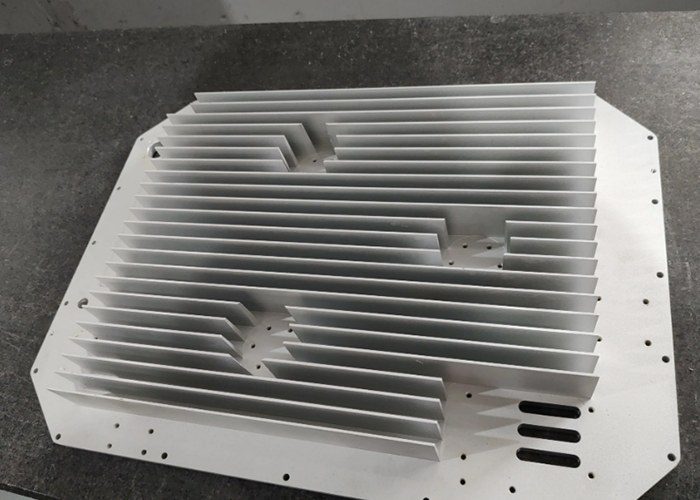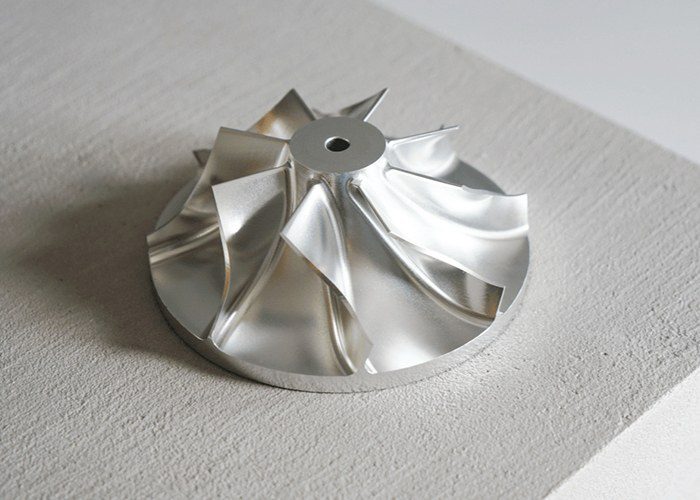
In the ever-evolving landscape of modern manufacturing, the demand for complex geometries, tighter tolerances, and faster production cycles has never been greater. While traditional three-axis machining has long served as the industry standard, its limitations become apparent when confronted with parts that feature intricate curves, angled surfaces, or features on multiple faces. This is where four-axis metal processing emerges as a transformative solution. By adding a rotational axis to the conventional linear trio, four-axis CNC machining unlocks new levels of capability, bridging the gap between simplicity and the full complexity of five-axis systems. This article explores the mechanics, advantages, and critical applications of four-axis metal processing in today’s advanced manufacturing environment.
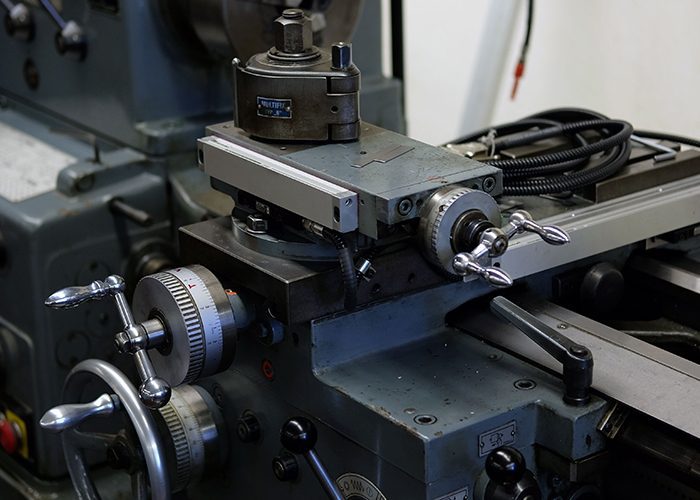
Understanding the Mechanics of Four-Axis Machining
A four-axis CNC milling machine fundamentally operates on three orthogonal linear axes (X, Y, Z) and a supplementary rotary axis, offering four distinct degrees of motion. This fourth axis, typically referred to as the A-axis, rotates around the X-axis and is most commonly implemented through a precision rotary table integrated into the machine bed or worktable.
The workflow begins in the digital realm. Engineers create a 3D model using computer-aided design (CAD) software, which is then converted into toolpaths by computer-aided manufacturing (CAM) software. The CAM software outputs G-code—the machine’s instructional language that governs axis movements, spindle speeds, feed rates, and coolant application. During execution, the CNC control system reads the G-code line by line, driving servo motors on all four axes simultaneously. The spindle rotates the cutting tool while the linear axes position it, and the A-axis rotates the workpiece to the required orientation. Encoders and sensors provide closed-loop feedback on position and speed, allowing modern systems to compensate for thermal drift and tool wear, thereby maintaining micron-level accuracy.
Two Operating Modes: Indexed versus Continuous
Four-axis machining offers two distinct operating modes, each suited to different part geometries and production requirements. In indexed mode—often referred to as 3+1 machining—the A-axis rotates the workpiece to a set angle, locks mechanically, and then the X, Y, and Z axes perform the cutting. The axis indexes to the next angle, locks again, and repeats. This mode is ideal for drilling radial holes, cutting keyways, and machining flat faces at various angles. The rigid locking mechanism allows for heavy cuts and maintains strong clamping stability.
In continuous (simultaneous) mode, the A-axis rotates while the X, Y, and Z axes are cutting—all axes interpolate in real time. This enables the production of helical grooves, spiral contours, cam profiles, and curved surfaces that would be impossible to achieve with indexed machining alone. Continuous mode produces smoother finishes and shorter cycle times, though it requires more complex programming and higher machine stiffness. The choice between these modes depends on the part’s geometry: indexed for prismatic parts with discrete angled features, and continuous for true three-dimensional curved geometry.
Why Four Axes? The Advantages Over Three-Axis Machining
The transition from three-axis to four-axis machining represents a significant leap in manufacturing capability. The primary advantage lies in the ability to machine multiple faces of a part in a single setup without manual repositioning. A three-axis machine requires the workpiece to remain fixed, meaning that parts with features on different sides must be manually re-fixtured multiple times. Each repositioning introduces cumulative positioning errors, increases labor costs, and extends production time. For a complex part, a three-axis approach might require five to six separate setups, whereas a four-axis machine can often accomplish the same work in just one or two.
Fewer setups translate directly into improved accuracy. Holding the part in a single fixture throughout the machining process eliminates the positioning errors that accumulate from repeated clamping operations. This enables tighter tolerances across multiple sides of the workpiece and ensures that positional relationships between different features are maintained with high precision. Furthermore, a single setup leads to better surface finishes because the cutting tool can maintain a more optimal and consistent proximity to the workpiece.
Productivity gains are equally compelling. By reducing setup time and eliminating manual part handling between operations, four-axis machining significantly shortens overall cycle times. Simultaneous four-axis motion allows for continuous cutting operations that would otherwise require multiple discrete steps. This efficiency is particularly beneficial for high-volume production runs, where even small reductions in cycle time yield substantial cost savings.
Versatility in Material Processing
Four-axis machining centers demonstrate remarkable versatility across a wide range of metals. They are capable of machining a wide spectrum of materials, ranging from softer metals such as aluminum and brass to high-strength alloys including stainless steel, titanium, and Inconel. The optimizable cutting parameters provided by the added rotational axis allow manufacturers to adjust speeds, feeds, and tool engagement angles to suit the specific characteristics of each material. This material flexibility makes four-axis machining a valuable asset across diverse industries, from aerospace to medical device manufacturing.
Critical Applications Across Industries
The capabilities of four-axis metal processing make it indispensable in several high-precision industries. In aerospace manufacturing, four-axis CNC machines are essential for producing complex components such as turbine blades, aircraft structural parts, and engine housings. The high precision and intricate geometries required in these components are achievable due to the additional rotational axis, which allows for continuous machining of curved surfaces and tight-tolerance features.
The automotive industry similarly benefits from four-axis machining for engine blocks, transmission components, and other powertrain parts. The ability to machine multiple faces in a single setup ensures that critical features—such as bearing journals, bolt holes, and sealing surfaces—maintain precise positional relationships.
In the medical device sector, four-axis machining produces surgical instruments, implant components, and endoscopic parts with the surface finish and dimensional accuracy required for patient safety. The technology also serves the defense, semiconductor, oil and gas, and renewable energy industries, where complex metal components are routinely required.
Conclusion
Four-axis metal processing represents a powerful and practical advancement in CNC machining technology. By adding rotational capability to the standard three linear axes, it enables manufacturers to produce more complex parts with greater accuracy, fewer setups, and shorter cycle times than traditional three-axis machines. While it requires more sophisticated programming and setup than three-axis systems, the return on investment is substantial for any operation that regularly produces parts with multi-sided features, angled surfaces, or curved geometries. As manufacturing continues to demand higher precision and greater efficiency, four-axis machining will remain an essential tool—a bridge between the simplicity of three-axis and the full complexity of five-axis, delivering exceptional value across a wide spectrum of metal processing applications.